Are Whale Sharks Dangerous?
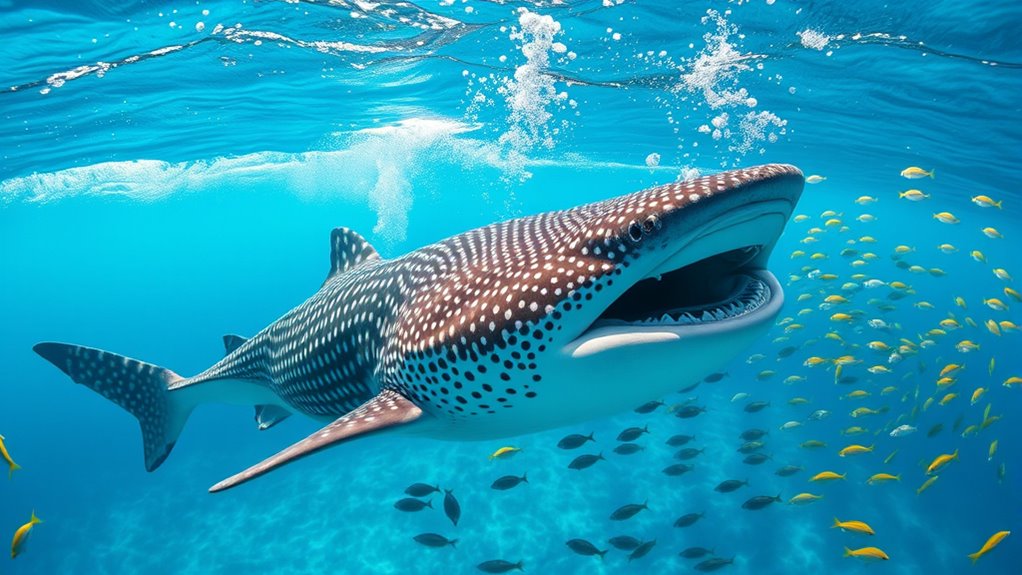
Are whale sharks dangerous? You’re not in danger swimming near whale sharks—they’re gentle giants that filter plankton quietly without aggression. Despite their massive size, they swim calmly, showing curiosity rather than threat toward humans.
They don’t bite or hunt, so they pose no risk if you keep a respectful distance. Just avoid touching or chasing them to stay safe and protect the sharks.
Exploring their behavior and conservation reveals why these peaceful creatures deserve our care.
What Are Whale Sharks and How Big Do They Get?
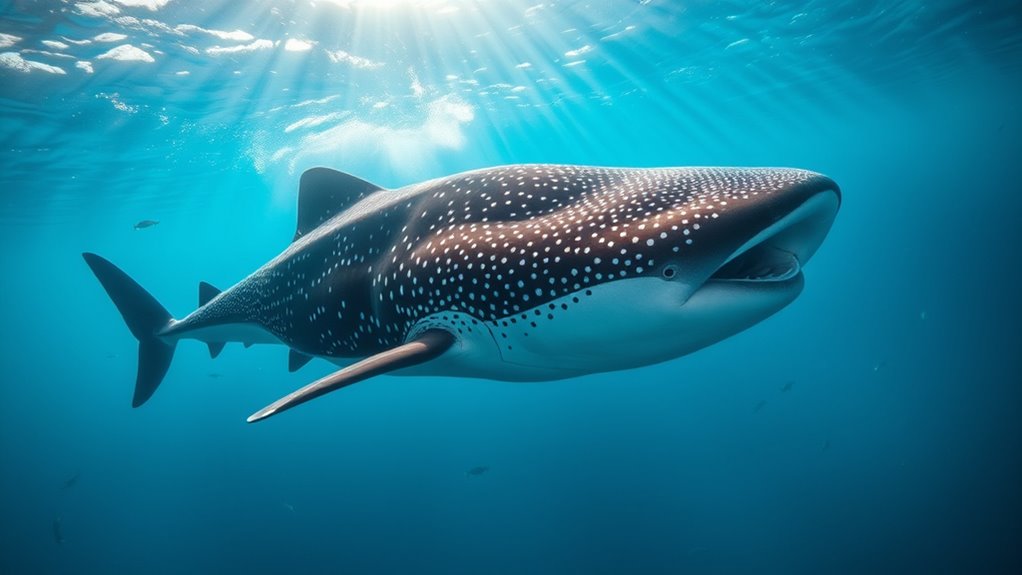
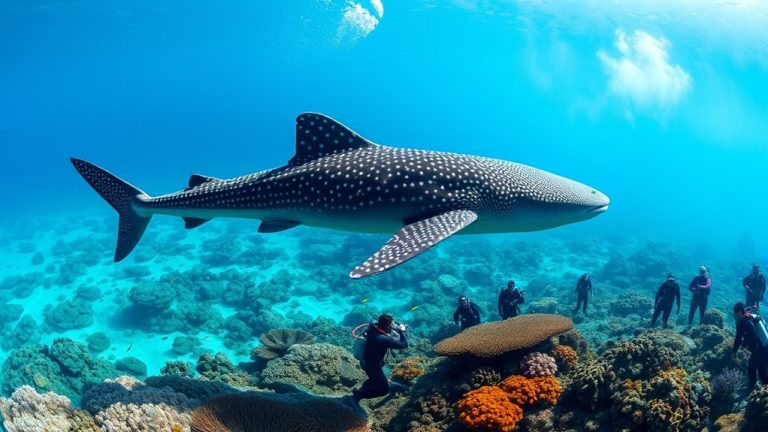
Although you might think of sharks as fierce predators, whale sharks are quite the opposite. These gentle giants hold the title of the largest fish in the world, growing up to an astonishing 19 meters (62 feet) long. Weighing around 14 metric tonnes, they’re the heaviest fish known to science.
You’ll recognize whale sharks by their broad, flat heads and massive mouths, which can stretch over 1.55 meters (5 feet) wide. Their dark grey skin, patterned with unique light spots and stripes, makes each one distinct. Despite their size, whale sharks feed gently by filtering plankton, small fish, and krill from the water.
Understanding their size and nature helps you appreciate these magnificent creatures as peaceful giants of the ocean.
Why Are Whale Sharks Not Dangerous to Humans?
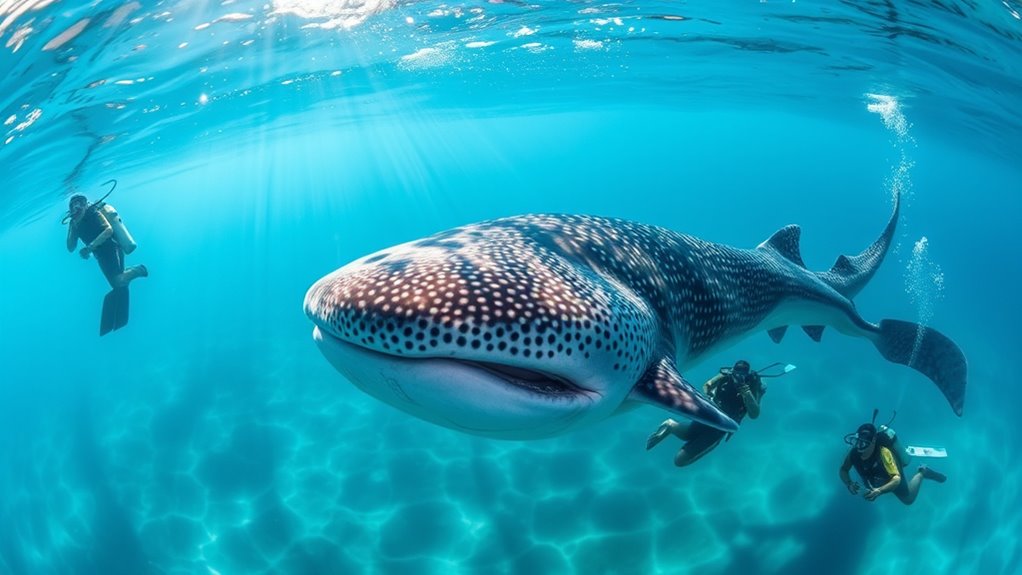
You won’t find whale sharks threatening because they feed gently by filtering tiny plankton from the water. They don’t show aggression and swim calmly through the ocean, making them easy to respect and admire.
Understanding these behaviors helps you see why they pose no danger to humans.
Gentle Filter Feeding
Because whale sharks feed exclusively on tiny plankton and other small organisms, they pose no danger to you or other humans. As gentle filter feeders, their feeding method involves opening their large mouth wide to sift through water, capturing microscopic food without any biting or attacking. This makes them completely harmless despite their enormous size.
When you encounter a whale shark, you’ll notice:
- They glide slowly, focused on filtering food.
- Their mouths act like giant strainers, not weapons.
- They lack sharp teeth or hunting instincts.
- They tolerate your presence calmly, showing no aggression.
- Their diet excludes anything larger than plankton, including humans.
Understanding their gentle filter feeding helps you appreciate why whale sharks aren’t a threat—they’re peaceful giants simply nourishing themselves from the ocean’s smallest creatures.
Lack Of Aggression
While whale sharks grow to massive sizes, they don’t display aggression toward humans or other creatures. You won’t find any signs of threat because their lack of aggression is genuine. These gentle giants are filter feeders, mainly eating plankton and small fish, so they have no interest in hunting or biting.
Their teeth aren’t designed for biting, making them inherently harmless to you and others nearby. Many swimmers and divers have shared how calm and peaceful whale sharks remain, even when people approach closely. They don’t act territorial or aggressive, which means you can observe them safely without worry.
Scientific studies and firsthand encounters consistently show that whale sharks pose no danger, thanks to their naturally calm and harmless nature.
Calm Swimming Behavior
Even though whale sharks can grow impressively large, their slow and steady swimming shows they have no interest in threatening you. Their calm swimming behavior is a clear sign they’re harmless and peaceful giants of the ocean. When you encounter one, you’ll notice:
- They glide smoothly without sudden movements or aggression.
- Their filter-feeding means they’re not hunting you or any large prey.
- Their giant size doesn’t translate to danger because they lack biting teeth.
- Their peaceful nature often brings them close to snorkelers and divers.
- Scientific studies confirm their friendly, non-threatening interactions with humans.
How Whale Sharks Feed Without Hurting People
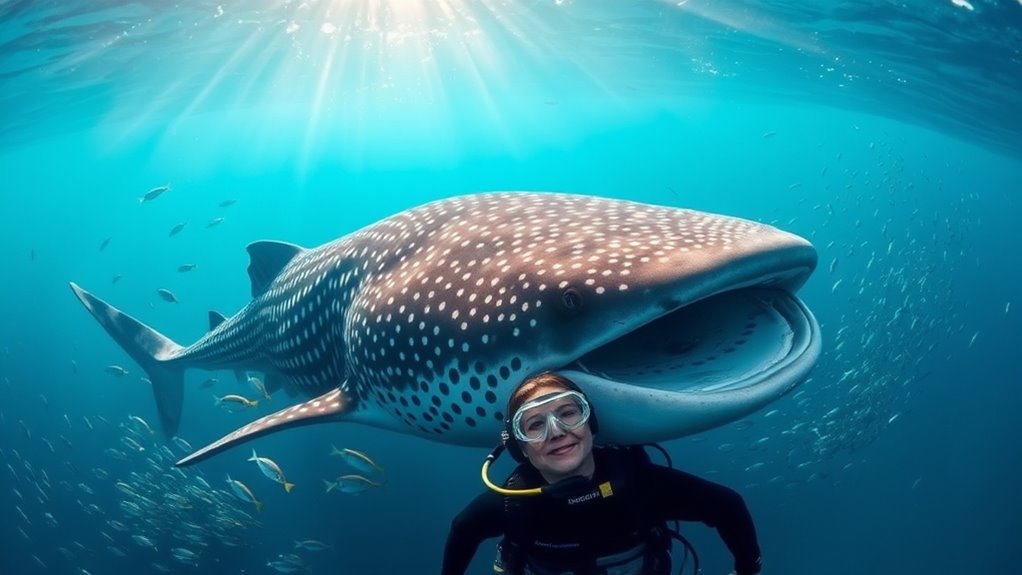
When you see a whale shark feeding, you’ll notice it swims with its mouth wide open, gently filtering plankton and tiny fish from the water. Since their diet consists only of these small creatures, they pose no threat to you.
Their calm, passive feeding style means they don’t harm people as they eat.
Gentle Filter Feeding
A whale shark feeds by gliding through the water with its massive mouth wide open, filtering plankton and tiny fish without harming anything or anyone nearby. As peaceful filter feeders, whale sharks rely on a gentle, non-aggressive method to nourish themselves. Here’s how they do it:
- Swim slowly through dense plankton blooms with mouths agape
- Pull in water containing tiny prey without biting or snapping
- Use over 3,000 tiny teeth, which don’t bite but may protect
- Filter up to 6,000 liters of water per hour through large gill rakers
- Let water exit through gills while trapping food inside
You’ll find that despite their enormous size, whale sharks remain gentle giants, posing no threat due to their calm, careful feeding style.
Plankton Diet Only
Their gentle filter feeding depends entirely on a diet made up of plankton only. As filter feeders, whale sharks swim with mouths wide open, filtering up to 6,000 liters of water per hour to trap these tiny creatures.
Their over 3,000 tiny teeth aren’t for biting but protection. This feeding method guarantees they don’t hurt you or any other humans nearby.
| Feature | Detail |
|---|---|
| Diet | Plankton only |
| Feeding Method | Filter feeding with gill filters |
| Water Volume Filtered | Up to 6,000 liters/hour |
| Teeth | 3,000+ tiny, non-biting teeth |
| Behavior | Non-aggressive, harmless |
This unique plankton diet keeps whale sharks safe for you and other marine life.
What People Get Wrong About Whale Shark Behavior
Although whale sharks are the largest fish in the ocean, you don’t need to worry about them being dangerous. Many people misunderstand their behavior due to their massive size, but whale sharks are actually gentle giants. Here’s what you should know:
- They’re gentle filter feeders, not hunters.
- Their teeth aren’t designed for aggression or biting.
- Whale sharks often show curiosity and approach humans calmly.
- No recorded attacks exist; they’re completely harmless.
- Their behavior is consistently non-aggressive, even around divers.
How Whale Sharks React When Humans Are Nearby
When you’re near a whale shark, you’ll notice they stay calm and often curious, sometimes swimming close without any signs of aggression. They might slow down or keep feeding, showing they’re comfortable around you.
Unless you disturb them, whale sharks usually won’t react defensively or try to escape.
Whale Shark Behavior
If you approach a whale shark, you’ll notice it stays calm and often shows curiosity rather than fear or aggression. These gentle giants move with a slow, deliberate grace, making them non-threatening companions in the water. Here’s what you can expect from their behavior:
- They remain peaceful and avoid aggressive displays.
- Whale sharks often swim closer, showing curious interest in your presence.
- They filter feed quietly, unaffected by nearby humans.
- When disturbed, they simply move away slowly instead of reacting defensively.
- Their calm demeanor allows you to observe them safely without worry.
Human Interaction Response
You’ll find that whale sharks remain calm and unthreatening even when you approach them closely. During human interaction, these gentle giants typically continue their slow swimming or feeding without showing any signs of aggression. Whale sharks pose no danger to people—they’re filter feeders and don’t hunt or defend themselves aggressively.
If they feel disturbed or frightened, they might slowly swim away or change their movement pattern, but they rarely respond aggressively. This peaceful behavior makes encounters safe and popular among eco-tourists who want to observe them without harm.
Are There Any Risks When Swimming With Whale Sharks?
How safe is it to swim with whale sharks? Generally, it’s very safe since whale sharks are gentle filter feeders and don’t pose a threat to humans. However, there are some risks you should be aware of to guarantee your safety and the shark’s well-being:
Accidental injuries can occur from sudden movements or close contact. Improper behavior like blocking their path increases risks. Collisions with boats pose hazards, especially in busy areas.
Following safety guidelines considerably reduces dangers. Maintaining a respectful distance is essential for safety.
Why You Shouldn’t Touch or Chase Whale Sharks
Although whale sharks are gentle giants, you shouldn’t touch or chase them because doing so can harm their protective mucus layer and cause unnecessary stress. When you touch a whale shark, you damage this essential mucus that defends them from bacteria and keeps them healthy.
Chasing or grabbing them disrupts their natural behavior, feeding, and migration, which negatively affects their wellbeing. Remember, sharks pose no danger to you, so there’s no reason to chase them.
What Threats Do Humans Pose to Whale Sharks?
While whale sharks pose little threat to humans, human activities have caused significant dangers to them. You should know that these gentle giants face serious risks mainly due to our actions:
- Vessel strikes from boats often injure or kill whale sharks despite their tough skin.
- Bycatch in fishing nets accidentally traps and harms many whale sharks every year.
- Illegal hunting for fins, skins, and oil continues in some areas, even though it’s banned.
- Pollution from plastics and chemicals degrades their habitats and can be ingested, causing harm.
- Targeted fishing, including finning, drastically reduces their populations.
Understanding these threats helps you realize how vulnerable whale sharks are because of human impact, not the other way around.
How Conservation Efforts Protect Whale Sharks
Because whale sharks face numerous threats from human activities, conservation efforts have become essential to their survival. You’ll find that several countries, like the Philippines, India, and Taiwan, have banned whale shark fishing to protect these gentle giants. Internationally, their inclusion in CITES Appendix II helps regulate trade and stops illegal poaching.
Conservation also involves marine protected areas, where eco-tourism promotes sustainable interaction and minimizes harm. Projects focusing on habitat protection in India and Kenya reduce vessel strikes and raise community awareness, directly benefiting whale shark populations. Organizations like IFAW and the Wildlife Trust of India actively rescue and release whale sharks, supporting population recovery.
These combined efforts guarantee you and future generations can continue appreciating whale sharks in their natural environment safely.
Tips for Safely Observing Whale Sharks in the Wild
When you observe whale sharks in the wild, keeping a safe distance and respecting their space guarantees a memorable and injury-free experience for both you and the shark. These gentle giants pose little threat, but following safety guidelines is key to protecting them and yourself.
Here are tips for observing in the wild:
- Maintain at least 4-5 meters from the head and 5 meters from the tail to avoid accidental contact.
- Never touch or ride whale sharks to prevent stress and damage to their mucus layer.
- Approach calmly from the side or behind without sudden movements or loud noises.
- Always listen to trained guides and follow conservation organization rules.
- Stay patient and enjoy watching these magnificent creatures respectfully.
Frequently Asked Questions
How Dangerous Is It to Swim With Whale Sharks?
Swimming with whale sharks isn’t dangerous if you keep your distance and follow guidelines.
They’re gentle filter feeders and won’t harm you, but you should avoid touching or crowding them to stay safe during encounters.
What Is the Friendliest Shark?
Imagine meeting the ocean’s gentle giant—that’s the whale shark. You’ll find it’s the friendliest shark, peacefully gliding and welcoming curious swimmers.
You won’t face danger, just awe and wonder with this calm ocean buddy.
Have Whale Sharks Ever Attacked Anyone?
Whale sharks haven’t attacked anyone. You can swim near them safely since they’re gentle filter feeders. They’re curious, not aggressive, and their tiny teeth aren’t used for biting.
Just respect their space, and you’ll be fine.
Why Are Whale Sharks so Friendly?
You find whale sharks friendly because they’re gentle filter feeders that eat tiny plankton, not prey. They don’t see you as food or threat, so they calmly swim alongside you without aggression or fear.
Conclusion
Whale sharks are gentle giants of the ocean, more like floating gardens than lurking predators. You don’t need to fear them—they’re unlikely to harm you if you respect their space. Remember, they’re delicate creatures, not machines, so don’t touch or chase them.
Observing them safely is like watching a peaceful dance in the sea. By protecting whale sharks and following guidelines, you help keep this beautiful dance alive for generations to come. Understanding whether whale sharks are dangerous shows us the importance of respecting and conserving these magnificent creatures.