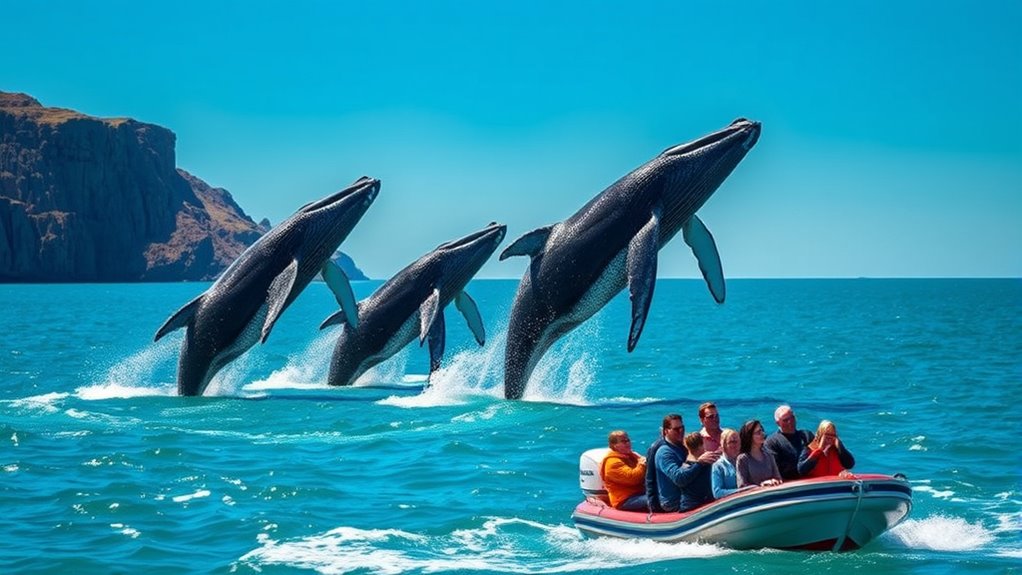
Is Whale Watching Dangerous and How Can You Stay Safe?
Whale watching is an exciting adventure, but it can be risky if you get too close or don’t follow safety rules. Sudden whale movements and rough seas can capsize boats, making it essential to understand the dangers involved and how to stay safe.
To protect yourself, keep at least 100 yards away from the whales. Approach them slowly and quietly, and never touch or chase these magnificent creatures.
Always pay attention to weather conditions and choose responsible tours that follow legal guidelines.
By respecting these practices, you protect both yourself and the whales—and discover how to enjoy this adventure safely and responsibly.
What Are the Main Dangers of Whale Watching?
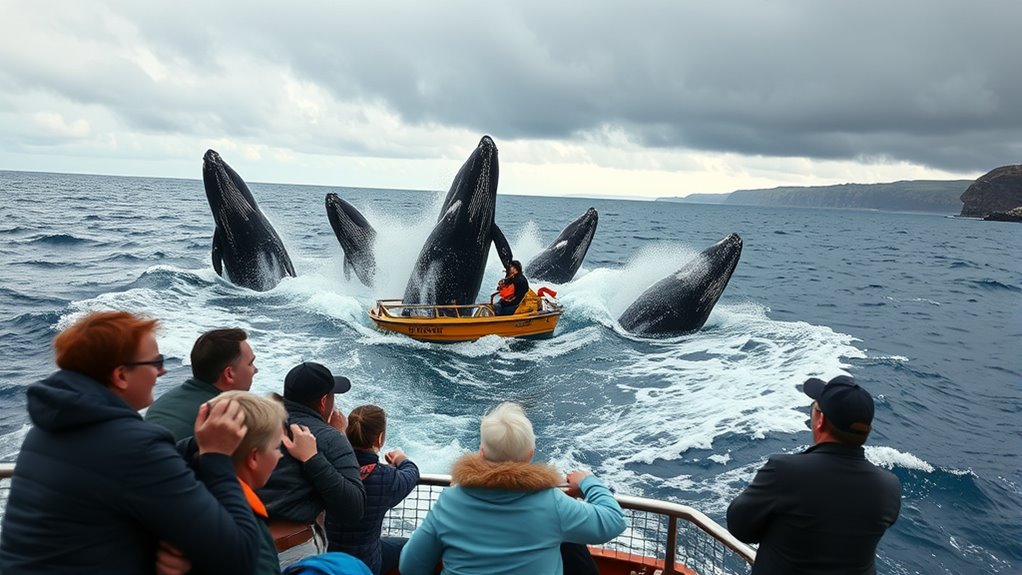
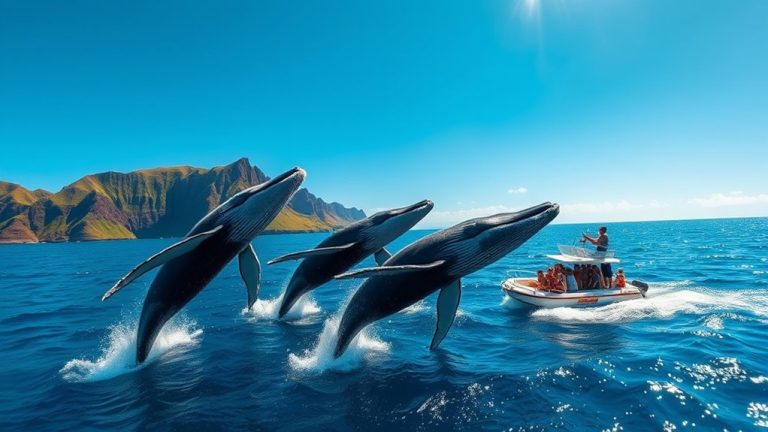
Although whale watching offers unforgettable experiences, it comes with significant dangers you need to be aware of. During a whale-watching excursion, sudden whale breaches can swamp or even capsize your boat, especially if you’re too close.
Vessel strikes pose a serious risk not only to you and your crew but also to the whales, causing injuries or fatalities. Rough seas and unpredictable weather conditions increase the chance of accidents and falling overboard.
Vessel strikes endanger both humans and whales, while rough seas raise risks of accidents and overboard incidents.
If you approach whales too closely or disturb their natural behaviors, they may react unpredictably, putting everyone at risk. Finally, ignoring safety regulations or lacking proper safety equipment heightens these dangers.
Staying informed and cautious helps ensure your whale-watching trip remains safe and enjoyable.
Key Laws That Keep You and Whales Safe
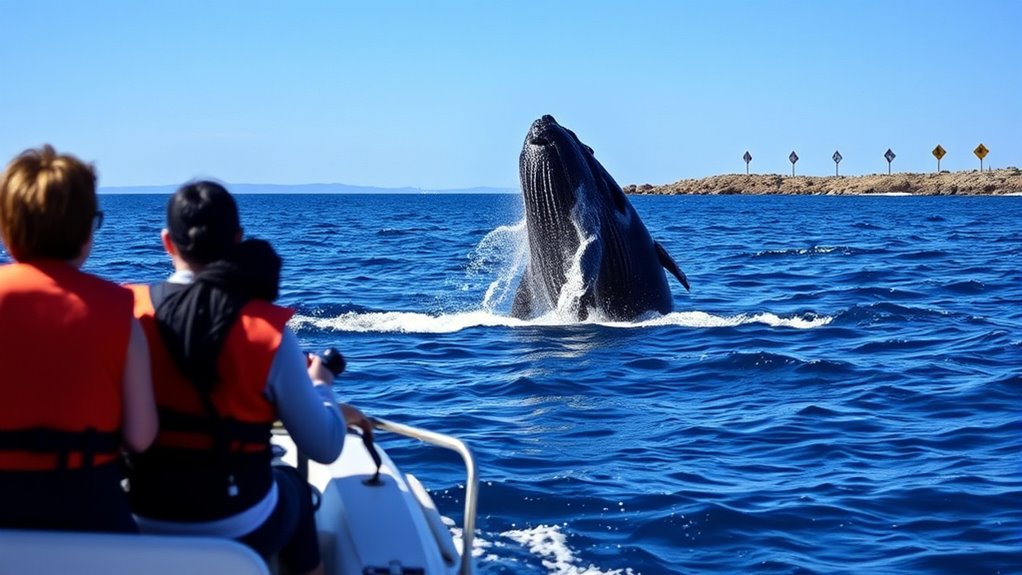
When you go whale watching, following key laws guarantees both your safety and the whales’ protection. The Marine Mammal Protection Act (MMPA) of 1972 strictly prohibits harassment, harm, or disturbance of marine life, setting legal boundaries you must respect. For example, vessels are required to keep a safe distance of at least 100 yards from whales, with even larger buffers for sensitive species like the North Atlantic right whale.
Harassment includes loud noises, close swimming, or chasing—actions that can lead to hefty fines and legal trouble. Additionally, commercial whale watching operators need permits to ensure they follow these rules. By complying with these laws, you help keep the marine environment safe and reduce the risk of collisions or disturbances during your whale watching adventure.
Why Keep a Safe Distance From Whales?
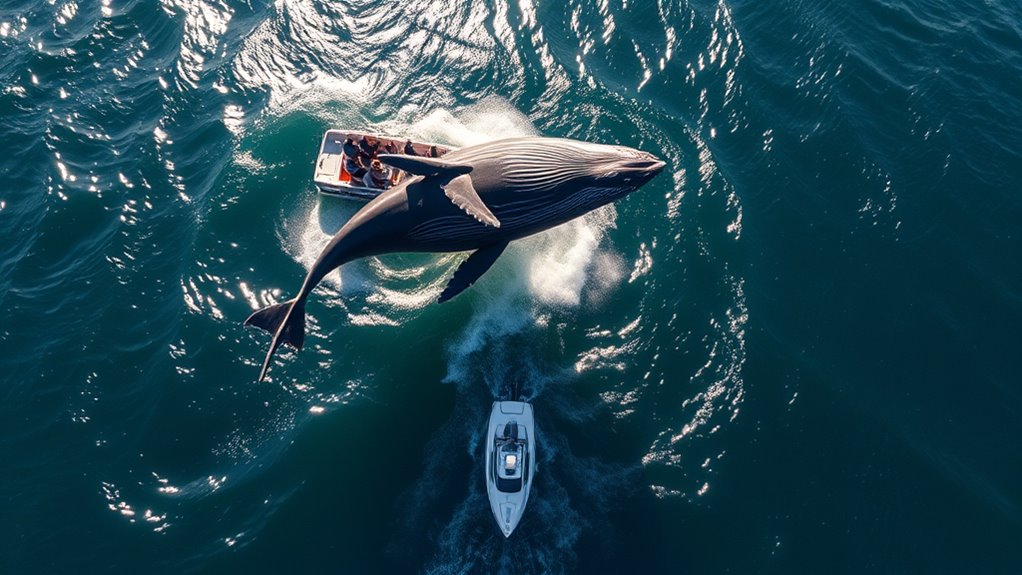
Because getting too close to whales can disrupt their natural behaviors and increase the risk of collisions, you should always keep a safe distance of at least 100 yards. This distance helps protect both you and the whales from accidental injury. When you maintain a safe distance, you reduce stress on the whales and avoid provoking any defensive reactions.
Approaching them too closely not only disturbs their environment but also violates laws like the Marine Mammal Protection Act, which prohibits harassment or contact. To enjoy whale watching safely, use binoculars or zoom cameras for a closer view without getting near. Keeping this safe distance ensures you respect the whales’ space and contribute to their conservation while enjoying a memorable experience.
Why You Should Never Touch Whales
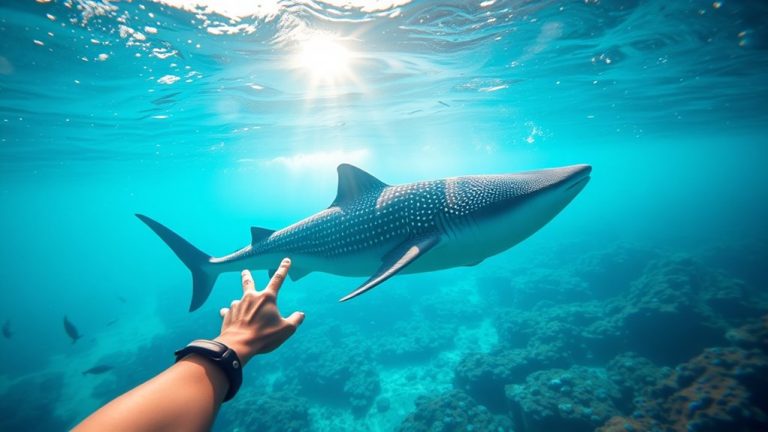
Keeping a safe distance from whales is just one way to protect them and yourself, but it’s equally important to never touch these majestic creatures. Touching whales can transmit harmful bacteria and disrupt their natural behaviors, like feeding and socializing. Physical contact may provoke defensive reactions, putting both you and the whale at risk.
Never touch whales—doing so can spread bacteria, disrupt their behavior, and provoke dangerous reactions for both you and them.
Plus, getting close enough to touch often breaks legal distance rules designed to keep everyone safe. Violating these laws can lead to serious legal penalties, including hefty fines.
Remember:
- Touching whales stresses them and interferes with their natural behaviors.
- Physical contact may cause whales to act defensively, risking injury.
- Legal penalties for touching whales are strict and enforced.
Respecting these boundaries keeps whale watching safe and enjoyable for all.
How Weather and Sea Conditions Affect Whale Watching Safety
Although whale watching offers incredible experiences, unpredictable weather and sea conditions can quickly turn a safe trip into a hazardous one. You need to monitor weather forecasts closely, especially in open waters where rapid changes can occur. Storms, high winds, and heavy rain not only reduce visibility but also affect vessel stability, putting everyone’s safety at risk.
Choosing trips in calm, protected waters—like those around Lahaina, Maui—helps reduce the chance of rough seas and enhances your safety. Reputable operators maintain vessels designed to handle sudden weather shifts, but planning your excursion during stable weather periods remains essential. By paying attention to weather and sea conditions, you can enjoy whale watching while minimizing risks and staying safe throughout your adventure.
What Safety Gear Should You Have Onboard?
You should always wear a properly fitted life jacket while on board, no matter your swimming skills. Make sure throwable flotation devices are within easy reach in case someone falls overboard.
Don’t forget essential emergency communication tools like whistles, radios, or flares to call for help quickly if needed.
Essential Lifejackets Usage
Since safety should always come first on any whale watching trip, wearing a properly fitted life jacket or personal flotation device (PFD) is essential for everyone onboard, no matter your swimming skills. Life jackets are a critical part of your safety gear and boost your emergency preparedness considerably.
Make sure there are enough Coast Guard-approved life jackets for all passengers, including children and non-swimmers. Before heading out, inspect all life jackets for damage and keep them within easy reach. Ensure everyone knows how to wear them correctly to maximize safety.
- Choose life jackets suitable for each person’s size and weight.
- Regularly check safety gear for wear or defects.
- Educate all passengers on proper life jacket use.
Throwable Flotation Devices
When venturing out on a whale-watching trip, having throwable flotation devices like rescue rings or cushions within easy reach is essential for your safety. In rough seas, these flotation devices can be lifesavers, quickly providing buoyancy to someone who falls overboard.
Make sure they’re clearly marked, in good condition, and accessible to everyone onboard. Regular drills help you respond efficiently during emergencies.
| Device Type | Purpose |
|---|---|
| Rescue Ring | Thrown to person overboard |
| Cushion | Provides immediate buoyancy |
| Condition Check | Ensures device reliability |
| Accessibility | Easy reach for quick use |
Keeping throwable flotation devices ready boosts your safety and survival chances until help arrives.
Emergency Communication Tools
How can you guarantee swift help arrives if an emergency occurs during your whale-watching trip? Carrying the right emergency communication tools is vital. Always have a VHF marine radio on board to contact the coast guard or nearby vessels immediately.
Confirm everyone wears properly fitted, Coast Guard-approved life jackets to stay safe until help arrives. Additionally, an emergency locator beacon or GPS device can pinpoint your location to rescue teams quickly.
Key safety gear includes:
- VHF marine radio for instant communication
- Coast Guard-approved life jackets for all passengers
- Waterproof emergency locator beacon or GPS device for fast location tracking
Picking a Safe, Responsible Whale-Watching Tour
Choosing a whale-watching tour requires careful consideration to guarantee your experience is both safe and respectful to the animals. To assure a responsible whale watch, pick licensed operators who follow federal and local regulations focused on safety and conservation. Look for tours maintaining legal minimum distances, typically at least 100 yards from marine mammals, avoiding any disturbances.
Prioritize companies with experienced guides and well-maintained vessels committed to eco-friendly practices, like using electric engines to minimize noise pollution. Avoid tours promising guaranteed sightings or allowing touching, feeding, or swimming with whales, as these activities compromise both your safety and the wellbeing of the animals.
Best Practices for Approaching and Observing Whales Safely
To observe whales safely, you need to approach them from the side while staying parallel to their swimming direction, maintaining at least 100 yards to avoid disturbance and comply with legal requirements.
Keeping a respectful distance helps ensure whale watching safe practices and protects these magnificent marine creatures.
Remember to:
- Limit your observation time to 15-30 minutes to minimize stress on whales and avoid disrupting their natural behaviors.
- Move slowly, reduce engine noise, and keep engines in neutral gear until whales pass to prevent startling or harming them.
- Use binoculars or zoom cameras instead of getting physically closer, respecting all local guidelines for safe encounters.
Following these best practices ensures you enjoy whale watching while preserving the well-being of whales and their marine environment.
What to Do If a Whale Shows Signs of Distress
When a whale shows signs of distress, such as rapid swimming or tail slapping, you should immediately leave the area to prevent adding stress or causing harm. It’s essential to maintain a safe distance of at least 100 yards (300 feet) from the whale to avoid disturbing or injuring it. Slow down and maneuver your vessel carefully away from the animal to minimize disturbance and prevent collisions.
Never attempt to touch, feed, or chase the whale, as these actions increase its signs of stress. If you observe any signs of stress or unusual behavior, promptly report any signs to local authorities or marine mammal response organizations. Your quick response helps protect whales and supports conservation efforts.
Frequently Asked Questions
What Are the Risks of Whale Watching?
You face risks like sudden whale breaches, collisions, rough seas, and falling overboard. Getting too close without caution can cause accidents or disturb whales.
Staying alert and following safety rules reduces these dangers considerably.
Are Whales Aggressive Towards Humans?
Whales aren’t usually aggressive, but they’ll act if annoyed or alarmed. You shouldn’t approach or provoke them.
Stay safe by respecting their space, following guidelines, and watching without disturbing these wonderful, wild water giants.
What to Do if a Killer Whale Approaches You?
If a killer whale approaches you, stay calm and avoid sudden movements. Slowly back away or steer your boat gently away.
Don’t try to touch or feed it, and report the encounter to local authorities.
Has a Whale Watching Boat Ever Sunk?
You might think whale-watching boats sink like stones, but they rarely do. Though a few have sunk due to rough seas or collisions, you’ll stay safe by choosing experienced operators who follow strict safety rules every trip.
Conclusion
Whale watching can be thrilling, but it’s important to stay as cautious as a sailor steering stormy seas. By keeping a safe distance, following laws, and choosing responsible tours, you protect both yourself and these magnificent creatures.
Always wear safety gear, respect the whales’ space, and be mindful of weather conditions. These precautions help minimize risks and enhance your overall experience.
Remember, your care ensures a safe, unforgettable experience while preserving the ocean’s gentle giants for generations to come. Staying safe during whale watching is essential for both your well-being and the protection of these majestic animals.