What Natural Predators Do Whale Sharks Have?
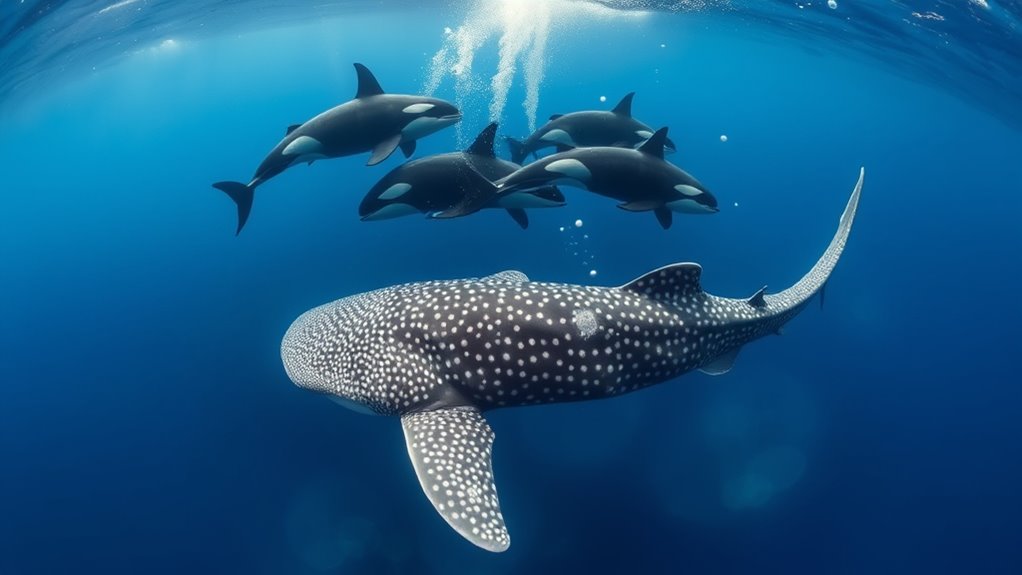
You don’t have many natural predators when you’re a whale shark. Juveniles can fall prey to large sharks like great whites, tiger sharks, and killer whales, which sometimes hunt them in groups.
Adult whale sharks are mostly safe due to their size and tough skin, though orcas may occasionally target them.
Other marine threats are minimal compared to these. If you want to explore how these giants defend themselves and why humans pose a greater risk, keep going.
Which Natural Predators Target Juvenile and Adult Whale Sharks?
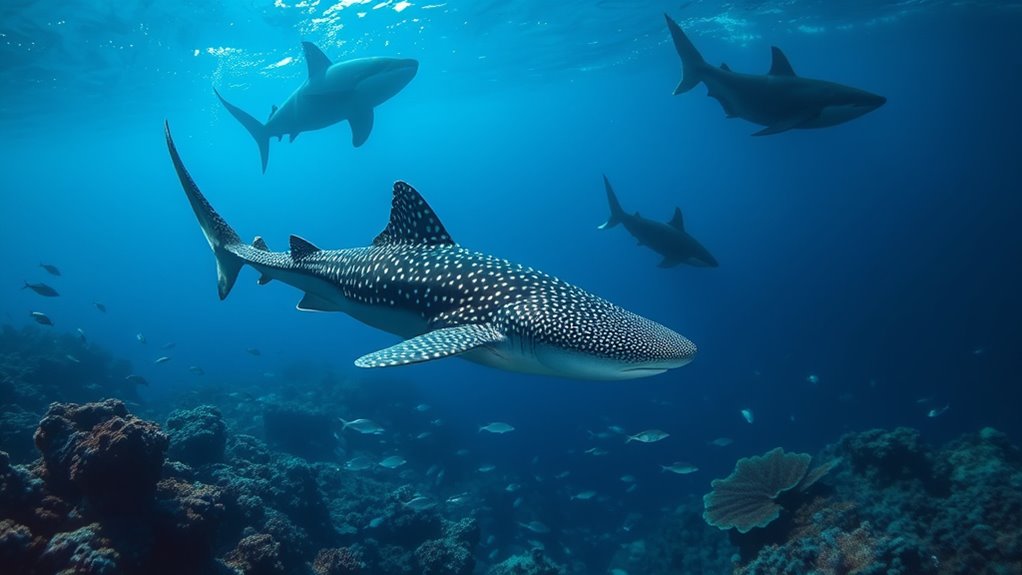
Although adult whale sharks face few natural threats due to their size and thick skin, juvenile whale sharks are more vulnerable and often targeted by larger predators like great white and tiger sharks. When you think about natural predators, large sharks pose the biggest threat to these younger sharks, preying on them when they’re small and defenseless.
Killer whales also hunt both juvenile and adult whale sharks, especially where their habitats overlap, making them one of the few predators capable of taking on mature sharks. You should know that adult whale sharks usually avoid predation thanks to their enormous size and tough skin, but large sharks like blue sharks and black marlins may opportunistically attack weakened individuals.
Which Shark Species Are Predators of Whale Sharks?
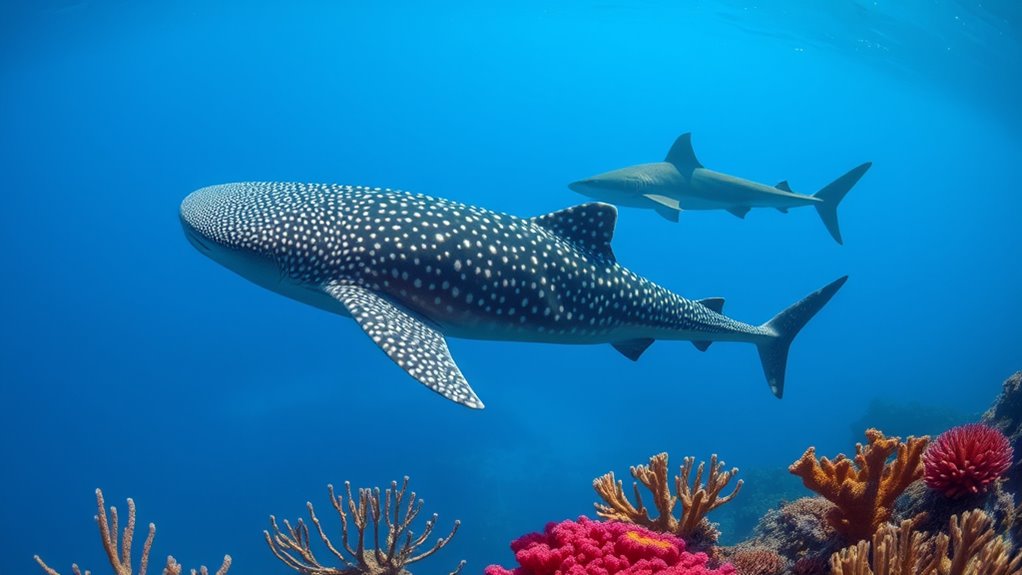
When considering which shark species prey on whale sharks, you’ll find that great white sharks and tiger sharks top the list as opportunistic hunters, mostly targeting juveniles or weakened individuals. These apex predators seize chances to attack juvenile whale sharks, as adult whale sharks’ sheer size and thick skin make predation rare.
Besides great white and tiger sharks, black marlins and other large pelagic species occasionally threaten younger whale sharks, adding to the predation pressure during their vulnerable stages. While blue sharks scavenge carcasses, they don’t actively hunt whale sharks.
Understanding which shark species pose threats helps you appreciate the challenges juvenile whale sharks face before reaching adulthood, when they become nearly invincible to most marine predators.
How Do Orcas Hunt Whale Sharks?
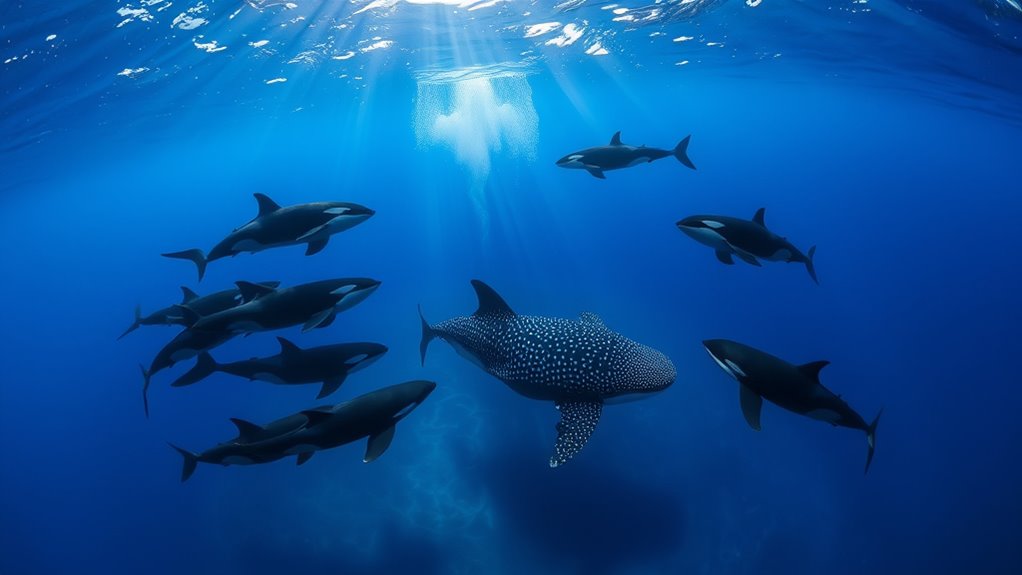
How do orcas manage to hunt such massive creatures as whale sharks? As a top predator, the orca uses strategic behavior and teamwork to hunt these giant prey. Orcas coordinate in herds, using their speed—up to 34.5 mph—to attack slower, often juvenile whale sharks.
Their attacks leave bite marks and scars, clear evidence of their predator-prey interactions.
| Orca Hunting Behavior | Effect on Whale Sharks |
|---|---|
| Herd Coordination | Overwhelms the whale shark |
| High Speed | Catches slow-moving prey |
| Target Juveniles | Exploits vulnerability |
| Coordinated Attacks | Increases attack success |
| Bite Marks Evidence | Confirms predator status |
You’ll see orcas rely on these tactics to successfully hunt whale sharks despite their size.
What Other Marine Animals Threaten Whale Sharks?
While adult whale sharks rarely face threats due to their size and tough skin, juvenile whale sharks aren’t so fortunate. Large sharks such as great whites and tiger sharks can opportunistically target these younger, more vulnerable individuals. Killer whales, known marine predators, also prey on juvenile whale sharks, focusing on smaller or weaker ones.
Although blue sharks and other pelagic sharks might scavenge from dead whale sharks, they seldom attack healthy adults. Predation on fully grown whale sharks is extremely rare because their massive size and protective skin act as strong defenses.
How Do Whale Sharks Defend Themselves Against Predators?
You’ll notice whale sharks rely on their massive size as their first line of defense, discouraging most attackers. Their skin, which can be up to four inches thick, adds a tough barrier against bites.
Plus, their unique spotted pattern helps them blend in while quick movements make escaping predators easier.
Size As Primary Defense
Because of their massive size, adult whale sharks rarely face threats from predators. Their large size serves as the primary defense, making them intimidating and difficult targets. Here’s how size provides protection for whale sharks:
- Adult whale sharks can reach up to 40 feet and weigh around 15 tons, deterring most predators.
- Their sheer bulk limits the number of animals capable of attacking or overpowering them.
- The large size reduces vulnerability, allowing whale sharks to swim confidently in open waters.
- Predators usually seek easier prey, so the size of whale sharks acts as a natural barrier.
You can see that when it comes to protection, size is the whale sharks’ first and most effective line of defense against predators.
Thick Protective Skin
Although their massive size deters many predators, whale sharks also rely on thick, protective skin to defend themselves. This thick skin, which can be up to 4 inches thick, acts as a formidable physical barrier that resists bites and abrasions from large predators like orcas and big sharks.
Composed of multiple layers of collagen and tough tissues, their shark skin serves as an effective defense mechanism, making it difficult for attackers to inflict injury. Alongside their size, this robust skin helps minimize vulnerability, enhancing their survival odds.
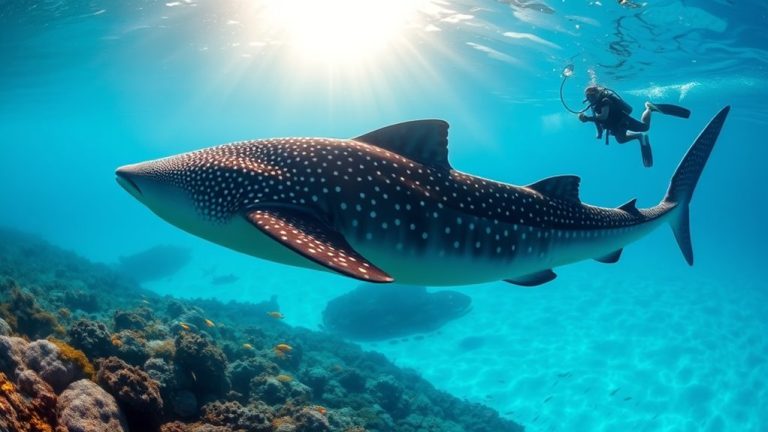
Additionally, the skin’s unique pattern provides a subtle camouflage that blends with sunlight-dappled water, further reducing visibility to predators. Together, these features make whale sharks well-protected from most natural threats.
Camouflage And Evasion
When you spot a whale shark gliding through the ocean, its distinctive spotted pattern helps it blend seamlessly with the sunlight filtering down through the water. This clever camouflage allows it to evade predators effectively.
You should also know that:
- Their large size and thick skin provide strong physical protection.
- Whale sharks perform rapid profound descents to escape threats quickly.
- Their broad, flat bodies make crucial areas hard to target.
- Swift, sudden movements confuse predators and create escape opportunities.
Why Are Human Threats More Dangerous Than Natural Predators?
You might not realize just how much human activities overshadow natural threats for whale sharks. Unlike occasional attacks from predators, humans impact these gentle giants on a massive scale through fishing, pollution, and habitat destruction.
Understanding this difference is key to protecting their future.
Human Impact Versus Nature
Because humans intentionally hunt whale sharks for their fins, meat, and oil, their impact far exceeds that of natural predators. You should know that while natural predators rarely attack healthy adults, human impact is constant and widespread.
Here’s why human threats are more dangerous:
- Targeted Hunting: Unlike natural predators, humans deliberately catch whale sharks for valuable products.
- Bycatch: Whale sharks often get caught accidentally in fishing gear, leading to injury or death.
- Vessel Strikes: Collisions with boats cause severe harm, something natural predators rarely inflict.
- Habitat Destruction: Pollution and habitat loss caused by humans degrade the environments whale sharks rely on.
These factors combine to threaten whale shark populations far beyond the scope of natural predators, making human activities their greatest danger.
Scale Of Human Threats
Although natural predators rarely threaten healthy adult whale sharks, human activities relentlessly endanger their survival on a massive scale. Unlike natural predators such as sharks and killer whales, which seldom attack adult whale sharks, human threats are intentional and widespread. Fishing targets whale sharks for their flesh, cartilage, and oils, driving populations toward endangered status.
Over 73 million sharks, including whale sharks, are finned annually, causing drastic declines. Habitat destruction and pollution further disrupt their migratory routes and breeding grounds, compounding these dangers. Vessel strikes and climate change add to the relentless pressure.
Unlike rare shark attacks, human threats eliminate entire populations indiscriminately, making human impact far more dangerous than natural predators. You can see why protecting whale sharks from human threats is critical for their survival.
Frequently Asked Questions
What Is a Whale Shark’s Biggest Predator?
The biggest predator you’ll face as a whale shark is the orca, or killer whale. These powerful hunters work in groups and can take down even large individuals, though attacks are still pretty rare overall.
What Is the #1 Apex Predator in the Ocean?
You might say the orca rules the ocean like a king on its throne.
As the #1 apex predator, it hunts with clever teamwork, taking down everything from seals to great white sharks without fear or rivals.
Why Are Whale Sharks Not Aggressive?
You won’t see whale sharks acting aggressive because their huge size and thick skin protect them well. Since they feed by filtering water calmly, they don’t need to fight or hunt, so they stay peaceful and gentle.
What Animal Eats a Whale Shark?
You might be surprised to learn orcas occasionally prey on smaller whale sharks. While attacks are rare due to their size, if you spot a juvenile whale shark, keep an eye out—predators might see it as easy prey.
Conclusion
While you might think whale sharks have armies of predators, their natural threats are surprisingly few, mostly limited to orcas and large sharks. You’ll be relieved to know these gentle giants have clever defenses to stay safe.
But don’t be fooled—human threats are a thousand times more dangerous, putting whale sharks at far greater risk than any ocean predator ever could.
So, protecting whale sharks is something you truly can’t ignore! Understanding what natural predators do whale sharks have helps highlight why conservation efforts are essential for their survival.