What Are Whale Eyes in Dogs?
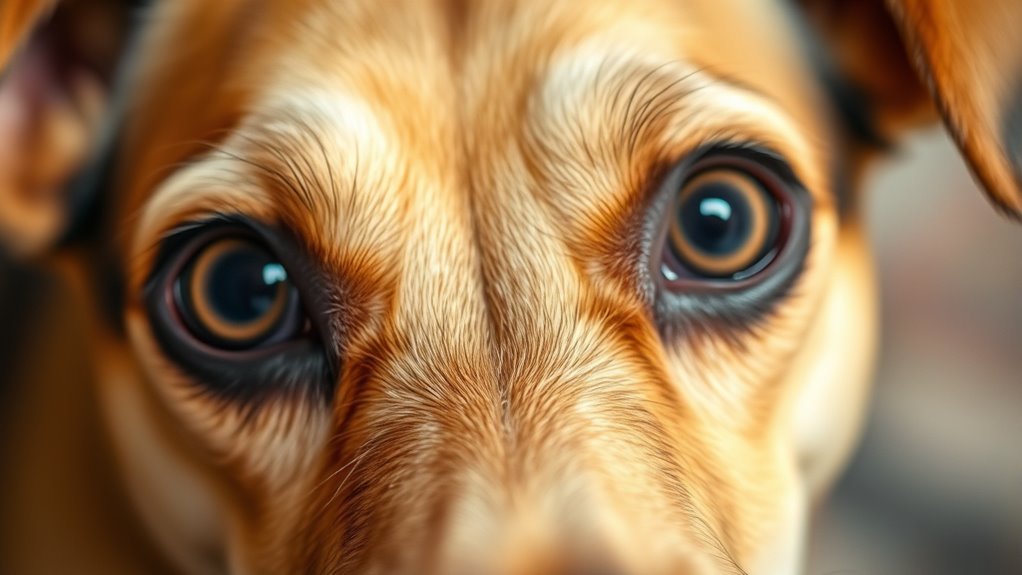
When you notice the white part of your dog’s eyes showing in a half-moon shape as they turn their head slightly but keep looking at you, that’s called whale eye. This behavior is a common sign of stress, anxiety, or discomfort in dogs.
Recognizing whale eyes in dogs can help you understand their emotional state better.
Whale eye often indicates that your dog may want some space or is feeling uneasy. This subtle signal usually comes with other body language cues, such as tense posture or lip licking.
Understanding why your dog shows whale eye and what it means can help you respond calmly and keep your dog comfortable.
What Does Whale Eye Look Like?
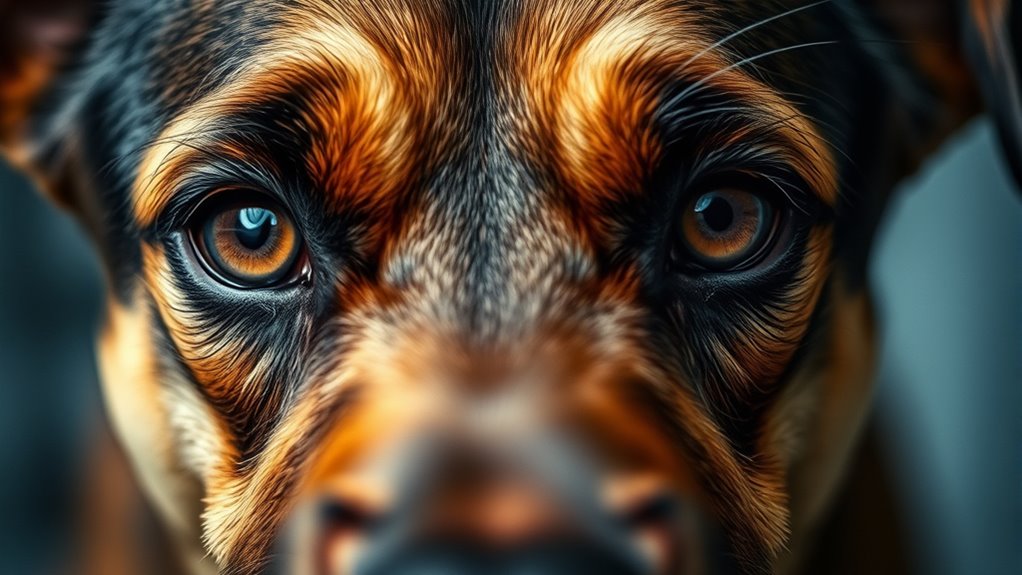
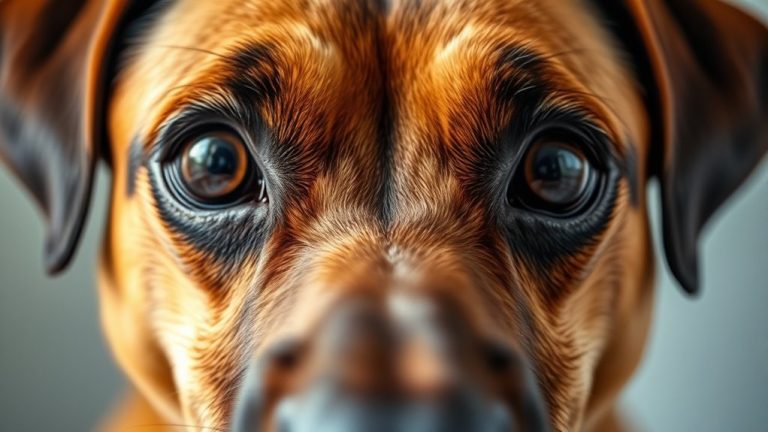
When you notice a dog turning its head slightly while still making eye contact, you might see the white part of its eye showing in a half-moon shape—this is called whale eye. This subtle shift reveals the eye whites, which aren’t usually visible when a dog looks straight at you. You’ll often catch this when the dog’s head tilts just enough to expose those whites without breaking eye contact.
The size and prominence of the eye whites can vary based on the dog’s breed, eye shape, and individual differences. Keep in mind, whale eye isn’t exclusive to moments of fear or aggression; it can appear in different contexts. Along with whale eye, you might notice other signals like tense muscles or pinned-back ears, giving you clues about the dog’s emotional state.
How to Spot Whale Eye and Other Stress Signs
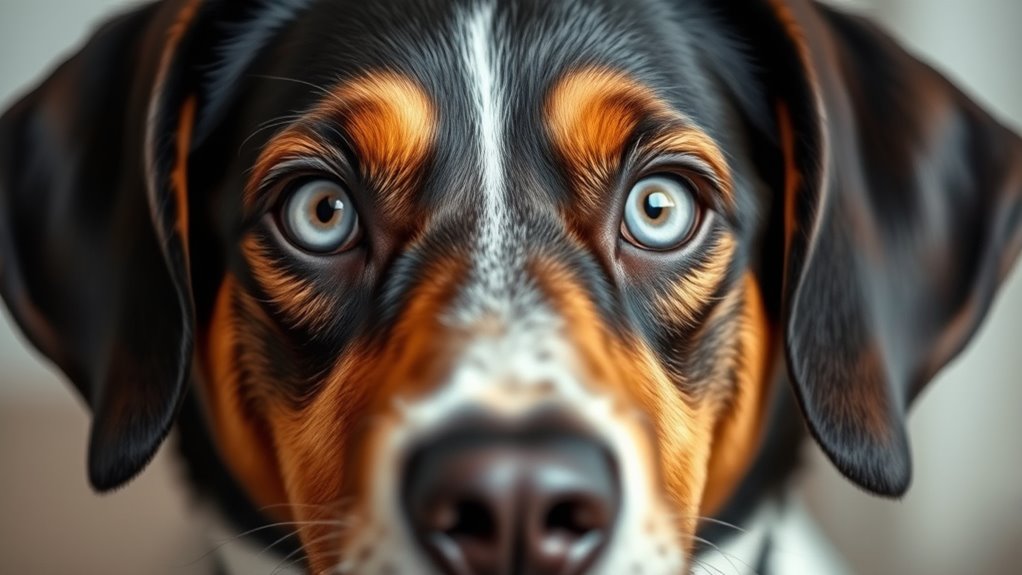
Although whale eye can be subtle, you can spot it by looking for the visible white of the dog’s eye, especially when their head turns slightly but their gaze stays fixed on you. This half-moon shape of the sclera signals discomfort or stress.
To better understand your dog’s feelings, pay attention to other dog body language cues like lip-licking, pinned-back ears, or tense posture. Avoiding eye contact or giving side glances may also accompany whale eye, showing anxiety rather than aggression.
Recognizing these signs together helps you respond appropriately and prevent situations from escalating. By tuning into your dog’s whale eye and related stress signals, you’ll strengthen your bond and keep interactions calm and safe.
Why Do Dogs Show Whale Eye?
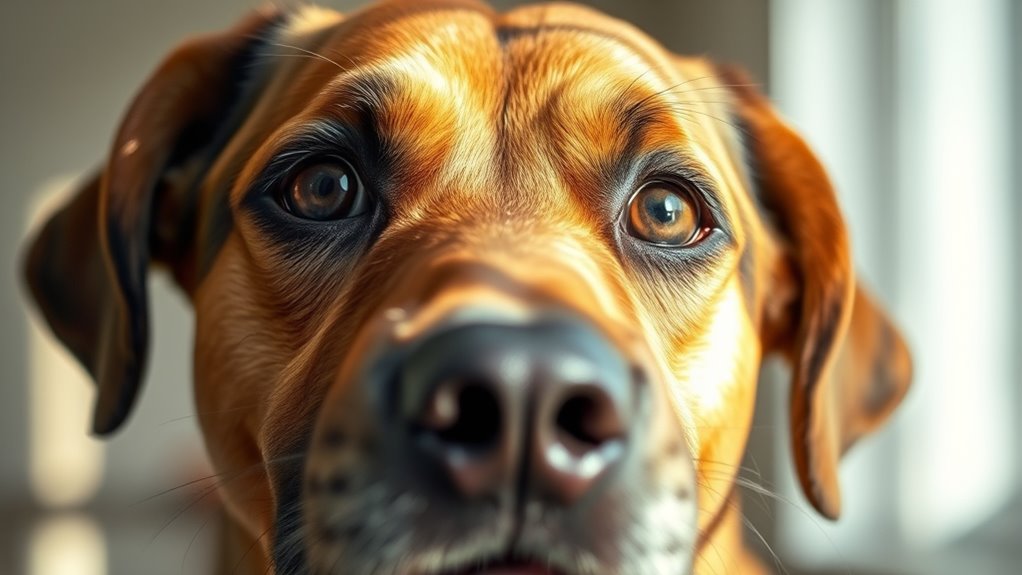
When you see a dog showing whale eye, it’s usually because they’re feeling stressed, anxious, or threatened. This behavior is their way of signaling discomfort and a need for space.
Understanding these emotional signals helps you respond appropriately and keep interactions calm.
Causes Of Whale Eye
Why does your dog sometimes show the whites of their eyes, known as whale eye? Dogs display whale eye when they feel threatened, anxious, or uncomfortable. It’s their way of signaling stress or unease in certain situations.
External stressors like new environments, unfamiliar people, or other animals often trigger this response. Physical discomfort during grooming or vet visits can also cause it. Additionally, dogs may show whale eye when guarding resources or feeling trapped.
| Cause | Trigger Example | Dog’s Response |
|---|---|---|
| Anxiety | New people or places | Whale eye, tense body |
| Physical Discomfort | Grooming, vet exams | Whale eye, pulling away |
| Resource Guarding | Protecting food or toys | Whale eye, growling |
| Feeling Trapped | Cornered or restrained | Whale eye, warning |
Emotional Signals Displayed
If your dog shows the whites of their eyes, they’re trying to tell you they’re stressed, anxious, or uncomfortable. This behavior, known as whale eye, is a clear emotional signal that your dog feels threatened or uneasy. When you notice whale eye, it often means your dog is on edge and might become defensive if the stress continues.
Alongside whale eye, your dog might also lick their lips, yawn, or hold a tense posture—additional emotional signals of distress. Recognizing these signs helps you understand your dog’s feelings and respond appropriately, whether by giving them space or calming reassurance.
What Is Your Dog Trying to Tell You With Whale Eye?
Although you might not always notice it right away, your dog’s whale eye signals that they’re feeling anxious, stressed, or uncomfortable. When you see the white of their eye showing, especially in that half-moon shape, your dog is closely monitoring something that’s making them uneasy. This subtle sign often comes with other cues like avoiding eye contact, lip licking, or a tense body posture.
Your dog isn’t just being difficult—they’re trying to tell you they feel threatened or overwhelmed. Recognizing whale eye helps you understand that your dog needs space or a change in environment to feel safe. By paying attention to these signals, you can better support your dog’s emotional well-being and prevent their discomfort from escalating.
When Does Whale Eye Mean Your Dog Might Get Aggressive?
When your dog shows whale eye alongside other signs like growling or a stiff posture, it signals that they feel threatened and might become aggressive. Whale eye itself is a warning sign that your dog is uncomfortable or stressed.
When combined with behaviors like resource guarding or tense body language, it raises the risk of an aggressive reaction. You should recognize whale eye as an early warning sign that your dog could escalate if pushed further.
Persistent whale eye, especially in stressful situations, means your dog is on edge and may act defensively. Paying close attention to these signals helps you avoid triggering aggression and keeps both you and your dog safe.
What to Do When Your Dog Shows Whale Eye
Because whale eye signals your dog’s stress or discomfort, you should immediately pause any activity that might be causing it. When you see the whites of your dog’s eyes—known as whale eye in dogs—it’s a clear sign they’re uneasy. Stop what you’re doing and give your dog some space by backing away slowly.
Avoid scolding or punishing, as this only increases their anxiety. Instead, focus on calming your dog with gentle petting or offering treats to help them relax. Paying close attention to these signals helps you respond appropriately and strengthens your bond.
What Are Common Misunderstandings About Whale Eye?
Many dog owners misunderstand whale eye, often mistaking it for aggression when it actually signals fear or discomfort. When you see the whites of the eyes in your dog showing, it’s easy to assume they’re angry or about to bite. However, whale eye can simply indicate stress, anxiety, or caution rather than imminent aggression.
You might also think whale eye only appears during confrontations, but it can show up during subtle moments of unease. Sometimes, people confuse whale eye with a relaxed or curious look, missing an important stress signal.
Understanding these common misconceptions helps you better read your dog’s feelings and respond appropriately, ensuring you don’t misinterpret whale eye as just anger or threat.
Frequently Asked Questions
What Does It Mean When a Dog Has Whale Eyes?
When your dog shows whale eyes, it means they’re feeling stressed or uneasy.
You should recognize this as a sign they need space or reassurance to feel safe and comfortable in the current situation.
What Breeds Are Prone to Whale Eye?
You’ll find Boston Terriers, Chihuahuas, and herding breeds like Collies often showing whale eyes. Bulldogs and Pugs might hide it better, but when stress hits, even Huskies and Pomeranians can’t keep it under wraps.
What Is the Difference Between Whale Eye and Side Eye in Dogs?
You’ll notice whale eye shows a wide, stressed look with lots of white, while side eye is a quick, relaxed glance with minimal white.
Pay attention to body language to understand if your dog’s anxious or just curious.
How to Tell if a Dog Has Imprinted on You?
You can tell a dog’s imprinted on you when it seeks your attention, follows you everywhere, relaxes near you, and shows excitement or comfort in your presence.
These behaviors prove your bond’s strong and special.
Conclusion
Next time you catch your dog’s eyes darting to the side, don’t just brush it off. That “whale eye” could be their silent warning, a glimpse into their stress or discomfort. Ignoring it might lead to unexpected tension or even aggression.
Stay alert, read the signs carefully, and respond with care. Your dog’s eyes are trying to tell you something important—are you ready to truly listen before it’s too late? Understanding what whale eyes in dogs mean can help you keep your furry friend safe and happy.