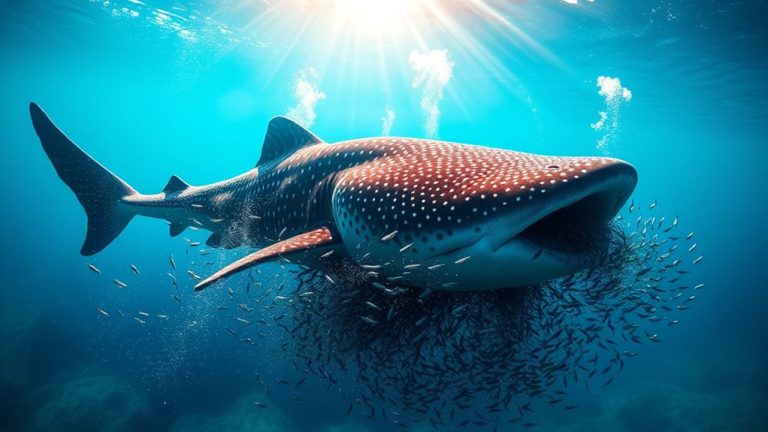
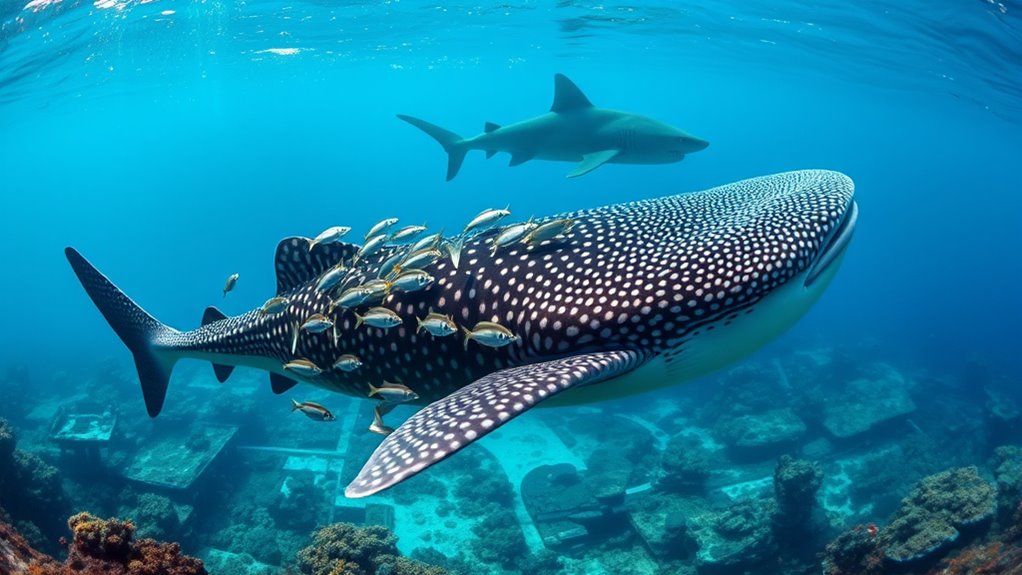
What Are the Natural Predators of Whale Sharks?
You’ll find that adult whale sharks have few natural predators because their massive size and thick skin protect them well. When discussing the natural predators of whale sharks, it’s important to note that adults are largely safe from attacks due to these defenses.
However, juvenile whale sharks aren’t as lucky—they can fall prey to orcas, great white sharks, and tiger sharks. These predators focus on smaller, vulnerable individuals, leaving adults mostly safe.
Whale sharks also rely on camouflage and speed to avoid danger. If you want to understand how these gentle giants defend themselves and encounter threats, keep exploring.
Natural Predators of Whale Sharks
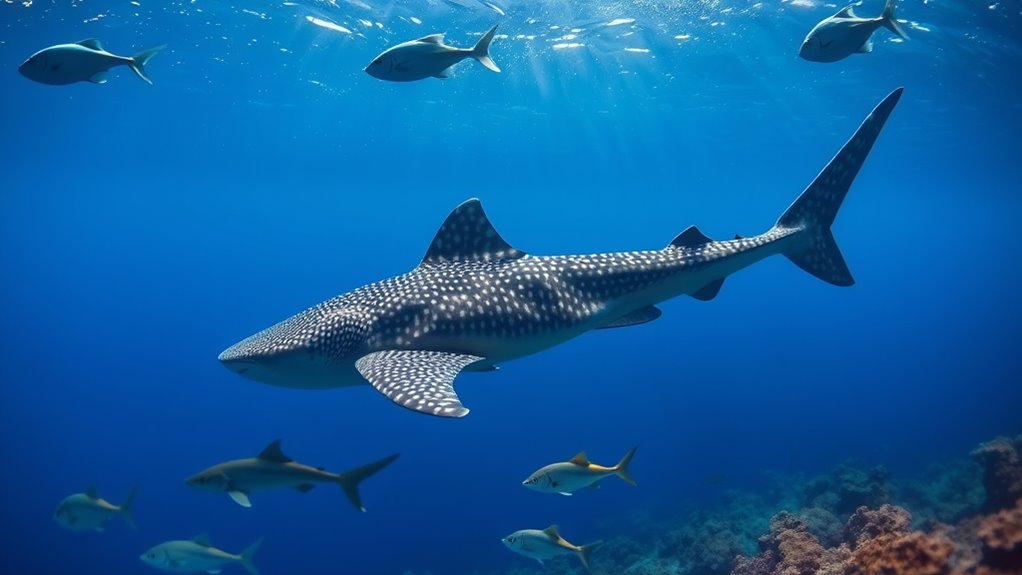
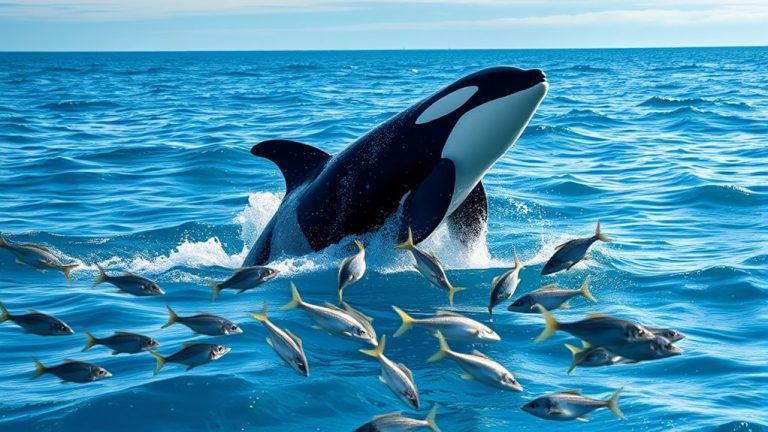
Who preys on the massive whale shark? While adult whale sharks face few threats thanks to their enormous size and thick skin, juvenile whale sharks aren’t as lucky. Killer whales, or orcas, are among the most formidable predators, using strategic hunting techniques and powerful jaws to take down smaller or vulnerable whale sharks.
Large sharks, such as great whites and tiger sharks, also target juvenile or weakened whale sharks, although such attacks are relatively rare. Other potential predators, like blue sharks and certain large marine mammals, occasionally pose a threat but don’t frequently attack whale sharks.
How Predators Target Juvenile and Adult Whale Sharks
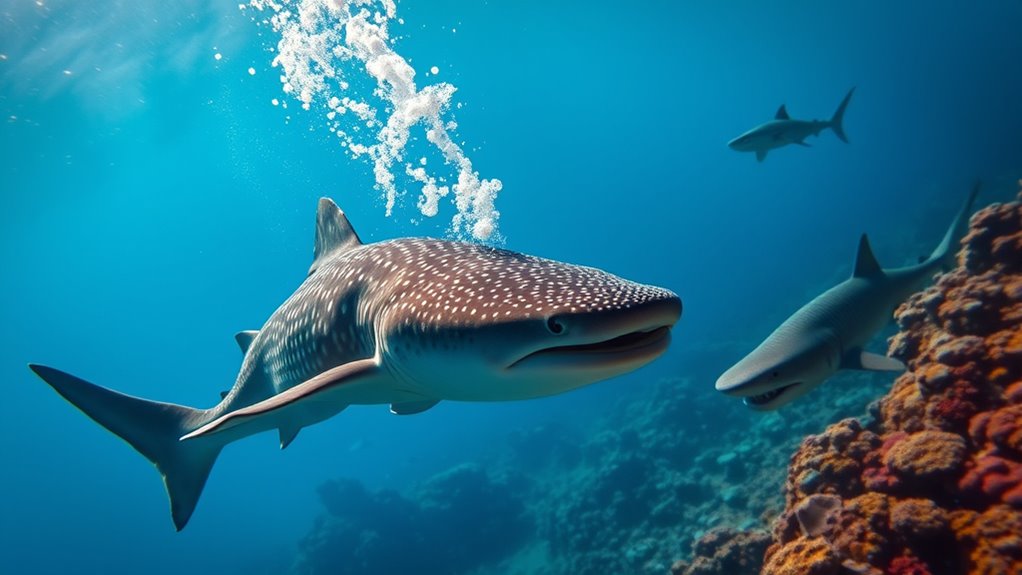
While adult whale sharks enjoy relative safety from predators, younger sharks face more frequent threats due to their smaller size and vulnerability. Predators like great white sharks, tiger sharks, and killer whales often target juvenile whale sharks, exploiting their defenselessness.
You can identify predator attacks by the distinctive bite marks left on these younger sharks, a clear sign of attempted predation. However, adult whale sharks rarely face such threats thanks to their massive size.
| Predator | Targeted Whale Shark Stage | Evidence |
|---|---|---|
| Great White Sharks | Juvenile | Bite marks on juveniles |
| Tiger Sharks | Juvenile | Bite marks on juveniles |
| Killer Whales (Orcas) | Juvenile and Injured Adults | Observed attacks |
Understanding these patterns helps you appreciate how predators focus mainly on vulnerable juvenile whale sharks.
Whale Shark Defense Mechanisms
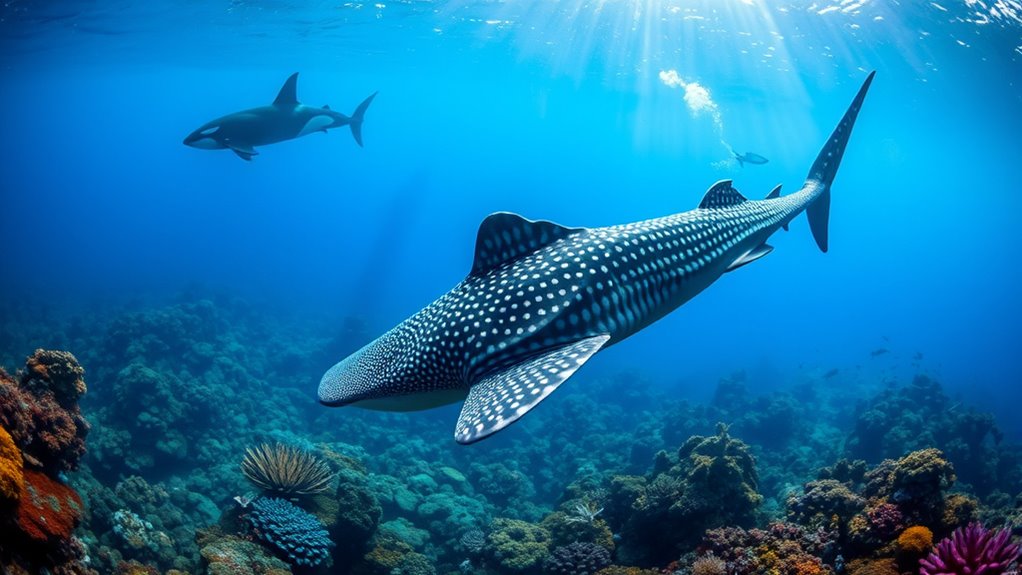
Although whale sharks face threats during their juvenile stages, their impressive defense mechanisms substantially reduce risks as they mature. You’ll notice their enormous size and thick skin, which can be up to 4 inches thick, act as strong physical barriers against natural predators.
When danger looms, whale sharks perform rapid submarine explorations, quickly escaping predator-prone surface waters. Their distinctive spotted pattern isn’t just for show—it provides effective camouflage by blending with sunlight filtering through the water, making them harder to detect.
As gentle filter feeders, whale sharks don’t provoke aggression, further lowering predation risk. Overall, these defense mechanisms work together to protect adult whale sharks, making predation events rare and reinforcing their status as giants with few natural predators.
Frequency of Whale Shark Predation Events
How often do whale sharks face threats from predators? Predation events are surprisingly rare due to their massive size and tough skin. However, juvenile whale sharks have a higher risk since they’re smaller and less protected.
Great white sharks and orcas occasionally target these younger sharks, though such attacks are infrequent. Here’s what you should know:
- Most predation events happen to juvenile whale sharks before they grow large enough to deter predators.
- Reports of great white sharks biting whale sharks are uncommon but show potential danger.
- Mature whale sharks face almost no natural predation, as their size and strength make them nearly invulnerable.
Human Threats to Whale Sharks Surpass Natural Predators
Because whale sharks face few natural predators, human activities have become their greatest threat. When you think about it, fishing puts these gentle giants at risk, especially when they get caught unintentionally as bycatch. This accidental capture can seriously harm or even kill whale sharks.
You should also be aware that vessel strikes are a significant danger, as boats often collide with these slow-moving creatures in busy waters. Unlike natural predators, human threats come from multiple sources and affect whale sharks of all ages. While adult whale sharks are mostly safe from predators like great white sharks or orcas, they can’t avoid the increasing dangers caused by humans.
To protect these magnificent animals, it’s vital you support conservation efforts addressing fishing practices and maritime traffic.
Frequently Asked Questions
What Is a Whale Shark’s Biggest Predator?
You’d find that great white sharks and tiger sharks are the biggest predators of juvenile whale sharks, while orcas might target smaller or weaker ones.
Adult whale sharks usually face no serious threats due to their size.
What Animal Eats a Whale Shark?
You’ll find that orcas sometimes eat whale sharks, especially adults, while great whites and tiger sharks might target juveniles.
But attacks are rare since whale sharks are huge, tough, and usually not easy prey for most animals.
What Is the Biggest Threat to Whale Sharks?
You face the biggest threat to whale sharks from human activities like fishing, finning, and boat strikes. These actions injure or kill them and degrade their habitats, putting their survival at serious risk worldwide.
Has a Whale Shark Ever Attacked a Human?
No, whale sharks haven’t attacked humans. They’re gentle giants, filter feeding without aggression. If you encounter one, you’ll see they’re curious, not threatening, making any attack extremely rare and usually accidental.
Conclusion
You might think a giant like the whale shark has no natural enemies, but even these gentle giants face threats from a few predators, especially when they’re young. Luckily, they’ve got some clever defense mechanisms to stay safe.
Still, you’ll find that human activities pose a far bigger risk than any prehistoric sea monster lurking in the depths. So, while nature’s been their challenge for centuries, it’s us who now hold the greatest power over their survival.
In conclusion, the natural predators of whale sharks are limited, but human impact remains the most significant threat to these magnificent creatures. Protecting whale sharks requires addressing the dangers posed by human actions to ensure their continued existence.