Which Bones Are Located in a Whale Flipper?
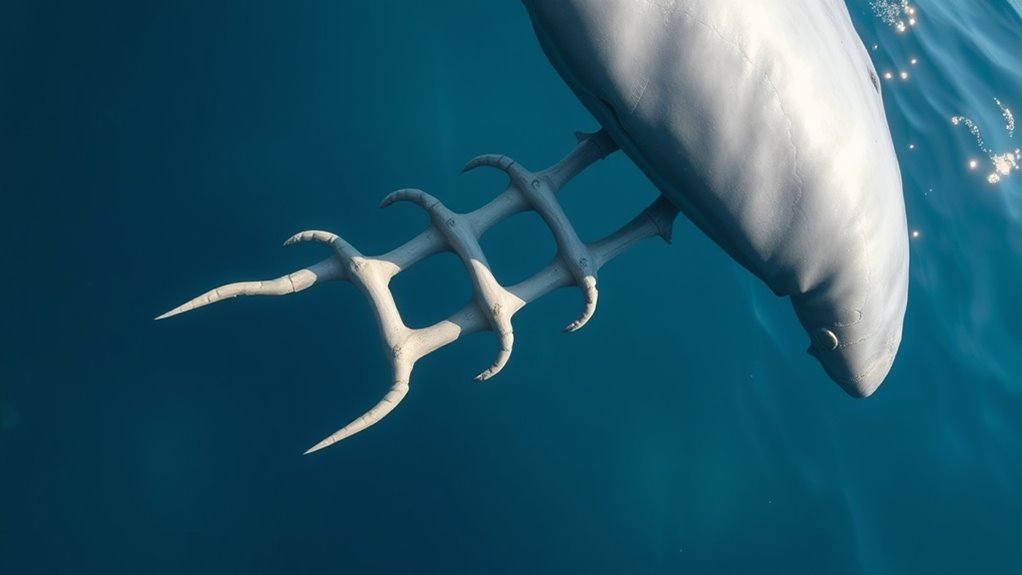
You’ll find that a whale flipper contains many bones similar to your arm, including the humerus, radius, ulna, carpals, metacarpals, and phalanges. These bones are crucial for understanding which bones are located in a whale flipper and how they function.
These bones are adapted for aquatic life, making the flipper strong and flexible for steering and stability in water.
While the overall structure mirrors your own arm’s layout, the shapes and sizes suit swimming rather than complex movement.
Keep exploring to discover how these bones shape whale motion and evolution.
The Main Bones That Form a Whale Flipper
Although whale flippers look quite different from human arms, they share many of the same bones. When you examine a sperm whale’s flipper, you’ll notice it includes a humerus, radius, and ulna, just like your own arm. The humerus connects the flipper to the whale’s shoulder blade, forming the upper part.
Below it, the radius and ulna provide support and flexibility, allowing the flipper to move efficiently through water. Beyond these bones, the carpals act as wrist bones, linking the forearm to the long finger-like bones—the metacarpals and phalanges.
These elongated bones shape the edges of the flipper, helping the sperm whale steer and stabilize itself while swimming. Understanding these bones reveals how evolution adapted a familiar structure for life in the ocean.
How Whale Flipper Bones Compare to Human Arm Anatomy?
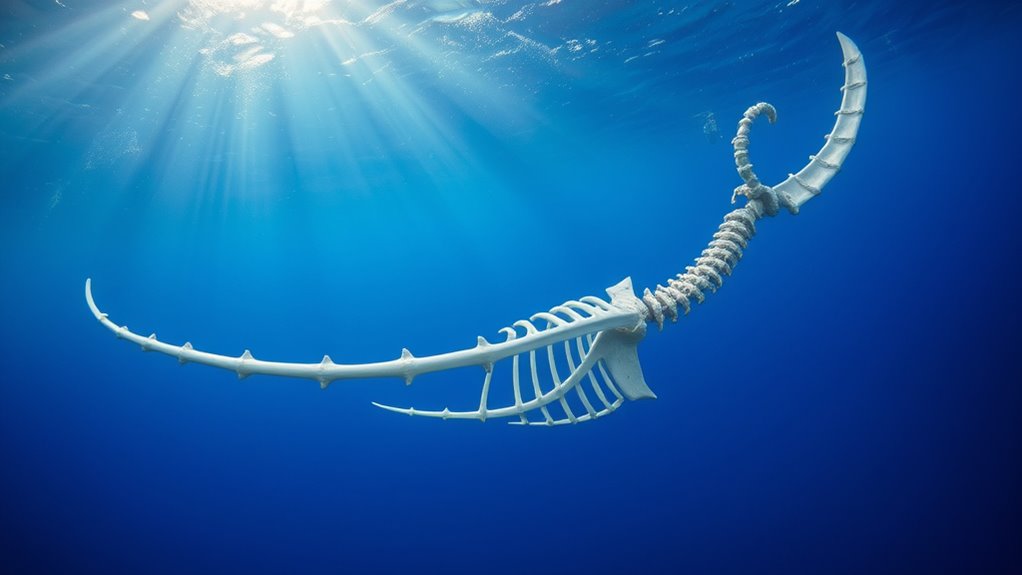
When you compare whale flipper bones to your own arm, you’ll see they share many structural similarities, like the humerus, radius, ulna, carpals, metacarpals, and phalanges. The whale’s humerus acts like your upper arm bone but is thicker and built for swimming. Below it, the radius and ulna form the forearm, though their shape suits aquatic movement rather than supporting weight.
The flipper’s fingers consist of elongated phalanges, similar to your finger bones but adapted for flexibility and hydrodynamics. Unlike your arm, whale flippers don’t have complex joints for precise movements. Instead, they’re designed mainly for steering and maintaining stability in water.
What Makes the Bowhead Whale’s Flipper Bones Unique
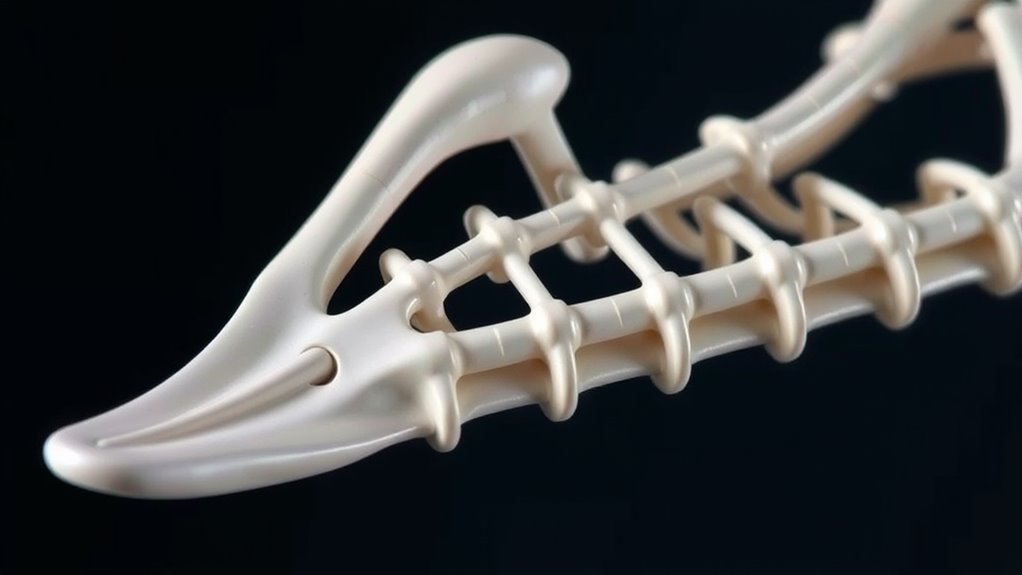
What sets the bowhead whale’s flipper bones apart from others? While it has the same basic bones—humerus, radius, ulna, carpals, metacarpals, and phalanges—as other whales, its humerus is especially robust. This bone is adapted more for steering and stability than for propulsion, highlighting the bowhead’s slow, precise movements in Arctic waters.
You’ll notice its flipper bones are more compact, with distinct size proportions that suit its environment. Although structurally similar to other Mysticeti whales, these subtle variations help the bowhead navigate icy habitats effectively.
How Whale Flipper Bones Help Whales Move
Because whale flippers contain bones similar to your arm and hand, they allow these giants to move with surprising agility. The humerus connects to the scapula, providing the main support for flipper movement. Bones like the radius, ulna, carpals, metacarpals, and phalanges work together, letting whales steer, stabilize, and stop while swimming.
This bone arrangement gives them precise control over their movements, which is essential for navigating through water, interacting socially, and responding to their environment. Different species have variations in these bones that reflect their unique swimming styles and maneuvering abilities.
What Whale Flipper Bones Tell Us About Evolution and Species
Although whale flippers look very different from your arms, their bones reveal a clear evolutionary connection to land mammals. When you examine the humerus, radius, ulna, and finger bones inside a whale’s flipper, you see the same basic layout found in terrestrial mammals. This similarity shows whales evolved from land-dwelling ancestors.
You can also spot differences in flipper bones among whale species—like variations in the size of the humerus or the number of phalanges—that help scientists trace evolutionary paths within cetaceans. These homologous bones tell you how whales adapted over time for aquatic life, shifting from walking on land to swimming efficiently.
Frequently Asked Questions
What Bones Are Found in the Flipper of a Whale?
You’ll find the humerus, radius, and ulna in a whale’s flipper, along with wrist bones called carpals, plus metacarpals and phalanges that form finger-like structures.
These bones help the whale steer and maintain stability underwater.
What Is Located in the Whale Flipper?
You’ll find a surprising structure inside the whale flipper—bones like your humerus, radius, and ulna, plus tiny carpals and finger-like phalanges.
These bones let the whale steer smoothly through ocean currents with precision and grace.
What Are the Bones in a Whale Fin?
You’ll find the humerus, radius, ulna, carpals, metacarpals, and phalanges in a whale fin. These bones work together to help steer and stabilize the whale while it swims through the ocean.
Why Do Whale Flippers Have Finger Bones?
You might think whales carry finger bones to text underwater, but no—they’ve kept them from land-living ancestors for structural support and swimming finesse.
Evolution didn’t toss useful bits; it just remodeled the flipper’s design.
Conclusion
When you look at a whale’s flipper bones, you’re holding a map of evolution in your hands. Those sturdy bones, echoing the human arm, tell a story of adaptation and survival beneath the waves. Like nature’s own blueprint, they guide whales through ocean currents with grace and power.
So next time you imagine a whale, remember: its flipper is more than a limb—it’s a bridge connecting past and present, land and sea. The bones located in a whale flipper reveal this incredible evolutionary journey, showcasing the link between marine mammals and their terrestrial ancestors.