What Is the Rarest Whale Today?
You might not have heard of the spade-toothed whale, but it’s considered the rarest whale today, with only a few specimens ever found. This elusive creature lives deep in remote South Pacific waters, making sightings nearly impossible.
Its unique large spade-shaped teeth set it apart from other whales.
Despite its distinctive features, much about its behavior and survival remains a mystery. The spade-toothed whale is rarely studied due to its inaccessible habitat and scarcity.
If you want to uncover what makes this elusive whale so mysterious and why it’s so hard to study, keep exploring.
Why Is the Spade-Toothed Whale So Rare?
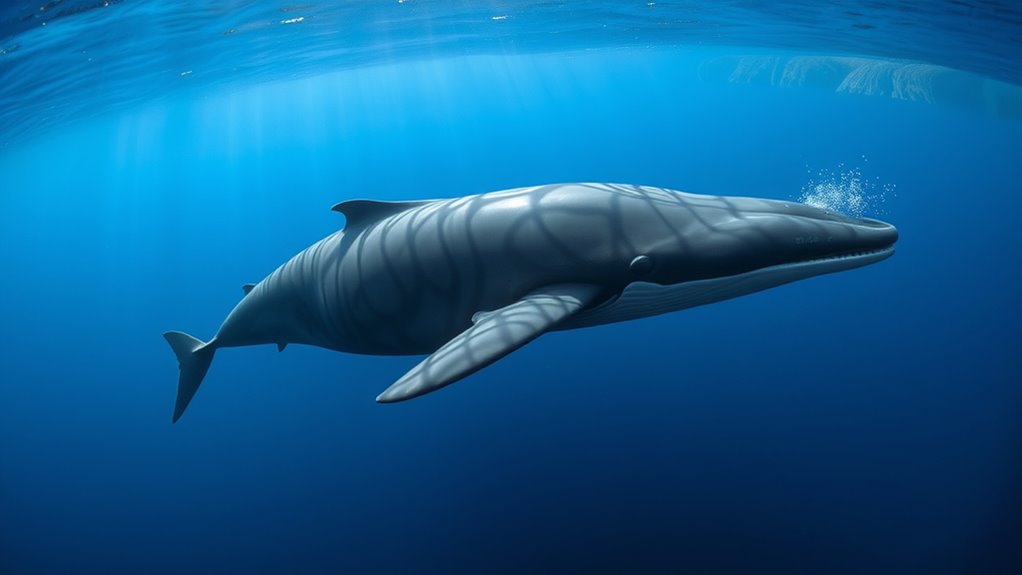
Although the spade-toothed whale was first discovered in the 19th century, you’re unlikely to ever spot one alive because they live in remote, deep-sea waters. This whale is incredibly rare, with only a few fossil and stranded specimens ever found. Its deep-sea habitat keeps it far from human eyes, making sightings nearly impossible.
Since it spends most of its life deep underwater and rarely approaches the surface or shore, direct encounters are exceedingly scarce. The spade-toothed whale’s elusive nature and rarity mean scientists have limited opportunities to study it or understand its population.
How Did Scientists Discover the Spade-Toothed Whale?
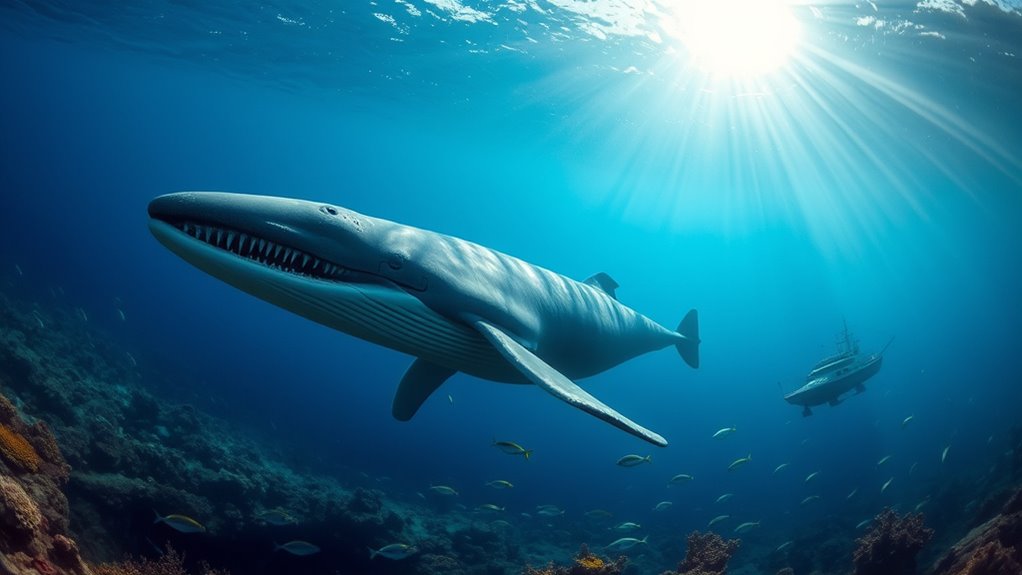
| Year | Researcher | Classification |
|---|---|---|
| 1872 | Henry Travers | Specimen discovered |
| 1873 | James Hector | *Dolichodon layardii* |
| 1874 | John Edward Gray | *Dolichodon traversii* |
| 2002 | DNA Analysis Team | *Mesoplodon traversii* (confirmed) |
Physical Traits of the Spade-Toothed Whale
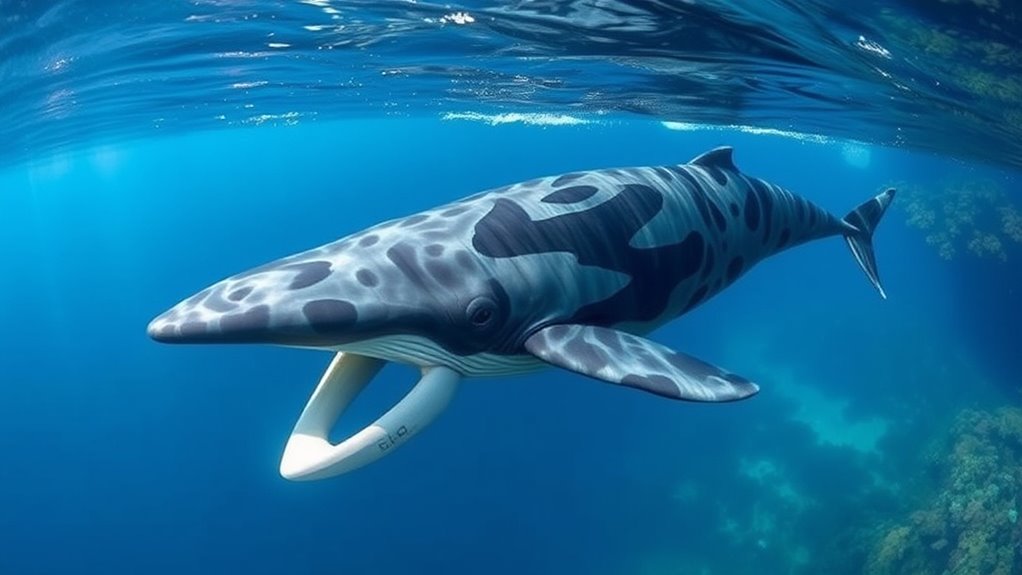
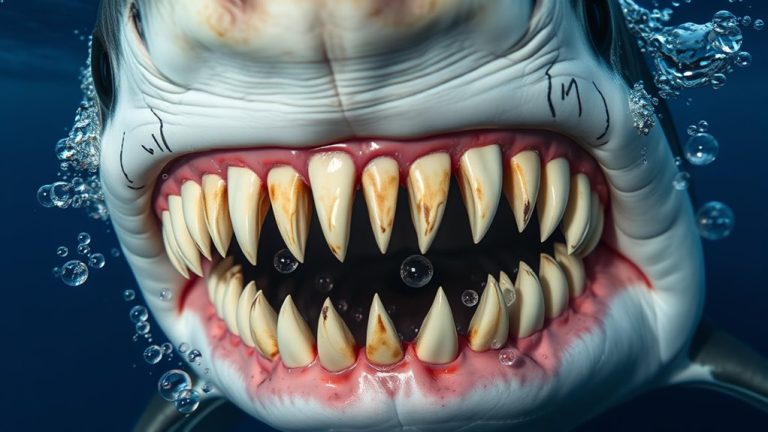
You’ll notice the spade-toothed whale’s most striking feature is its large, spade-shaped teeth, each about 23 centimeters long with a unique denticle on the tip.
Its dark gray to black back contrasts sharply with a white belly and a light band across the chest.
Plus, the triangular dorsal fin sits two-thirds down its body, helping it move smoothly through the water.
Distinctive Tooth Structure
The spade-toothed whale stands out with its large, broad teeth measuring about 23 centimeters long, shaped much like a spade. These distinctive teeth set this rare whale apart from other beaked whales, making identification easier. When you look closely, adult males show a small crest or denticle on the tooth tip, which fades as they grow older.
Compared to strap-toothed whales, the spade-toothed whale’s teeth are wider and built tough, perfect for hunting deep-sea prey. Here’s what you should know about its teeth:
- Large, spade-shaped teeth about 23 cm long
- Pronounced denticle on adult male teeth, smoothing with age
- Wider and more robust than strap-toothed whale teeth
- Smooth tooth surface unique to this rare whale species
These traits highlight the spade-toothed whale’s unique place among beaked whales.
Size And Appearance
How big is the spade-toothed whale, and what makes its appearance stand out? This rare whale measures about 5.0 to 5.5 meters (16.4 to 18 feet) long, making it a medium-sized cetacean.
What really catches your eye are the large, spade-shaped teeth of adult males, which can reach 23 centimeters (9 inches) and are wider than those of related species. These teeth give the spade-toothed whale a distinctive look you won’t find elsewhere.
Its body shape resembles an enlarged ginkgo-toothed whale, but its unique denticles on the tooth tips set it apart. The triangular dorsal fin, located mid-back, helps it glide smoothly through water.
When you spot this whale, its rare combination of size and striking teeth make its appearance unforgettable.
Coloration And Markings
While exploring the spade-toothed whale’s physical traits, you’ll notice its striking coloration plays a key role in its deep-sea camouflage. Unlike the gray’s beaked whale, spade-toothed whales showcase distinct markings that help them blend into dark ocean depths. Key coloration and markings include:
- Dark gray or black dorsal side with a sharp white ventral surface
- A light thoracic band crossing the chest, creating a unique pattern
- Triangular dorsal fin, lighter in color, blending with the dark body
- Large teeth with denticles showing slight coloration differences in mature males
These features not only differentiate spade-toothed whales from other species but also aid their stealth in deep waters. This highlights how coloration and markings are crucial for survival.
What We Know About the Spade-Toothed Whale’s Behavior and Habitat
Because no one has ever seen a spade-toothed whale alive in its natural setting, researchers rely on strandings and related species to understand its behavior and habitat. You can infer that the spade-toothed whale lives in deep ocean waters, likely in remote parts of the South Pacific, far from human presence. Its behavior probably includes deep diving—up to 1,899 meters—and long periods underwater.
While no one has directly observed its feeding habits, it likely preys on squid and cephalopods, similar to other beaked whales. Since observations come mostly from stranded or deceased individuals, the spade-toothed whale’s social structure and movement patterns remain a mystery. Still, by studying related species, you get a glimpse into how this elusive whale might live beneath the waves.
Why It’s So Hard to Study and Protect the Spade-Toothed Whale
Studying and protecting the spade-toothed whale challenges researchers due to its elusive nature and deep-sea habitat. Since no one has ever seen this rare whale alive in the wild, you rely mainly on a few stranded specimens to understand it. This limits your ability to study its behavior or diet directly.
The spade-toothed whale’s rarity and remote oceanic range make locating and monitoring populations extremely difficult. You also lack acoustic or visual data, so evaluating threats and planning effective conservation is nearly impossible.
Key challenges include:
- No live observations in natural habitat
- Limited data from stranded individuals
- Deep, remote ocean environment
- Absence of acoustic/visual monitoring
These factors combine to make studying and protecting the spade-toothed whale a uniquely tough task.
How the Spade-Toothed Whale Compares to Other Rare Whales
Though many rare whales have documented populations and occasional sightings, the spade-toothed whale remains almost entirely unknown to science. Unlike other rare whale species seen, such as the North Atlantic Right Whale or Vaquita, the spade-toothed whale is known only from a few stranded specimens and DNA analysis.
While beaked whales like the Gervais beaked whale are occasionally spotted at sea, the spade-toothed whale has never been observed alive in its natural habitat. This extreme scarcity makes it arguably the rarest whale today.
Compared to species with tens of thousands of individuals, the spade-toothed whale’s population is entirely unknown and possibly critically endangered, setting it apart from other rare whales you might have heard about.
Why Protecting the Spade-Toothed Whale Matters
The spade-toothed whale’s rarity and mysterious nature make protecting it a priority. As one of the rarest marine mammals, this critically endangered species depends on a fragile deep-sea habitat.
You can help support conservation efforts that safeguard not only the spade-toothed whale but also the larger ocean ecosystem. Here’s why your involvement matters:
- Protecting its habitat prevents the species from slipping into extinction.
- Conservation preserves unknown aspects of its biology and behavior.
- Safeguarding this whale supports overall deep ocean health.
- Continued research enabled by conservation may reveal new insights.
Frequently Asked Questions
What Is the Most Rare Whale?
The spade-toothed whale is the rarest whale. You won’t easily spot it since it’s only known from a few stranded specimens and has never been observed alive in the wild,
making it truly elusive and mysterious.
Is the 52 Blue Whale Still Alive?
You might think the “52 blue whale” is a mysterious giant still swimming, but it’s actually just a tag number from research.
What Whale Lives for 300 Years?
The Bowhead whale lives for about 300 years. You’ll find them in Arctic waters, and their slow metabolism and genetics help them age slowly, making them one of the longest-living mammals on Earth.
What Rare Whale Has Never Been Seen Alive?
Imagine finding a mysterious treasure chest unopened—that’s the spade-toothed whale, never seen alive. You can’t study its behavior firsthand; all you have are stranded specimens and fragments revealing its elusive deep-sea life.
Conclusion
Now that you know why the spade-toothed whale is so rare, it’s clear this mysterious giant warrants more attention. Studying it feels like trying to catch a unicorn in the wild—nearly impossible but incredibly important.
Protecting this elusive creature isn’t just about saving one species; it’s about preserving the delicate balance of our oceans. So, don’t just scroll past—be part of the effort to ensure this rare whale doesn’t vanish like a forgotten legend.
By raising awareness and supporting conservation, we can help protect the spade-toothed whale and contribute to the health of marine ecosystems. Remember, the rarest whale today depends on our actions to survive.