7 Essential Tips on What to Wear for Whale Watching
For whale watching, it’s important to dress in moisture-wicking layers to stay dry and comfortable throughout your adventure. Start with a base layer that pulls moisture away from your skin, then add fleece or sweaters for warmth as needed.
Wear waterproof, windproof jackets to protect against ocean spray and chilly breezes that are common on the water.
Choosing comfortable, non-slip shoes with good grip is essential to stay safe on wet decks and uneven surfaces.
Don’t forget a hat and UV-protected sunglasses to shield your eyes and face from the sun’s rays. Bringing sunscreen and gloves offers extra protection against the elements.
Stay ready for changing weather conditions, and you’ll be set to enjoy your whale watching trip comfortably and safely. There’s more advice available to help you prepare perfectly for this exciting experience.
Dress in Layers for Whale Watching Comfort
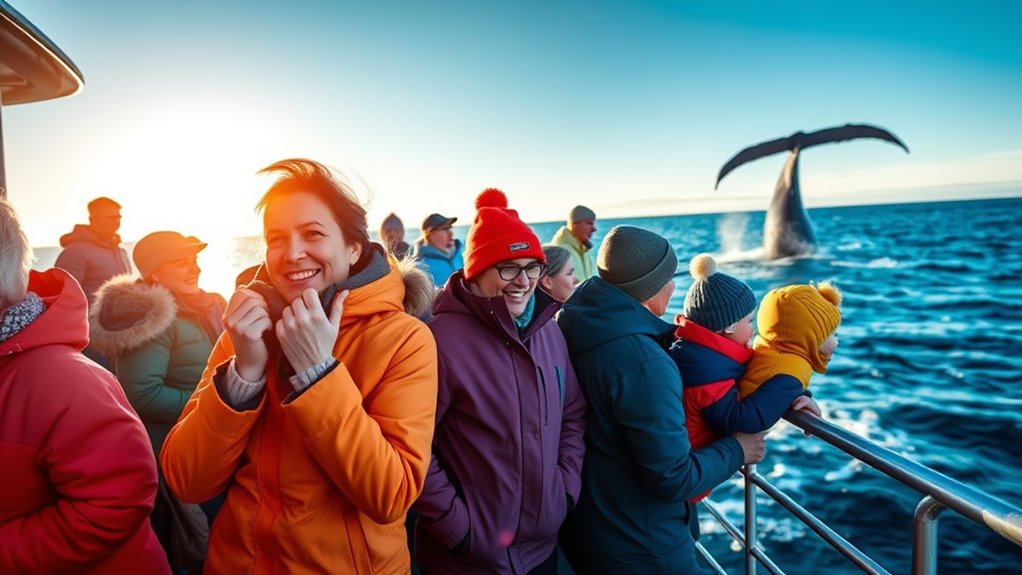
Since temperatures can shift quickly on the water, dressing in layers helps you stay comfortable throughout your whale watching trip. Start with a moisture-wicking base layer that pulls sweat away from your skin, keeping you dry and comfortable. Next, add an insulating layer like a fleece or sweater to trap warmth when the air turns chilly.
Wearing multiple lightweight layers gives you the flexibility to adjust as conditions change, which is much better than relying on one bulky piece. While a waterproof outer will protect you from ocean spray and wind, focusing on your layers underneath is key for staying comfortable.
Choose Waterproof and Windproof Outerwear
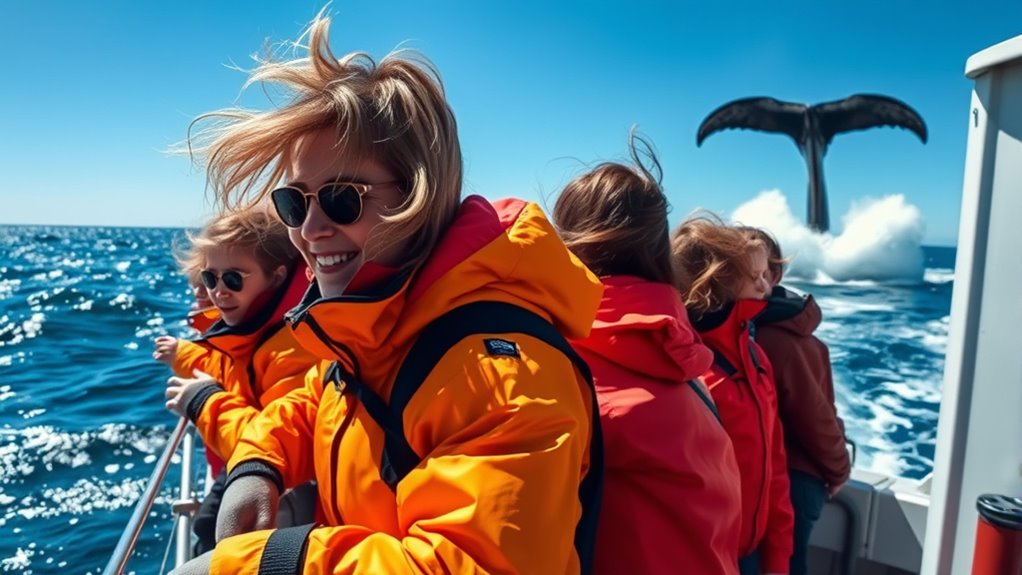
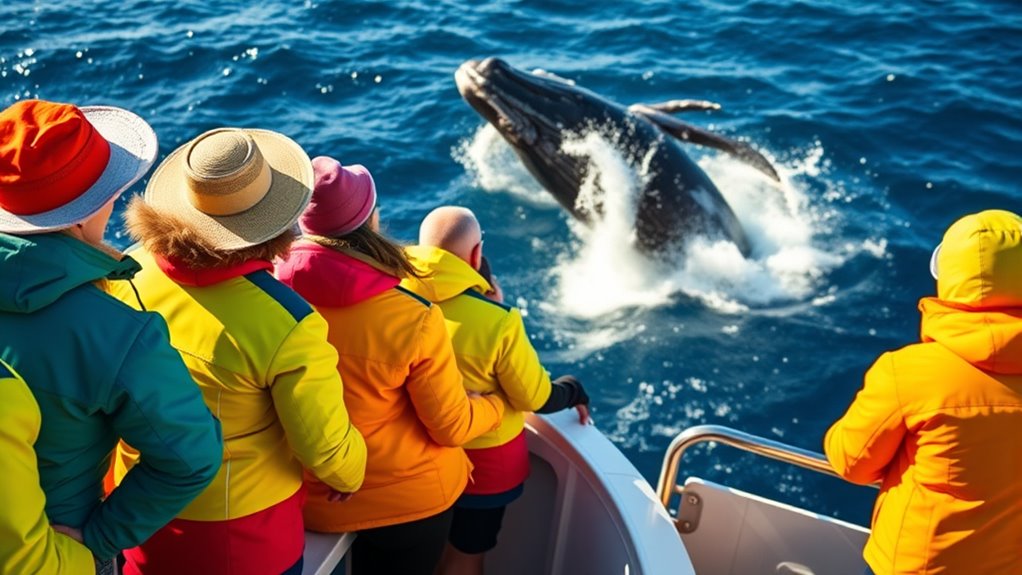
When you head out on a whale watching trip, choosing waterproof and windproof outerwear keeps you dry and comfortable against ocean spray and chilly winds. Waterproof jackets and pants shield you from rain and moisture, while windproof layers block gusts that can quickly drop your body temperature.
Opt for breathable waterproof outerwear so you stay warm without overheating, and layer it over insulating clothes for easy adjustments. High-quality materials like Gore-Tex ensure durability and protection in unpredictable coastal weather.
| Feature | Benefit |
|---|---|
| Waterproof | Keeps you dry from rain & spray |
| Windproof | Shields skin from chilly winds |
| Breathable | Prevents overheating |
Pick Comfortable, Non-Slip Shoes for Safety
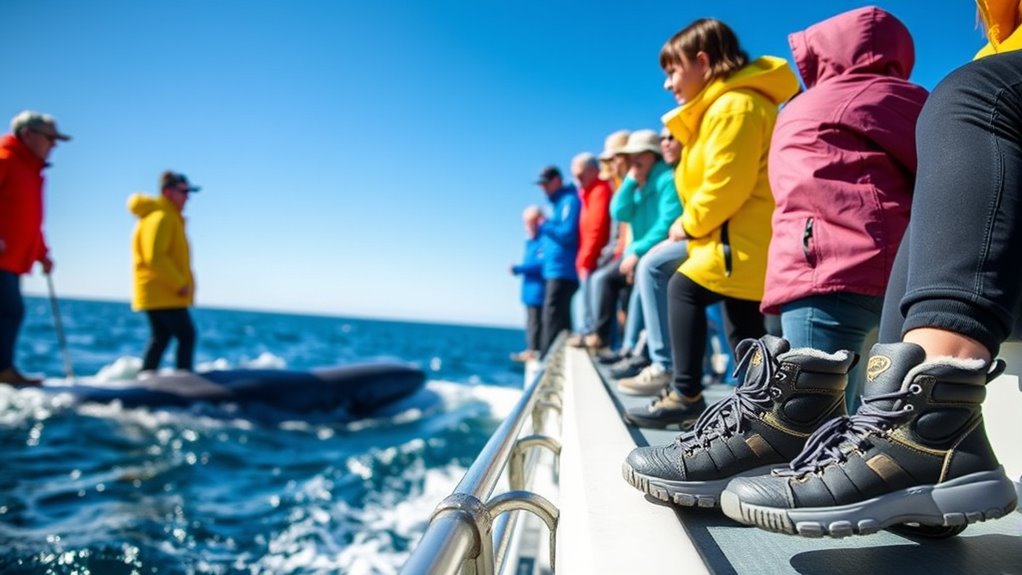
You’ll want to pick shoes with a strong grip to keep you steady on slippery boat decks. Comfort and stability are key since you’ll be standing or walking for a while.
Choose footwear that supports your feet without weighing you down.
Choose Shoes With Grip
Although the seas can be unpredictable, choosing shoes with good grip keeps you steady on wet, rocking decks. Opt for non-slip shoes with rubber soles or waterproof footwear like hiking boots to prevent slipping. These shoes provide essential traction, helping you stay balanced while moving around.
Avoid smooth-soled shoes such as dress shoes or sandals, which can easily slide on wet or oily surfaces. Waterproof footwear not only keeps your feet dry from sea spray but also maintains grip even when splashed. Make sure your shoes are easy to remove if the boat requires it.
With proper grip and waterproof features, your footwear ensures safety and confidence during your whale watching adventure.
Prioritize Comfort And Stability
Since whale watching often involves standing or moving on uneven, wet surfaces, picking shoes that combine comfort and non-slip features is vital for your safety. Choose footwear with non-slip soles, like rubber-soled sneakers or hiking boots, to maintain stability on slippery decks. Comfort plays an essential role, so opt for shoes that provide good support for prolonged standing or walking.
Avoid sandals or smooth-soled shoes, as they lack grip and increase your risk of slipping. Waterproof shoes or boots can help keep your feet dry while preserving stability during splashes or rain. Always check your shoes for worn-out soles or loose parts that could jeopardize safety.
Prioritizing comfort and stability ensures you enjoy whale watching without unnecessary risks.
Use Hats and Sunglasses to Block Sun and Wind
You’ll want to wear a wide-brimmed hat and polarized sunglasses to protect your face and eyes from the sun’s harsh rays and wind. These accessories not only block UV damage but also reduce glare, helping you spot whales more easily.
Choose lightweight, breathable options to stay comfortable throughout your trip.
Sun Protection Benefits
When you wear a wide-brimmed hat and polarized sunglasses, you block harmful UV rays and reduce glare from the water, making it easier to spot whales while protecting your face, neck, and eyes from sun and wind.
These essentials provide vital sun protection that keeps you comfortable and safe throughout your whale watching adventure. Here’s why you shouldn’t skip them:
- Wide-brimmed hats offer UPF sun protection for your face and neck.
- Polarized sunglasses cut glare, improving visibility on the water.
- Sunglasses with UV protection prevent eye strain and damage.
- Together, they shield you from bright sunlight and wind-blown spray.
- Proper sun protection helps avoid sunburns, even on cloudy days.
Wearing both ensures you enjoy the tour without sun-related discomfort or harm.
Wind Shielding Advantages
Beyond protecting you from the sun, hats and sunglasses also shield you from wind and spray during whale watching. Wearing a hat with a wide brim or a baseball cap offers excellent wind protection by blocking gusts that can cause discomfort on your face and neck. Choose hats made from lightweight, breathable materials to stay comfortable.
Polarized sunglasses not only reduce glare but also act as a barrier against wind-driven spray, keeping your eyes clear and protected. Sunglasses with wraparound frames provide even more wind protection, preventing irritation from debris and wind chill. Combining a hat and polarized sunglasses creates a strong shield against both sun and wind, helping you stay focused and comfortable as you enjoy spotting whales on the water.
Choosing Proper Accessories
Although the ocean breeze can be invigorating, it often brings glare and spray that make whale watching challenging. Choosing proper accessories like hats and sunglasses is essential for sun protection and comfort. A wide-brimmed hat shields your face, neck, and shoulders, while sunglasses reduce glare and improve your view of marine life.
Opt for polarized lenses with UV protection to prevent eye strain and long-term damage. To keep your hat secure in windy conditions, choose one with a chin strap. Both hats and sunglasses help block wind and spray, letting you focus on the whales without distraction.
Remember these tips to enhance your whale watching experience:
- Wear a wide-brimmed hat for sun protection
- Use polarized sunglasses to cut glare
- Choose UV-protected lenses for eye safety
- Select a hat with a chin strap for windy days
- Combine accessories for wind and spray shielding
Adjust Layers for Changing Weather Conditions
Because weather on whale-watching trips can change quickly, you should layer your clothing with a moisture-wicking base, an insulating middle, and a waterproof outer shell. These layers let you adjust easily as temperatures rise or fall throughout the day.
Since ocean spray and wind can make it feel cooler, having windproof layers helps keep you warm. Choose lightweight, removable layers so you won’t feel weighed down or overheated as conditions shift.
Before you leave, check the weather forecast to decide how many and what kind of layers to bring. By staying flexible with your layers, you’ll stay comfortable no matter if the weather turns sunny, chilly, or windy during your whale-watching adventure.
Adjusting your clothing smartly is key to enjoying the experience fully.
Pack Essential Accessories Like Sunscreen and Gloves
When you head out for whale watching, packing essential accessories like sunscreen and gloves helps protect you from the sun and cold. Don’t forget to bring items that keep you comfortable and shielded throughout your trip.
Consider these essentials:
- Broad-spectrum sunscreen with at least SPF 30 to protect your skin from harmful UV rays
- UV-protective sunglasses and a wide-brimmed hat to shield your eyes and face from glare
- Lightweight, long-sleeved shirts made of UV-protective fabric for added sun coverage
- Insulated or waterproof gloves to keep your hands warm and dry in chilly or windy conditions
Remember to reapply sunscreen regularly, especially if you’re sweating or outdoors for long periods. These accessories ensure you stay safe and comfortable while enjoying your whale watching adventure.
Pick Clothes Based on Your Whale Watching Tour
Since whale watching conditions can change quickly, you’ll want to pick clothes that keep you comfortable and protected throughout your tour. Start with moisture-wicking base layers to stay dry no matter the weather. On warm, sunny days, lightweight, breathable t-shirts and shorts work well, but always bring extra layers in case it gets windy or cooler.
A waterproof jacket or windbreaker is essential to shield you from ocean spray and chilly breezes. Choose comfortable, non-slip shoes like sneakers or waterproof boots to stay steady on wet decks. Don’t forget a hat and polarized sunglasses to protect your eyes from the sun and reduce glare on the water.
Dressing smartly with layers ensures you stay comfortable and ready to enjoy every moment of your whale watching adventure.
Frequently Asked Questions
What Should I Wear When Whale Watching?
You should wear layers, including a moisture-wicking base, insulation, and a waterproof shell. Don’t forget non-slip shoes, a hat, polarized sunglasses, and a waterproof jacket.
Bring gloves or a warm hat if it’s chilly.
What Shoes Should I Wear When Whale Watching?
About 70% of boating accidents involve slips, so wear sneakers or hiking boots with good traction.
You’ll stay safe on wet decks, protect your feet, and move comfortably during your whale watching adventure without risking a fall.
Is It Cold When You Go Whale Watching?
Yes, it can feel cold while whale watching, especially with wind and ocean spray. You’ll want to wear layers because temperatures can drop quickly, and the breeze often makes it feel much chillier than the forecast suggests.
Dressing in waterproof or windproof outerwear can also help keep you comfortable during the trip. Don’t forget a hat and gloves to protect your extremities from the chill. Being prepared will ensure you enjoy the experience without getting too cold.
How to Not Get Sea Sick Whale Watching?
Over 30% of travelers suffer seasickness, but you can beat it! Take motion sickness meds early, wear acupressure wristbands, pick a middle boat seat, focus on the horizon, stay hydrated, and avoid greasy food.
Conclusion
Whale watching is an unforgettable experience, but dressing right makes all the difference. Did you know that temperatures on the water can feel up to 20 degrees cooler than on land? That’s why layering and waterproof gear are must-haves.
Wearing comfortable shoes and sun protection is essential. Adjust your outfit as needed to stay cozy and safe throughout your adventure.
Follow these tips, and you’ll be ready to enjoy every magical moment out on the waves. With the right clothes and preparation, your whale watching trip will be comfortable, safe, and truly memorable.