5 Essential Tips on What to Wear for Whale Watching
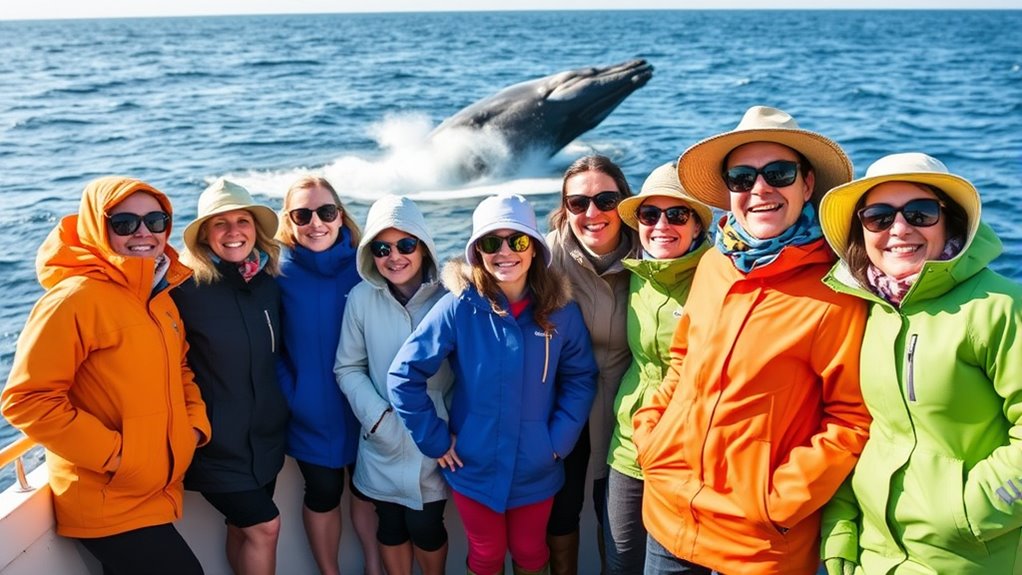
For whale watching, it’s essential to dress appropriately to stay comfortable and safe during your adventure. Start with moisture-wicking layers topped with a waterproof, windproof jacket and pants to stay dry and warm in changing weather conditions.
Wear comfortable, slip-resistant shoes like hiking boots to ensure safety on wet decks. Don’t forget to bring a wide-brimmed hat, polarized sunglasses, and sunscreen to protect yourself from sun exposure and glare on the water.
Additionally, pack snacks, binoculars, and motion sickness aids to enhance comfort and improve your whale watching experience. Keep these tips in mind, and you’ll be well-prepared to enjoy the adventure ahead.
Dress in Layers for Whale Watching Weather
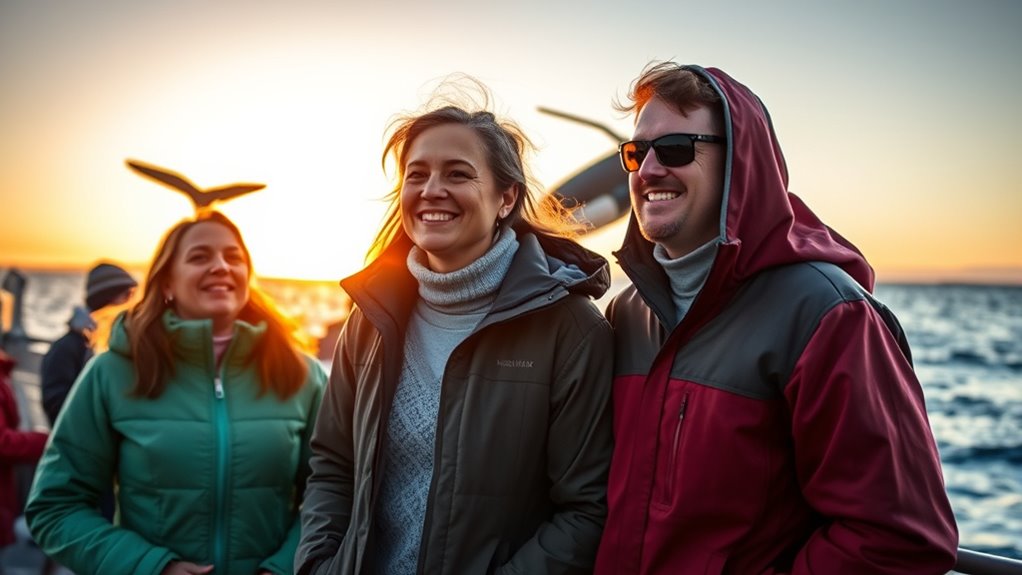
Although weather conditions can change quickly during whale watching trips, dressing in layers lets you adjust your clothing to stay comfortable. Start with a moisture-wicking base layer that keeps sweat away from your skin, ensuring you remain dry. Next, add an insulating layer like fleece for warmth when temperatures drop or wind picks up.
Finally, top it off with a waterproof outer layer to shield you from ocean spray and unexpected rain. This layering system offers flexibility, so you can easily remove or add layers depending on shifting weather conditions. By wearing multiple layers, you’ll be prepared for anything—from chilly breezes to warmer moments—while staying comfortable throughout your whale watching adventure. Don’t forget, your outer layer plays a vital role in keeping you protected.
Choose Waterproof and Windproof Jackets and Pants
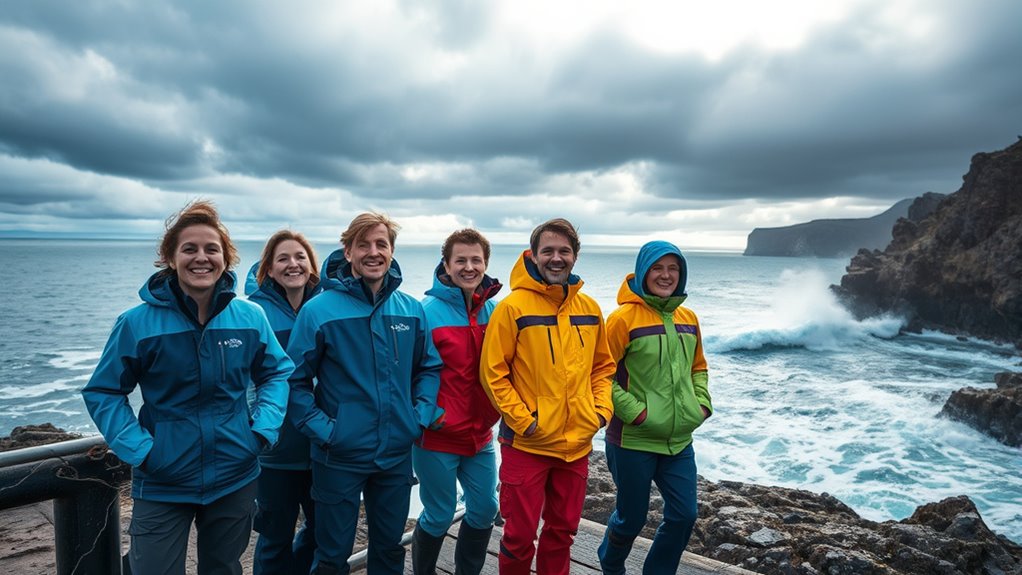
Once you’ve layered your clothing to handle changing temperatures, the next step is to choose waterproof and windproof jackets and pants. These outer layers are essential for keeping you dry from ocean spray and rain, ensuring comfort throughout your whale watching trip. Opt for jackets and pants made from breathable materials like Gore-Tex that block water while allowing moisture to escape.
Windproof fabrics shield you from chilly breezes that can make the temperature feel much colder than it is. By layering waterproof and windproof gear over your lighter clothes, you can easily adjust your warmth as conditions shift. This combination not only keeps you dry but also helps reduce the risk of hypothermia on colder days, making your whale watching experience safer and more enjoyable.
Wear Comfortable, Slip-Resistant Shoes for Safety
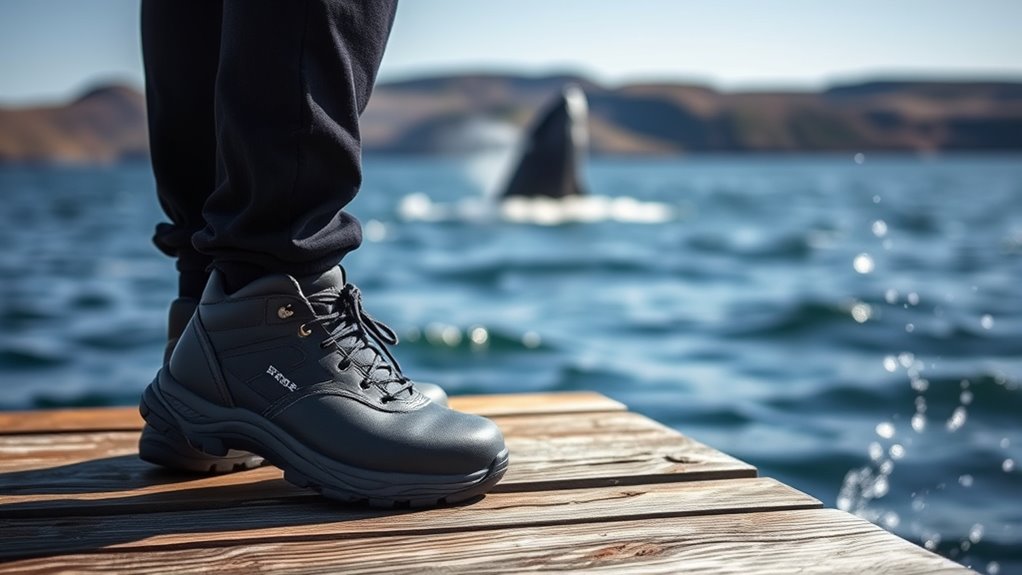
Since whale watching involves spending time on wet and sometimes slippery decks, wearing comfortable, slip-resistant shoes is essential for your safety. Your footwear should provide reliable grip on wet surfaces to prevent accidents and keep you steady throughout the tour.
Here’s what to think about when choosing your shoes:
- Opt for shoes with non-slip soles, like boat shoes or hiking boots.
- Prioritize comfortable footwear that supports long hours of standing and moving.
- Avoid sandals or flip-flops, as they lack adequate grip and stability.
- Choose shoes with good traction to maintain balance on uneven, wet decks.
- Discard shoes with worn-out or soft soles that reduce safety and increase slipping risk.
Following these tips ensures your safety and comfort while enjoying whale watching.
Don’t Forget Your Hat, Sunglasses, and Sunscreen
When you head out on a whale watching trip, make sure you bring a wide-brimmed hat, polarized sunglasses, and sunscreen to protect yourself from the sun’s harsh rays. A hat shields your face, neck, and shoulders, offering vital sun safety. Polarized sunglasses reduce water glare, enhancing your view of the whales while providing UV protection for your eyes.
Don’t underestimate the power of broad-spectrum sunscreen with at least SPF 30—it guards your skin from harmful UV rays, even on cloudy days when the sun’s reflection off the water intensifies exposure. Remember to reapply sunscreen regularly and wear your UV-protective sunglasses throughout your time on the water to prevent skin and eye damage, ensuring a comfortable and safe whale watching experience.
Pack Extras: Snacks, Binoculars, and Motion Sickness Aids
Along with protecting yourself from the sun, preparing for comfort and enjoyment on the water means packing a few extras. Bringing snacks keeps your energy up, especially on longer tours or with kids. Binoculars are essential for spotting distant whales and catching details you’d miss otherwise.
Protect yourself from the sun and pack snacks and binoculars for a comfortable, enjoyable whale-watching adventure.
Motion sickness aids, such as ginger chews or medication, help you stay comfortable throughout the trip. To protect your gear, use waterproof cases for your electronics and binoculars. Keep all your essentials organized in a small bag or backpack, so you can access them easily.
Consider packing these items:
- Energizing snacks
- Binoculars for clear viewing
- Motion sickness aids
- Waterproof cases for electronics
- A compact bag to stay organized
Frequently Asked Questions
What Should I Wear When Whale Watching?
You should wear layered, moisture-wicking clothes with a waterproof outer shell, comfortable non-slip shoes, a wide-brimmed hat, and polarized sunglasses.
Don’t forget an extra sweater and a rain jacket to stay warm and dry.
What Shoes Should I Wear When Whale Watching?
Think of your shoes as anchors on a rocking ship—you’ll want sneakers or waterproof boots with non-slip soles.
They’ll keep you steady on wet decks, dry quickly, and let you move comfortably while you marvel at the whales.
Is It Cold When You Go Whale Watching?
Yes, it can feel cold when you go whale watching, especially with wind and sea spray.
You’ll want to wear layers, a hat, and a windproof jacket to stay warm, even if the daytime seems mild.
How to Not Get Sea Sick Whale Watching?
Don’t let seasickness rain on your parade—take motion sickness meds early, snack on ginger, and sit mid-boat where the rocking’s gentler.
Keep your eyes on the horizon and stay hydrated to keep nausea at bay.
Conclusion
As you set sail on your whale watching adventure, think of your outfit as your trusty armor against the sea’s unpredictable moods. Layer up to dance with the wind, shield yourself with waterproof gear, and anchor your steps with steady shoes.
Don’t let the sun’s glare or unexpected waves catch you off guard—bring your hat, shades, and trusty sunscreen. With snacks and binoculars in hand, you’re ready to embrace the ocean’s grand performance in comfort and style.
Remember, what to wear for whale watching is just as important as the experience itself. Dressing appropriately ensures you stay warm, dry, and protected, allowing you to fully enjoy the breathtaking whale watching adventures ahead.