What Type of Shark Bit Bethany Hamilton?
Bethany Hamilton was bitten by a fully grown tiger shark, one of the ocean’s largest and most powerful predators. This shark, about 14 feet long, was confirmed by fishermen and wildlife officials through its distinctive markings and size.
Tiger sharks are common near Kauai’s shores due to their habitat preferences and curious behavior. These sharks sometimes come close to surfers like Bethany, which unfortunately led to the attack.
Known for their aggressive nature, tiger sharks are often found in warm coastal waters, making encounters more likely. Keep exploring to discover more about this shark and what makes it so unique.
What Type of Shark Bit Bethany Hamilton in 2003?
In 2003, Bethany Hamilton was bitten by a 14-foot tiger shark while surfing at Tunnels Beach on Kauai’s North Shore. As a dedicated surfer, you’d know the North Shore is famous for its powerful waves and marine life, including tiger sharks. These sharks are known for their size and aggressive nature, making encounters dangerous.
The tiger shark that bit Bethany was large and formidable, typical of the species found in these waters. Being aware of the shark’s behavior and habitat helps you understand how this attack happened. If you’re surfing near the North Shore, it’s essential to respect the ocean and know that tiger sharks are among the top predators lurking beneath the surface.
What Evidence Confirmed the Tiger Shark in Bethany’s Attack?
You can trust the fishermen’s eyewitness identification, as they recognized the shark from their recent catch. The shark they caught matched the size and markings of the one that attacked Bethany.
Plus, the attack happened at Tunnels Beach, a known tiger shark habitat, which confirms the shark’s identity.
Fishermen’s Shark Identification
Although shark attacks can be difficult to analyze, fishermen played a crucial role in confirming the species involved in Bethany Hamilton’s encounter. Their expertise in shark identification, combined with evidence from the attack site, helped pinpoint the culprit as a tiger shark.
Here’s how they made the confirmation: Fishermen caught a shark near the attack site matching the size of the one involved—about 14 feet long. They compared the physical features, like the distinctive tiger shark pattern and coloration, to the known characteristics of the attacker. The location, size, and unique markings of the caught shark aligned perfectly with the evidence from the attack site.
Thanks to the fishermen’s detailed observations, the tiger shark’s identity in Bethany’s attack was conclusively verified.
Match With Caught Shark
Fishermen didn’t just identify the shark species involved in Bethany Hamilton’s attack—they also helped confirm the culprit by catching a shark that matched the description from the attack site.
This caught shark was a 14-foot tiger shark, the exact size and species reported during the incident. By comparing the caught shark’s characteristics to the details from the attack site at Tunnels Beach, Kauaʻi, experts verified it was the same predator responsible.
Authorities relied on this direct evidence to conclusively link the tiger shark to Bethany’s attack. So, when you look at the facts, the caught shark served as concrete proof, confirming the tiger shark as the one that bit Bethany Hamilton.
Attack Site Confirmation
How did experts confirm the tiger shark was behind Bethany Hamilton’s attack? The evidence came directly from the attack site and the shark caught shortly after. Here’s what made it clear:
- Fishermen at the attack site reported catching a 14-foot tiger shark matching the shark involved in the incident.
- The bite patterns on Bethany and the shark’s size aligned perfectly, as confirmed by her medical team and experts.
- The Kauaʻi Department of Fish and Wildlife examined the shark caught, officially identifying it as a tiger shark.
These three points collectively verified that the tiger shark was responsible for the attack. The combination of eyewitness reports, physical evidence from the attack site, and the captured shark provided conclusive proof of the shark involved.
How Big Was the Tiger Shark That Bit Bethany Hamilton?
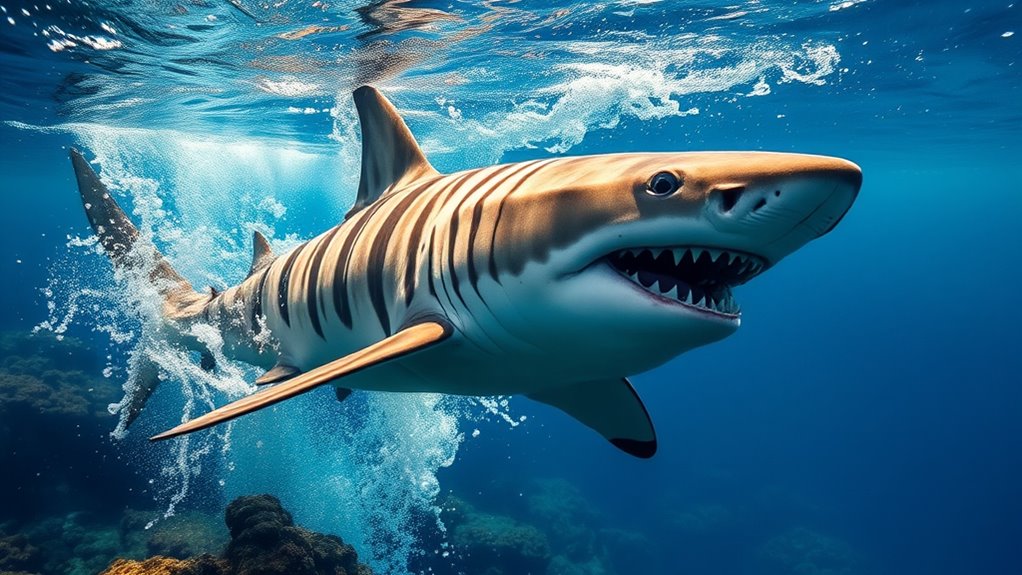
You might wonder just how big the tiger shark that attacked Bethany Hamilton really was. It measured about 14 feet, which is quite large compared to typical sharks.
Understanding its size helps you grasp the severity of the attack and how it compares to other tiger sharks.
Tiger Shark Size Details
A 14-foot tiger shark attacked Bethany Hamilton, making it one of the larger specimens of its species. Understanding the tiger shark’s size helps you grasp the attack’s severity and the shark’s potential danger.
Here are key tiger shark size details:
- Tiger sharks typically grow between 10 and 14 feet, with 14 feet marking the upper range.
- The shark that bit Bethany was at this upper size limit, increasing the force behind the attack.
- Larger tiger sharks like this one are more common in shallow coastal waters, which raises the risk during activities like surfing.
Knowing the tiger shark’s size gives you insight into why Bethany’s injuries were so severe and why such attacks, though rare, can be so impactful.
Estimated Length Measurements
Knowing the upper size range of tiger sharks sets the stage for understanding just how large the shark that bit Bethany Hamilton really was. The shark involved measured about 14 feet in length, placing it at the maximum typical size for tiger sharks. This length confirms it was a mature, sizable predator capable of such a powerful attack.
Fishermen who caught the shark verified its size, matching reports of a large adult tiger shark. When you consider the shark’s length, you understand the scale of the encounter Bethany faced. At 14 feet, the tiger shark was not just any shark—it was a formidable, fully grown predator, making the attack all the more remarkable in terms of the size and strength of the animal involved.
Comparing Shark Dimensions
Although tiger sharks can grow up to 18 feet, the 14-foot shark that bit Bethany Hamilton was still a formidable adult. Understanding shark dimensions helps you appreciate just how large this predator was.
Here’s a quick size comparison to put it into perspective:
- Average adult tiger sharks range from 12 to 18 feet, so a 14-foot tiger shark is solidly mature.
- The shark’s size was typical but on the larger side, contributing to the severity of Bethany’s injury.
- In contrast, smaller sharks rarely exceed 10 feet, making this tiger shark markedly more dangerous.
This size comparison shows you that the tiger shark that attacked Bethany was not only large but a fully grown predator capable of inflicting serious harm.
Where Did Bethany’s Shark Attack Happen and Why Does It Matter?
When you think about Bethany Hamilton’s shark attack, the location plays a crucial role in understanding the event. The attack happened at Tunnels Beach on Kauaʻi’s North Shore, a popular spot for surfers. This setting matters because it highlights the real risks surfers face in these waters.
The shark responsible was a 14-foot tiger shark, known for its aggressive nature and powerful bite. Confirmed by local fishermen who caught a matching tiger shark nearby, this detail helps you grasp why such attacks can occur here. Knowing that this shark attack took place at Tunnels Beach gives you insight into the environment and the importance of awareness about tiger sharks in Hawaiian waters, especially for those who enjoy surfing.
Why Are Tiger Sharks Common Near Kauai’s Shores?
Because Kauai’s waters are warm and tropical, tiger sharks find an ideal habitat near its shores. You’ll notice these sharks are common around Kauai’s shores due to several key factors:
- Warm tropical waters: Tiger sharks thrive in these conditions, making Kauai’s coastal waters perfect for them.
- Rich feeding grounds: Kauai’s reefs and drop-offs attract plenty of prey like seals and fish, providing ample hunting opportunities.
- Shallow coastal areas: These areas offer suitable habitats for both juvenile and adult tiger sharks, encouraging their presence.
Seasonal ocean currents also help bring tiger sharks closer to Kauai’s shores, increasing your chances of spotting or encountering them in this vibrant tropical environment.
How Does Tiger Shark Behavior Explain the Attack Circumstances?
Tiger sharks’ natural behaviors help explain why the attack on Bethany Hamilton occurred at Tunnels Beach. As solitary predators, tiger sharks patrol nearshore waters where they can easily encounter surfers like Bethany. Their aggressive behavior and curiosity make them investigate unfamiliar objects, sometimes resulting in accidental bites.
The shallow reef area at Tunnels Beach matches the tiger shark’s preferred habitat, increasing the chances of such encounters.
| Behavior | Explanation |
|---|---|
| Aggressive behavior | Leads to opportunistic attacks |
| Nearshore waters | High human activity increases encounters |
| Exploratory nature | Mistakes humans for prey or objects |
Understanding these behaviors clarifies the circumstances behind the attack without assuming intent.
Why Do Tiger Sharks Pose a Danger to Surfers in Hawaii?
Although you might enjoy the waves, surfers in Hawaii face real risks from tiger sharks that inhabit shallow coastal waters. These sharks are aggressive and known to frequent areas where you surf, increasing the danger.
Here’s why tiger sharks pose a threat to you:
- Tiger sharks swim near the surface, often in the same spots where you catch waves, making encounters more likely.
- Their powerful jaws and sharp teeth can cause severe injuries if they bite.
- Tiger sharks get attracted to bright colors and shiny objects, which are common on surfboards and gear.
Because these sharks hunt fish and seals nearby, their presence elevates the risk for surfers like you venturing into Hawaiian waters.
How Can You Tell a Tiger Shark Apart From Other Sharks?
When you spot a shark in the water, knowing how to identify a tiger shark can help you stay alert and safe. Tiger sharks have distinctive patterns of dark vertical stripes or spots, especially when young, which sets them apart from other sharks. Their broad, flat head and conical snout differ from the streamlined shape of great whites.
You can also recognize them by their serrated teeth, perfect for cutting through tough prey. Their bulky bodies and slow, deliberate swimming style add to their unique appearance.
| Feature | Tiger Shark Characteristics |
|---|---|
| Body Pattern | Dark vertical stripes or spots |
| Head Shape | Broad, flat with conical snout |
| Teeth | Serrated, blade-like |
| Swimming Style | Slow and deliberate |
How Has Bethany Hamilton’s Story Raised Awareness About Tiger Sharks?
Recognizing the features of a tiger shark helps you understand why they can be so dangerous, especially in waters popular with surfers. Bethany Hamilton’s story has raised public awareness about tiger sharks by highlighting their aggressive nature and the risks they pose. Her experience prompted important discussions and research on tiger shark behavior and safety measures.
Here’s how her story has made an impact:
- Educating the public on identifying tiger sharks and understanding their behavior.
- Promoting safety measures for surfers and beachgoers in areas where tiger sharks are common.
- Encouraging ongoing research into tiger shark populations to better assess risks.
Frequently Asked Questions
Did They Find Bethany’s Arm?
They didn’t find Bethany’s arm after the attack; it was bitten off by the shark and lost in the ocean. Despite thorough searches, her arm was never recovered.
But she didn’t let that stop her from surfing again.
What Kind of Shark Bit off Bethany’s Arm?
A tiger shark bit off your arm. These sharks have powerful jaws and are known for attacks like yours.
Fishermen identified the exact shark by matching bite marks, confirming it was a tiger shark responsible for your injury.
Who Is the Biggest Shark Ever Recorded?
Imagine a colossal shadow beneath ancient seas—that’s the megalodon, the biggest shark ever recorded.
You’d be dwarfed by its 60-foot length, a prehistoric giant ruling oceans millions of years ago with unmatched might.
How Did Soul Surfers Lose Her Arm?
You lost your arm when a tiger shark attacked you while surfing at Tunnels Beach. The shark bit off your left arm below the shoulder, causing severe blood loss.
But you bravely returned to surfing just weeks later.
Conclusion
You can almost feel the massive tiger shark’s shadow lurking beneath Kauai’s shimmering waves, a silent giant drawn by the ocean’s secrets—and surfers like Bethany. Her story isn’t just about survival; it’s a vivid reminder that these powerful predators patrol the waters with fierce grace.
Next time you hit the waves, remember: you’re sharing the ocean with a stealthy, striped titan whose presence is as real as the adrenaline rushing through your veins. The type of shark that bit Bethany Hamilton was indeed a tiger shark, a reminder of the wild and unpredictable nature of the sea.