10 Best Months for Whale Watching Season
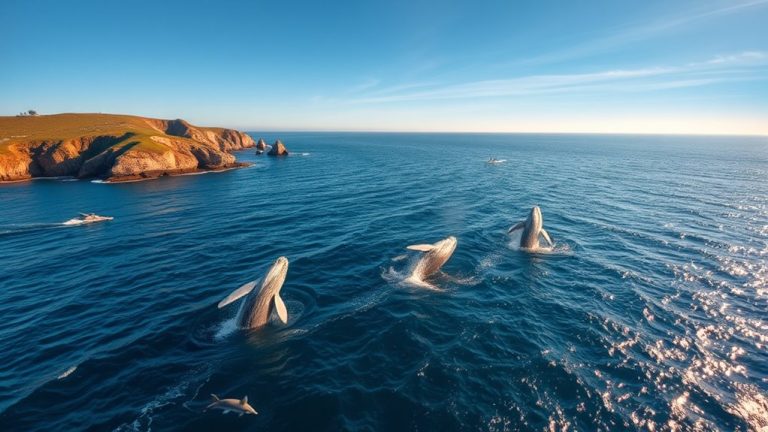
The 10 best months for whale watching offer incredible opportunities to see various species in their natural habitats. These months depend on the species and location but generally include December to April for gray whales migrating along California’s coast.
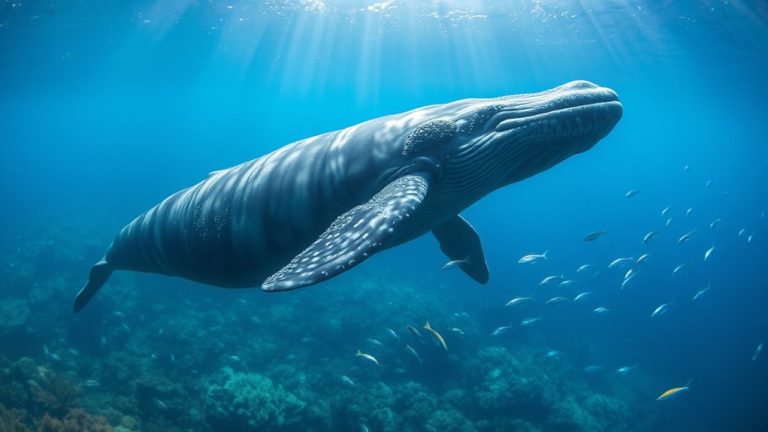
June to September marks the peak feeding season for blue whales, providing spectacular viewing experiences.
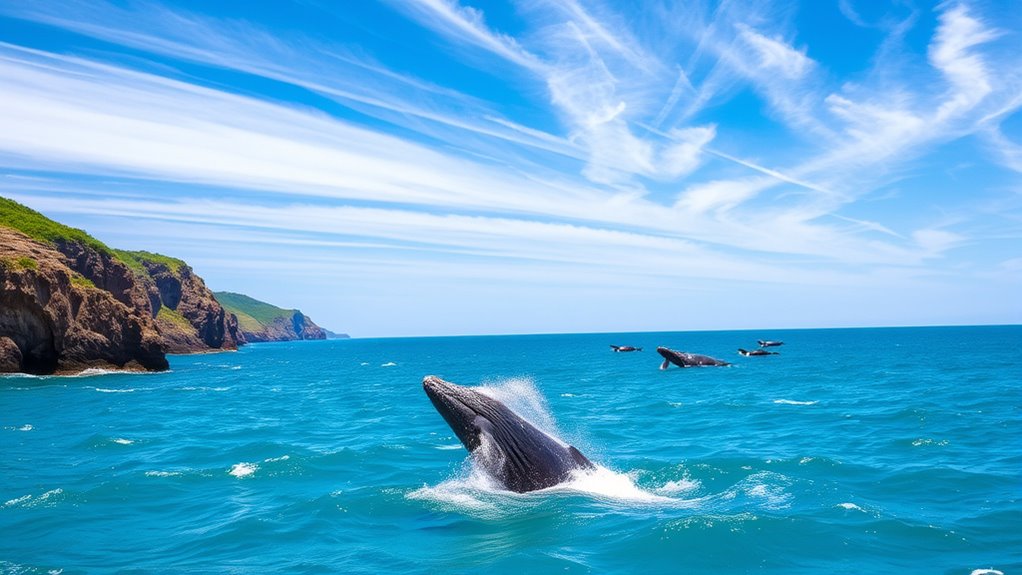
May to November is ideal for observing humpbacks as they show off their breaching behaviors. Oregon’s prime whale watching period falls between September and early October.
Meanwhile, orcas are most visible from April through October in the Pacific Northwest.
Planning your trip around these months significantly boosts your chances of memorable whale encounters. Keep exploring to find the perfect time and place for your whale adventure.
Best Overall Whale Watching Seasons in Southern California and Oregon
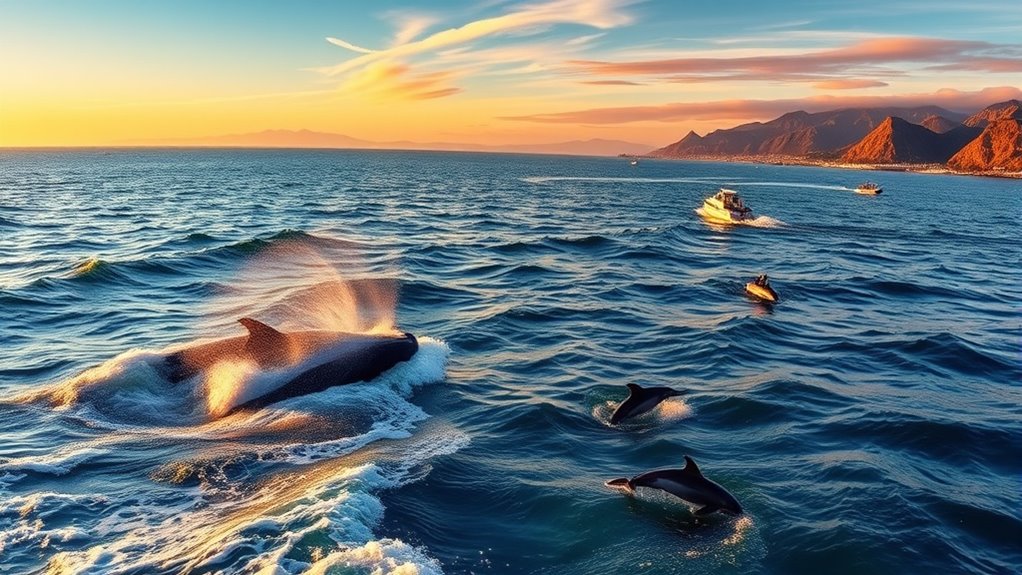
If you want to catch the best whale sightings in Southern California, plan your trip between December and April to see gray whales migrating along the coast. These months mark the prime whale watching seasons when migration activity peaks, offering a spectacular show.
In Oregon, the peak months shift to September and early October, just before whales head south, making it an ideal time for sightings. Summer through early fall in Southern California also brings opportunities to spot blue, humpback, and fin whales.
When to See Gray Whales During Whale Watching Trips
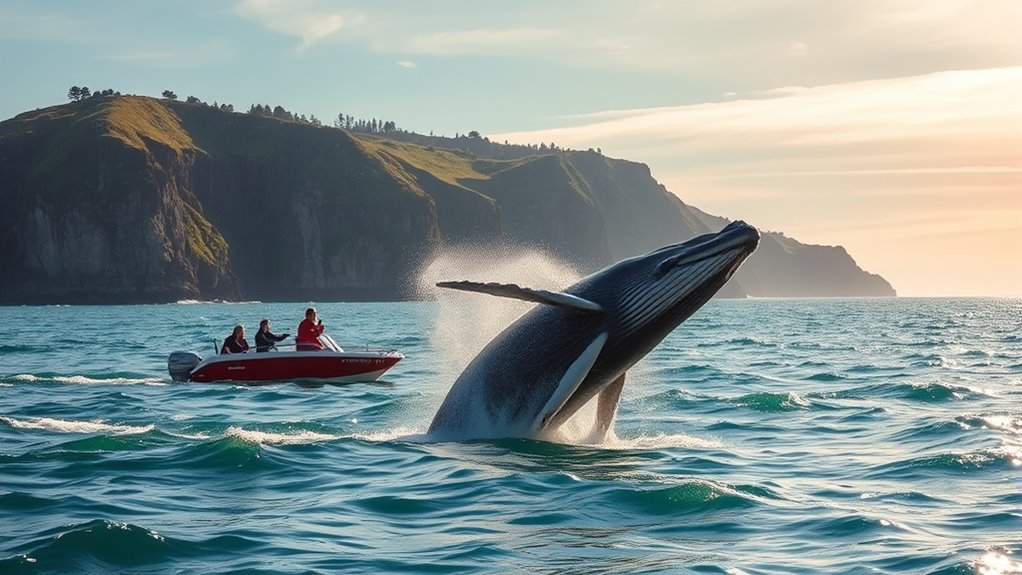
When you plan a whale watching trip between mid-December and early April, you’ll have the best chance to see gray whales migrating along the West Coast. These incredible creatures journey from Arctic feeding grounds to Baja California, passing close to shore near San Diego, Monterey, and other California locations.
Peak sightings usually happen in January and March, making these months ideal for your whale watching adventure. During migration, gray whales fast for several months, making their journey even more remarkable to witness.
Whale Watching Blue Whales: Peak Feeding Months
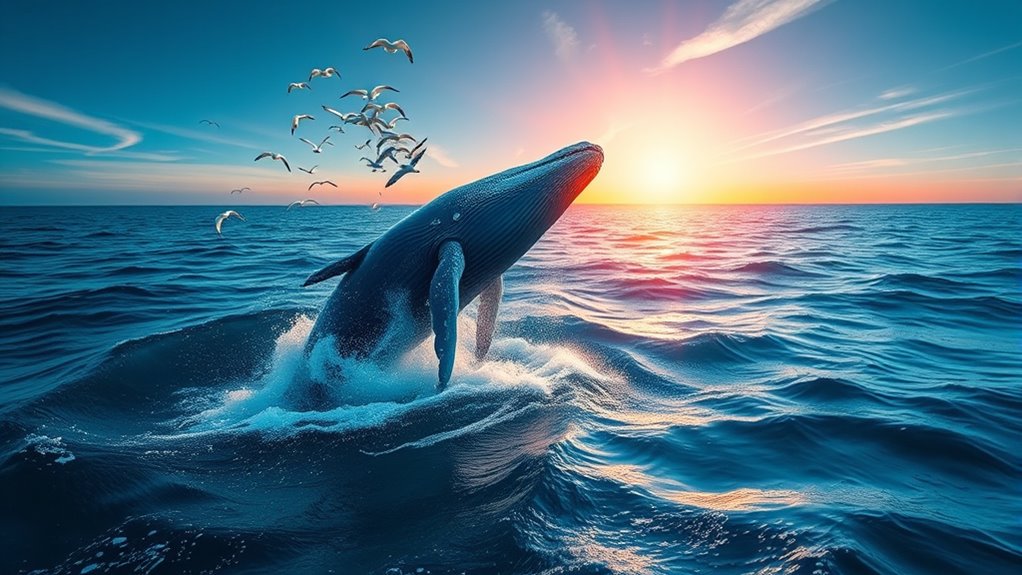
If you want to see blue whales at their busiest, plan your trip between mid-June and mid-September when they’re feeding heavily along the California coast.
During these months, they chow down on krill in deeper offshore waters, making sightings more frequent. July through September offer the best chances to catch these giants in action during their peak feeding season.
Blue Whale Peak Season
Because blue whales follow their prey, you’ll find the best whale watching opportunities along the California coast from mid-June to mid-September. This period marks the blue whales’ peak season when their presence is most consistent and sightings are frequent. During the summer months, warmer waters boost krill populations, attracting these giants to feed.
Key points about the blue whale peak season include:
- Blue whales concentrate in deeper offshore waters from July to September.
- Their peak feeding months coincide with the highest abundance of krill.
- Whale watching tours report the greatest success during these summer months.
- Sightings are especially common along the continental shelf where prey density is highest.
Plan your trip during this window for the best chance to see blue whales in action.
Feeding Behavior Patterns
Blue whales maximize their feeding efforts during the summer months of July through September, taking full advantage of the abundant krill along the California coast. This peak feeding period is vital as it provides the energy needed for their upcoming migration to warmer waters.
During these months, you’ll often see blue whales performing profound dives and lunge-feeding, gulping vast amounts of prey in a single mouthful.
| Month | Feeding Activity | Krill Abundance |
|---|---|---|
| July | High | High |
| August | Peak | Peak |
| September | High | High |
Outside these months, feeding markedly decreases as whales migrate south, making summer the best time to observe their active feeding behavior.
Optimal Viewing Months
While summer’s warmth lingers along the California coast, you’ll find the best chances to spot these majestic giants from mid-June to mid-September. This period marks the Blue whales’ peak feeding season, when they gorge on abundant krill in deep offshore waters. For an ideal viewing experience, focus on these months to catch the whales at their most active.
Key points to remember for Blue whale watching along the California coast:
- July through September offers the highest sighting rates
- Mid-June to mid-September aligns with their peak feeding season
- Outside these months, whales migrate to tropical breeding grounds
- Planning trips during peak months maximizes sighting opportunities
Humpback Whale Watching: Best Times to Spot These Giants
If you want to catch humpback whales in action, plan your trip between mid-May and mid-November along the California coast, with July to September offering the best chances to see them breaching, tail slapping, and feeding.
Humpback whales migrate from Alaska’s rich feeding grounds to warmer breeding waters, passing through California during spring and fall. You’ll find the summer months—especially July to September—are peak sightings, as these giants are most active and visible then.
While you might spot humpbacks year-round, your odds improve considerably during this window when their feeding behaviors are on full display. If you want an unforgettable whale-watching experience, targeting these months maximizes your chances of seeing humpback whales up close in their natural environment.
Fin Whale Sightings: When and Where to Look
If you want to spot fin whales, plan your trip between June and October when they feed close to the California and Oregon coasts.
Look offshore near places like Depoe Bay and Cape Foulweather, where they gather to feast on krill and small fish. Understanding their feeding habits during this peak season will boost your chances of a great sighting.
Peak Season Timing
Since fin whales gather in coastal and offshore waters to feed during the warmer months, you’ll have the best chance of spotting them from mid-July to mid-September. This peak season offers the highest fin whale sightings as they actively feed on krill and small fish. You can expect more frequent encounters during these months when the whales congregate in their favored feeding grounds.
Keep in mind these key points about peak season timing:
- Sightings rise considerably from July through August.
- Fin whales remain visible from June to October.
- Their feeding behavior peaks in mid-summer.
- Offshore waters host the densest whale activity during this time.
Plan your whale watching trips accordingly to maximize your chances of witnessing these magnificent creatures during their most active season.
Preferred Viewing Locations
Knowing when fin whales are most active helps you choose the best times to head out, but where you watch matters just as much. Depoe Bay is a top spot for whale watching, especially from June to October, when fin whales often appear.
You can also catch them at Boiler Bay, Rocky Creek, and Cape Foulweather. Early fall is prime time as fin whales feed before migrating south.
| Location | Best Months | Notes |
|---|---|---|
| Depoe Bay | June – October | Eco Excursions & Dockside Charters available |
| Boiler Bay | July – September | Coastal viewpoint |
| Rocky Creek | August – October | Quiet, less crowded |
| Cape Foulweather | September – October | Scenic cliffs and good sightings |
Choose your spot wisely for a memorable fin whale experience!
Behavior and Feeding Patterns
When you plan your whale watching trip between June and October, you’ll have the best chance to see fin whales actively feeding. Their feeding patterns peak in summer when krill and small fish abound. Fin whales migrate northward in spring and return south in fall, making mid-summer sightings especially consistent.
To maximize your experience, consider these tips:
- Look offshore along the California and Oregon coasts where prey concentrations are highest.
- Choose boat trips that venture into deeper waters, as fin whales prefer these feeding zones.
- Watch for lunge feeding and bubble-netting behaviors, which are visible when they hunt.
- Time your visit during summer months to align with their migration and feeding activity.
Understanding these patterns will help you spot fin whales when they’re most active and visible.
Orca Whale Watching: Prime Months for Encounters
If you want to catch a glimpse of orca whales, the best time is between April and October in the Pacific Northwest. This period marks the peak season for whale sightings, with orcas actively hunting and traveling along the coast.
July and August offer the highest chances to encounter both transient and resident pods.
| Month | Orca Activity Level |
|---|---|
| April | Increasing |
| May | High |
| July-August | Peak |
| September | Moderate |
During these months, you’ll enjoy increased opportunities to see orca whales in their natural habitat. Sightings are less frequent outside this window but can still happen year-round.
Plan your trip accordingly to maximize your orca whale watching experience!
Regional Whale Watching Seasons: Southern California vs. Oregon Coast
You’ll find Southern California’s whale watching peaks from winter through early fall, with gray whales in the colder months and blue whales in summer.
On the Oregon Coast, the best time is early fall, especially September and October, when whales are active before heading south.
Understanding these seasonal patterns helps you pick the perfect time and place for your whale encounters.
Southern California Peak Months
Offering prime opportunities from June through September, Southern California’s whale watching season shines with blue whales and other deep-water species dominating the waters. During these peak months, whale sightings reach their highest, making it an ideal time for enthusiasts like you to explore the marine life.
Here’s what you can expect in Southern California:
- Blue whales feed on krill, especially from July to September
- Gray whales migrate southbound and northbound between December and March
- Humpback whales and orcas appear most often from September to November
- Increased dolphin activity complements whale watching in the fall
Oregon Coast Timing
While Southern California’s whale watching peaks revolve around migration and feeding seasons, the Oregon Coast shines in September and early October when whales ramp up their activity before heading south. During this time, you’ll spot gray whales, orcas, and humpbacks engaging in lively pre-migration behaviors that make whale watching truly exciting.
The Oregon Coast offers prime viewing spots like Depoe Bay, Boiler Bay, and Cape Foulweather, where whale sightings are frequent and memorable. Unlike Southern California’s distinct migration-driven seasons, the Oregon Coast’s best whale watching months focus on this energetic pre-migration phase.
If you want to catch whales at their most active and playful, planning your trip to the Oregon Coast in early fall is a smart choice.
Seasonal Whale Activity
Because whale activity varies by region, Southern California and the Oregon Coast each have distinct whale watching seasons you should consider when planning your trip. Southern California offers more consistent sightings year-round, but its seasonal migration patterns define peak months for specific species.
The Oregon Coast’s whale activity spikes in early fall, just before whales head south.
Here’s what to keep in mind:
- Southern California’s gray whales peak from December to March
- Blue whales thrive from June to September in Southern California
- Oregon Coast sees lively whales in September and early October
- Seasonal migration drives the timing of peak months in both regions
How Whale Migration Patterns Affect Your Viewing Experience
Since whales follow specific migration routes at certain times of the year, your chances of spotting them depend heavily on when and where you go. Understanding their migration and seasonal patterns helps you pick the best viewing spots and times.
For example, gray whales migrate south to Mexico from December to April, while blue whales feed along the coast from June to September. Humpbacks appear year-round but peak in summer and fall.
| Species | Migration Period | Peak Viewing Season |
|---|---|---|
| Gray Whale | Dec-Apr (south), Feb-Jun (north) | Winter to early summer |
| Blue Whale | N/A (feeding grounds) | June-Sept |
| Humpback | Year-round | July-Nov |
Align your trip with these patterns to maximize sightings.
Booking Tips to Maximize Your Whale Watching Success
To maximize your whale watching success, you’ll want to book your tour well in advance, especially during peak seasons when demand soars. Timing your booking with the seasonal migration patterns is vital to increase your chances of whale sightings.
Book early and align your tour with migration seasons to boost whale sighting chances.
Here are some key tips to secure the best experience:
- Reserve your spot months ahead, particularly in summer and fall.
- Choose operators knowledgeable about seasonal migration for targeted tours.
- Select tours during peak months specific to the species you want to see, like July-September for blue whales.
- Check recent whale sightings with the tour provider before confirming.
Year-Round Marine Wildlife to Spot Besides Whales
While whales steal much of the spotlight, you’ll find plenty of other fascinating marine wildlife to spot year-round. Dolphins, including Common and Bottlenose species, swim along the coast in every season, often putting on playful displays. Sea Lions lounge on buoys and in harbor areas like Newport Beach throughout the year, offering easy viewing.
Sea Turtles, especially Green and Loggerhead, are more common in summer, so keep an eye out during warmer months. Sharks such as Mako, Thresher, and Great White occasionally appear, with sightings peaking in summer and early fall. You might also catch glimpses of Risso’s Dolphins and Orcas, which show increased activity during summer and fall migrations.
Exploring beyond whales enriches your marine wildlife experience year-round.
Frequently Asked Questions
What Is the Best Month to Go Whale Watching?
You’ll want to go whale watching in September since whales are most active then. Early October is also great, but September gives you the best chance to see gray, orcas, and humpbacks before they migrate south.
Which State Has the Best Whale Watching?
You’ll find California offers the best whale watching with diverse species year-round. Its extensive coastline boosts sightings, making it the top destination if you want a rich and varied whale watching experience in the U.S.
What Are the Odds of Seeing a Whale on a Whale Watch?
Imagine the ocean as a stage where whales perform; your odds of seeing them can reach 80-90% during peak times.
Though sightings aren’t guaranteed, your chances improve with expert guides and calm seas.
What Is the Whale Watching Capital of the World?
You’re looking at Monterey, California, as the whale watching capital of the world. Its rich marine life and deep submarine canyon create perfect conditions, so you’ll have amazing chances to see gray whales, humpbacks, blues, and orcas.
Conclusion
Whale watching offers unforgettable experiences, but timing is everything. As the saying goes, “strike while the iron is hot”—so plan your trip during peak seasons to maximize sightings of gray, blue, humpback, and fin whales. Whether you’re exploring Southern California or the Oregon coast, knowing migration patterns and regional differences will boost your chances.
Don’t forget to book early and stay flexible to make the most of your whale watching adventure all year round! By choosing the best months for whale watching season, you’ll increase your chances of incredible sightings and create lasting memories.