How to Plan Your Trip for Whale Watching Season in Southern California
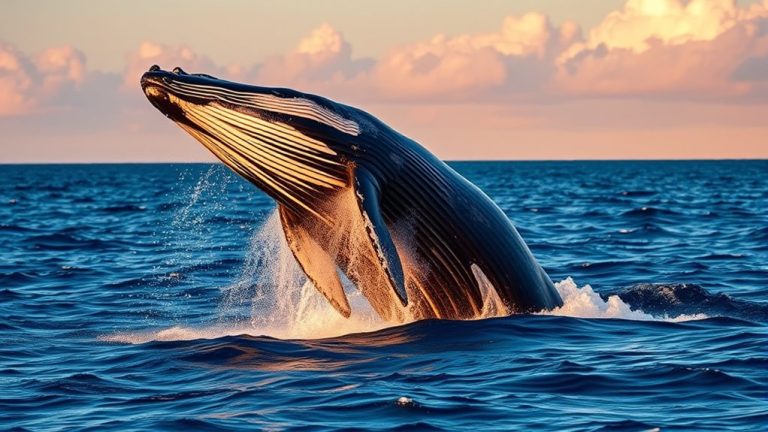
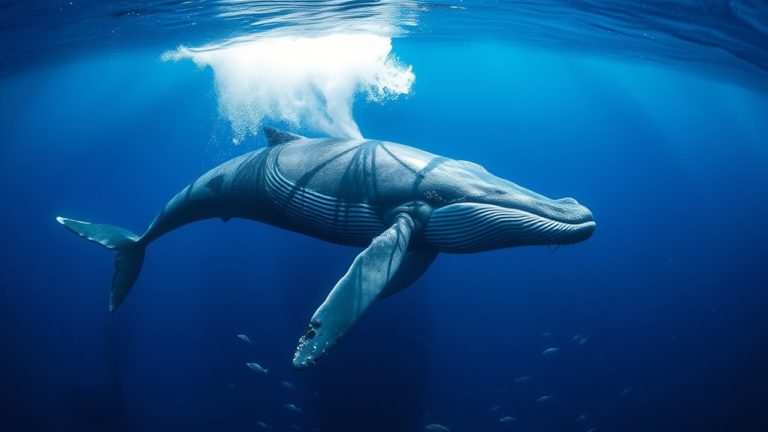
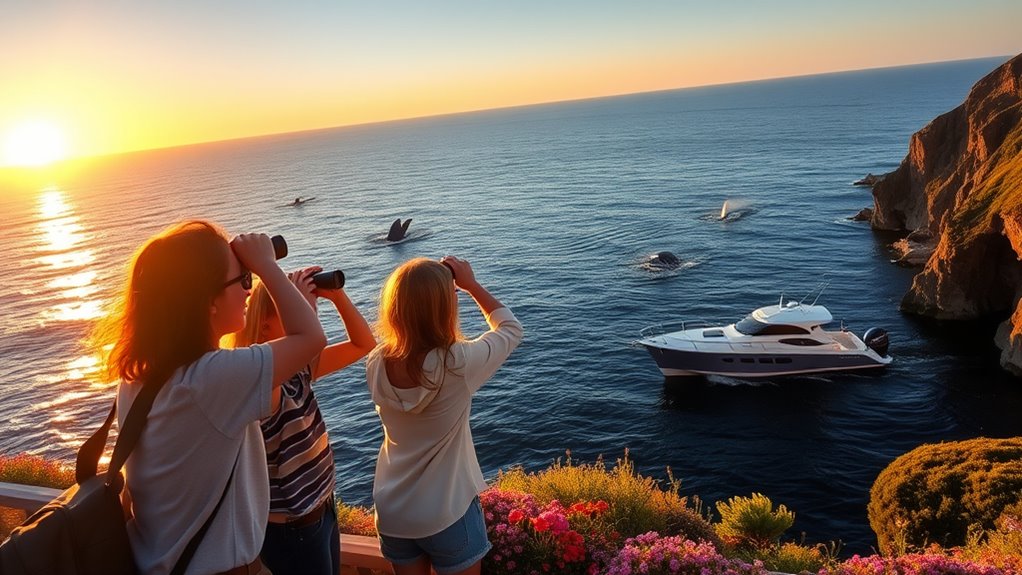
Plan your Southern California whale watching trip by targeting peak migration times—gray whales from December to April and blue whales from June to September. Whale watching in Southern California offers incredible opportunities to see these majestic creatures up close during their seasonal migrations.
Choose calm mornings for better views, especially in top spots like Dana Point or La Jolla. Check recent whale sightings and sea forecasts to boost your chances.
Book tours with experienced operators who use up-to-date data. Dress in layers and bring binoculars.
Keep going to discover expert tips on tours, packing, and ethical watching.
Know When and Where to Go Whale Watching
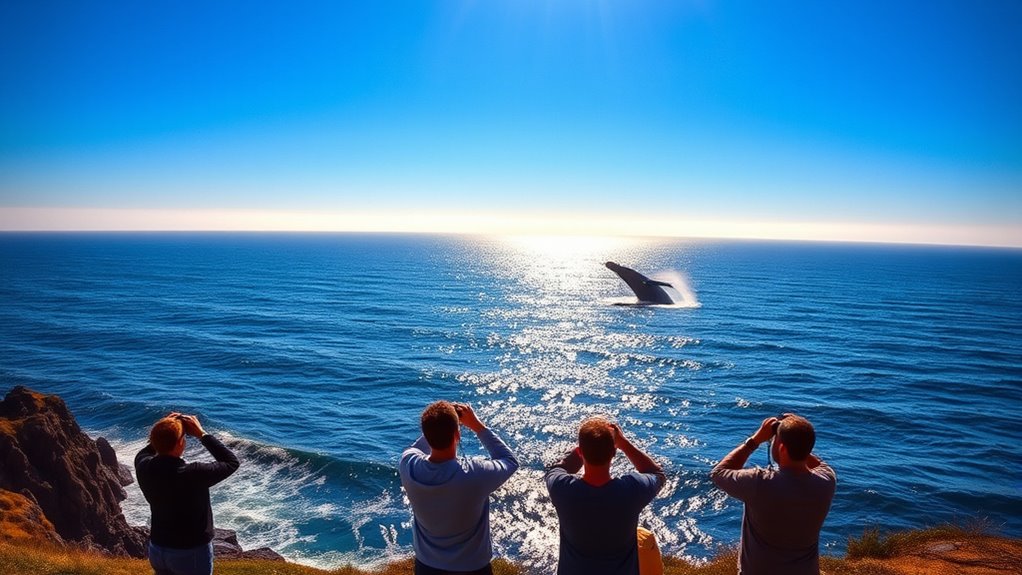
When planning your whale watching trip, knowing the best times and locations is key to maximizing your chances of sightings. In Southern California, season timing matters: gray whales migrate south from December to April, while blue whales feed from June to September.
You’ll find the best locations for whale watching in spots like Dana Point, Oceanside, La Jolla, and Monterey Bay, where sightings tend to be most frequent. To improve your experience, check current whale sightings reports and marine forecasts for the most productive days.
Morning trips are ideal for spotting gray whales, whereas afternoon tours boost your chances of seeing humpbacks and blue whales. Booking with experienced operators who rely on recent sighting data makes certain you won’t miss the action.
Why Weather and Sea Conditions Matter for Whale Watching
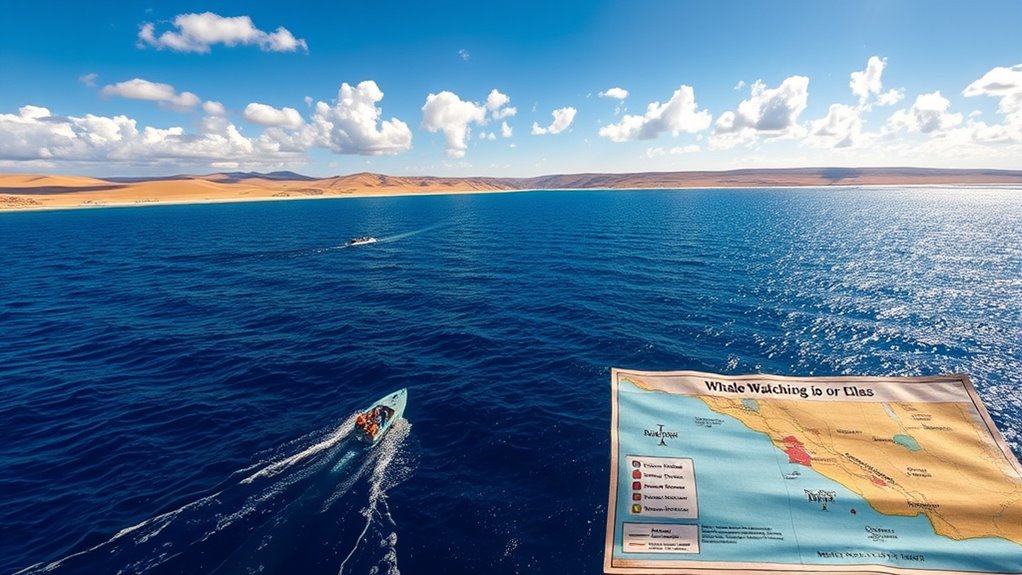
You’ll want to pay close attention to wind speed, wave height, and sea surface visibility when planning your trip. Calm waters and clear conditions help you spot whales more easily and keep your boat ride steady.
On the other hand, rough seas and poor visibility can make sightings rare and the experience uncomfortable.
Impact Of Wind Speed
A calm breeze can make all the difference on a whale watching trip by smoothing the seas and boosting your chances of spotting these majestic creatures. Wind speed plays a vital role in shaping sea conditions that directly impact whale sightings. Here’s what you should keep in mind:
- Wind speeds under 10 knots create calm seas, making it easier to see whales and enjoy a comfortable trip.
- Winds above 15-20 knots cause choppy waters, reducing visibility and making it harder to observe whale behavior.
- Strong winds can lead to cancellations for safety reasons and increase the risk of sea sickness, limiting your overall experience.
Sea Surface Visibility
How clearly you see the sea surface can make or break your whale watching experience. Calm sea surface conditions improve visibility by minimizing wave interference, letting you spot whales more easily as they surface. On the other hand, rough seas and high winds reduce your chances of sightings and can make your trip uncomfortable.
Clear weather with minimal clouds enhances natural light, boosting both visibility and photography opportunities. Sea surface temperature and currents also affect whale behavior and how often they surface, impacting your chances. Before you go, always check marine forecasts to find the best days with ideal sea surface conditions.
Doing so increases your chances of a memorable whale watching adventure in Southern California.
Wave Height Influence
When wave heights stay below 3 feet, your chances of spotting whales improve considerably, and you’re less likely to feel seasick during the trip. Calm seas create the perfect environment for whales to surface and breach, making your experience more rewarding. Here’s why wave height matters:
- Low wave height enhances visibility, allowing you to see whales more clearly.
- Calm seas reduce boat movement, minimizing your risk of motion sickness—still, bring motion sickness medication just in case.
- Rough seas with high waves and strong winds decrease whale surface activity and make the boat unstable, cutting your chances of sightings.
Check weather forecasts for low wave heights and plan morning trips when waves tend to be calmer for the best whale watching experience.
How to Use Recent Whale Sightings to Plan Your Trip
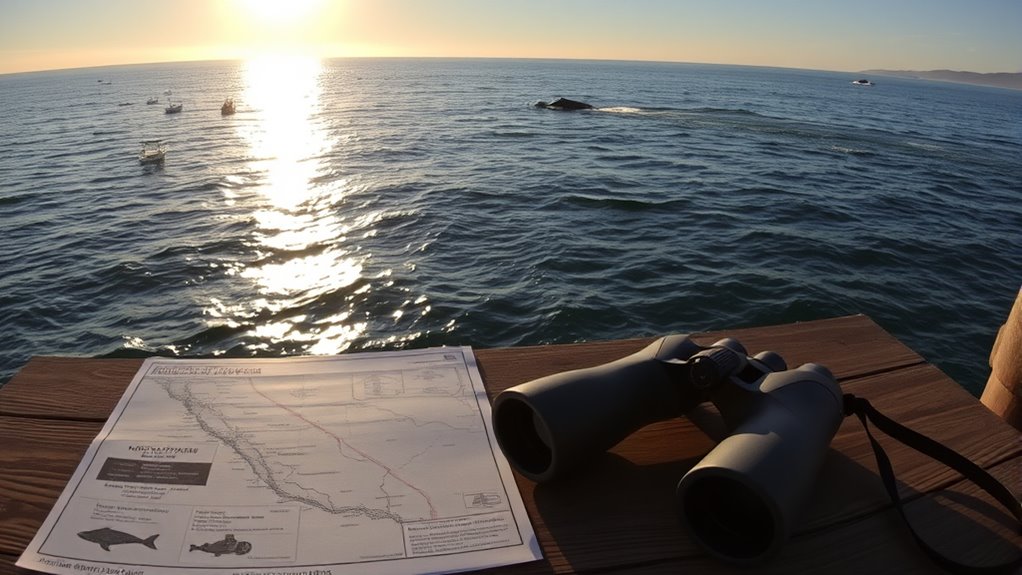
To plan your whale watching trip effectively, start by tracking recent sightings through local reports and apps. Align your trip dates and locations with the latest patterns to increase your chances of spotting whales.
Choosing spots with current activity, like Dana Point or La Jolla, can make all the difference.
Tracking Recent Sightings
Since whale activity can vary daily, checking recent sightings will help you time your trip for the best chances of seeing these majestic creatures. To track recent sightings effectively, follow these steps:
- Regularly visit local whale watching reports and online databases to get the latest updates on whale migration and recent sightings in Southern California.
- Use whale watching apps like Whale Alert or WhaleTrack for real-time reports and exact sighting locations from the community.
- Consult marine conservation websites and local tour operators to understand current migration patterns and hotspots for better trip planning.
Aligning Timing And Location
Although whale sightings can be unpredictable, you can increase your chances of a successful trip by aligning your timing and location with recent reports. Start by checking live updates from local tour operators and using whale watching apps like Whale Alert or WhaleTrack for real-time sightings. Plan your visit during known migration windows—December to April for gray whales and June to September for blue whales—to hit peak seasons.
Focus on locations like Dana Point, La Jolla, or Monterey Bay, where sightings are frequently reported during these times. Also, choose calm, clear days based on weather reports to improve visibility. By syncing your trip with recent whale activity and prime migration periods, you’ll maximize your chances of experiencing an unforgettable whale watching adventure.
Choose the Best Whale Watching Tours and Boats
When you pick a whale watching tour, choosing a reputable operator like Dana Wharf Whale Watching can greatly boost your chances of spotting whales, thanks to their 95% success rate. To make the most of your experience, focus on these key factors:
- Select reputable tour operators with proven success and ethical whale watching practices.
- Opt for boats with stable platforms, open viewing decks, and quality boat equipment like binoculars to enhance visibility.
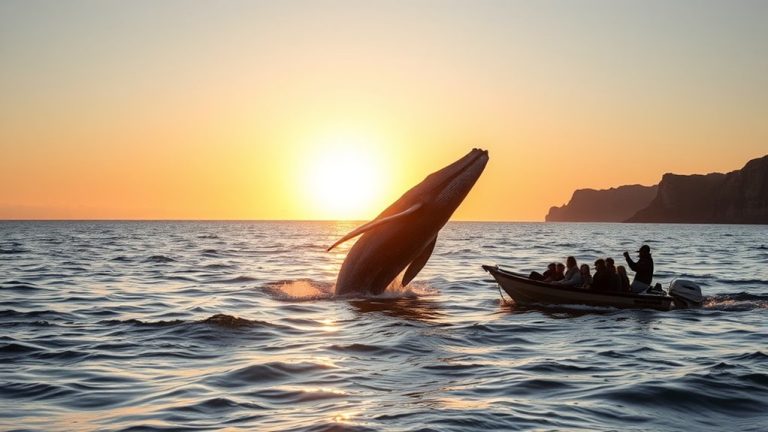
- Consider private charters or Zodiac-style boats for a closer and more personalized wildlife encounter.
Prepare for Your Whale Watching Trip: What to Bring and Expect
To enjoy your whale watching trip fully, you’ll want to prepare carefully for changing weather and long hours on the water. Be sure to bring layers, including a waterproof jacket, since weather conditions can shift quickly at sea. Pack a camera with a telephoto lens and binoculars to capture stunning views of whales and other marine life.
If you’re prone to seasickness, take motion sickness medication before boarding to stay comfortable. Don’t forget sunscreen, sunglasses, and a hat to protect yourself from UV rays during the tour. Bring water and snacks to stay hydrated and energized throughout your adventure.
With these essentials, you’ll be ready to focus on the incredible experience of watching majestic whales in their natural habitat.
How to Respect Whales and Dolphins: Ethical Whale Watching Guidelines
Because whales and dolphins are sensitive to human presence, you should always keep a safe distance of at least 100 yards to avoid disturbing them. Practicing ethical whale watching ensures you respect these creatures while supporting marine conservation.
Here’s how to engage in responsible viewing:
- Follow your tour operator’s guidelines and regulations to maintain safe, non-intrusive behavior.
- Avoid loud noises or sudden movements that could stress or disorient marine life.
- Never feed, touch, or chase whales and dolphins, as interfering disrupts their natural behaviors.
Frequently Asked Questions
When’s the Best Time to Go Whale Watching in Southern California?
You’ll find the best whale watching from December to April for gray whales and from June to September for blue whales.
Plan your trip around these peak months to catch the most sightings and enjoy an unforgettable experience.
Where Is the Best Place to See Whales in Southern California?
You don’t have to be a psychic—Dana Point is your go-to for whales in Southern California.
With year-round sightings and calm seas, you’ll spot giants like gray whales and orcas without breaking a sweat.
Is Newport or Dana Point Better for Whale Watching?
Dana Point offers a higher whale sighting rate and a serene harbor, perfect for focused whale watching. The calm waters make it an ideal spot for those looking to have an intimate experience with marine life.
Newport Beach provides more tour options and diverse wildlife. Its tours often include sightings of various marine animals, making it a great choice for families and those seeking variety.
Choose Dana Point for conservation-focused trips or Newport for variety and family-friendly experiences. Both locations offer unique advantages depending on what you want from your whale watching adventure.
How Much Does It Cost to Go Whale Watching in California?
You might think whale watching is pricey, but tickets usually cost $50 to $150 per person.
Private charters run higher, but group discounts and gift cards can make it affordable and flexible for your budget.
Conclusion
If you don’t plan your whale watching trip just right, you might as well be searching for a unicorn in the ocean! But with the perfect timing, weather checks, and the best tour, you’ll witness nature’s giants up close like never before.
So pack smart, respect these majestic creatures, and get ready for an unforgettable adventure that’ll blow your mind—and maybe even make you believe whales are the true rulers of the sea!
By planning your trip carefully during the whale watching season in Southern California, you ensure the best experience possible. Remember to check the local weather, choose reputable tours, and be mindful of whale watching guidelines to enjoy this incredible wildlife encounter safely and responsibly.