How to Determine If Jonah Was Swallowed by a Whale or Fish
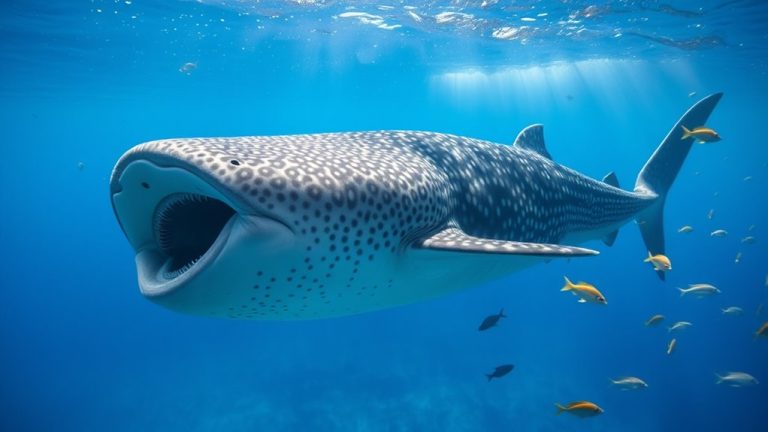
To determine if Jonah was swallowed by a whale or a fish, you need to focus on the original Hebrew term “dag gadol,” which means “great fish” and doesn’t specify species.
Ancient texts emphasized the creature’s size, not whether it was a whale or fish, as modern animal classifications didn’t exist.
Translations and cultural views shaped the popular whale image, but the Bible highlights the miracle, not biology.
If you want to explore the story’s deeper meanings and interpretations, keep going.
What Does the Bible Say About Jonah’s Creature?
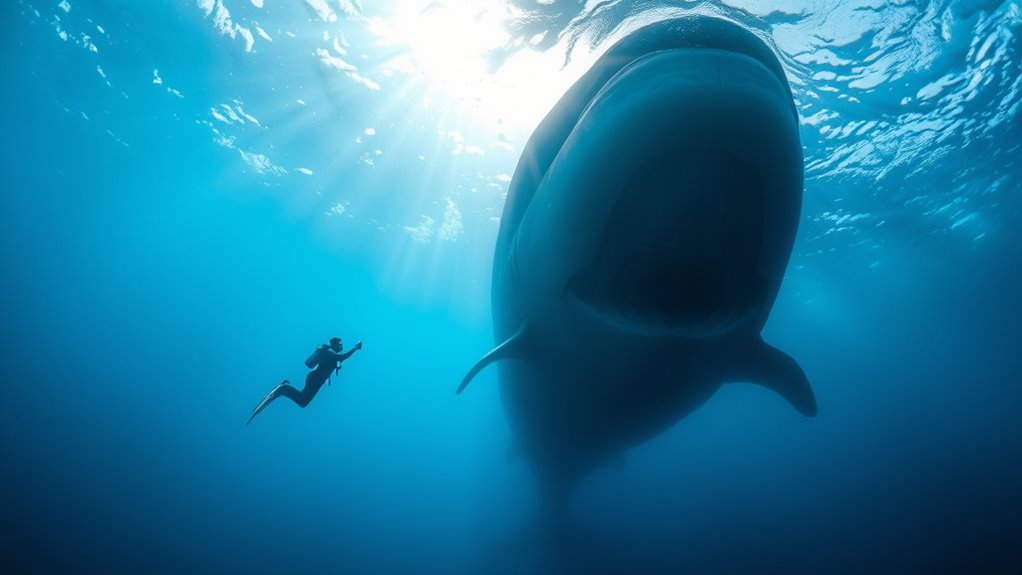
Although the Bible doesn’t specify the exact species, it clearly states that Jonah was swallowed by a “great fish.” If you read the Book of Jonah, you’ll notice the Hebrew term used is “dag gadol,” which translates directly to “great fish” rather than a whale.
When you look closely, the Bible focuses more on the miraculous nature of Jonah’s survival inside this creature, rather than identifying its exact kind. You won’t find detailed biological descriptions, but the emphasis lies in the event’s significance.
The story highlights God’s power and Jonah’s obedience, not the specifics of the animal. So, when you consider the Bible’s account, it’s clear that the creature’s identity is less important than the message conveyed.
What Does the Original Hebrew Word Mean: Fish or Whale?

How do you interpret the original Hebrew word used to describe the creature that swallowed Jonah? The term is “dag,” which generally means “fish.” However, ancient Hebrew didn’t always differentiate between what we call fish and whales today.
The word covers a broad range of sea creatures. You won’t find a specific Hebrew word for “whale,” as the language and culture grouped large sea animals under “fish.” So, when you read “great fish” in Jonah, it’s not necessarily excluding a whale.
Instead, it reflects the linguistic context of the time. Understanding this helps you see that the creature could be any large sea animal, not strictly a fish or a whale as we categorize them now. It’s about the original meaning, not modern classifications.
How Ancient Scholars Interpreted Jonah’s Creature

Since ancient scholars lacked the modern scientific distinctions we have today, they often described Jonah’s creature based on cultural interpretations and available knowledge. You’ll find that many referred to it simply as a “great fish,” a term encompassing large sea creatures without specifying species. In their writings, the creature sometimes took on symbolic meanings, representing divine intervention rather than a biological entity.
You might notice that ancient texts and commentaries didn’t focus on whether it was a whale or fish but emphasized the miraculous nature of Jonah’s survival. When you explore their interpretations, you see a blend of folklore, theology, and limited natural history, shaping how they understood the story. This context helps you appreciate why the creature’s identity remained broad and flexible in ancient thought.
Why Popular Culture Portrays Jonah Inside a Whale
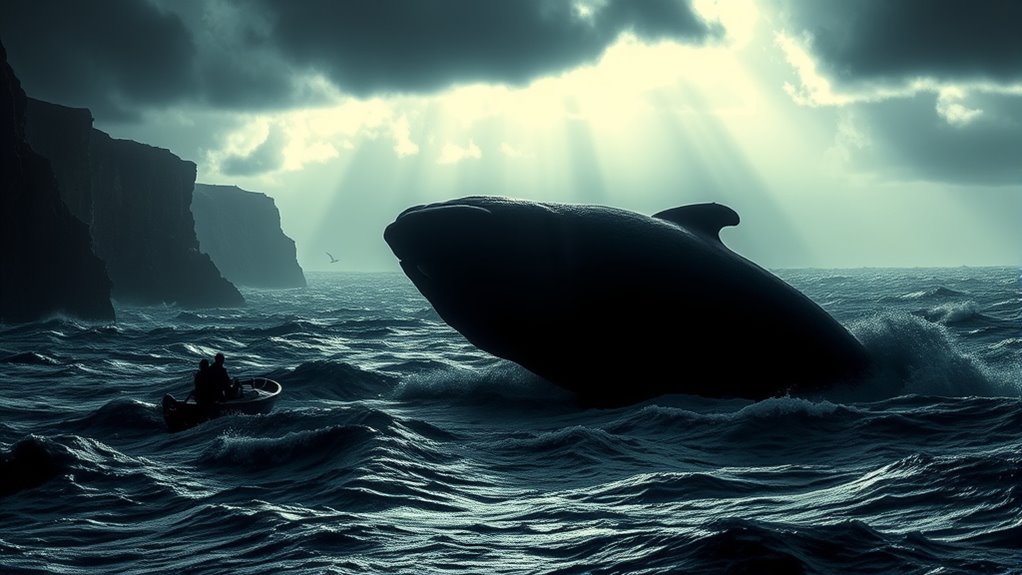
When you think of Jonah’s story, the image of him inside a whale likely comes to mind because popular culture has firmly stamped this version into public imagination. Movies, books, and cartoons frequently depict a massive whale swallowing Jonah, making it easier for audiences to visualize the miraculous event. The whale’s size and mystique create a dramatic, memorable symbol, while the word “whale” itself sounds more imposing than “fish.”
This portrayal also taps into familiar sea creature imagery, which resonates more strongly with people than a generic fish would. By consistently showing Jonah inside a whale, storytellers simplify the narrative and emphasize the extraordinary nature of his survival, helping the story stick in your mind as a powerful lesson about faith and redemption.
Biblical and Historical Views on Whales and Fish
Although the Bible mentions a “great fish” rather than a whale, many have assumed the creature was a whale because of its size and the dramatic nature of Jonah’s story. In biblical times, the Hebrew word “dag gadol” simply meant a large sea creature, without specifying species.
Historically, whales were less understood and often grouped with large fish. Ancient translations, like the Greek Septuagint, used “ketos,” meaning sea monster or whale, influencing later interpretations.
You’ll find that early scholars debated whether Jonah’s ordeal involved a literal fish or a symbolic creature. This ambiguity reflects the limited marine knowledge of the era. Understanding these biblical and historical contexts helps you grasp why opinions differ and why pinpointing the exact creature remains complex.
Could Someone Survive Inside a Whale or Large Fish?
You might wonder if you could survive inside a whale or large fish. The reality is that the environment would be extremely hostile, with limited air and crushing pressures.
Understanding these biological limits helps explain how difficult it would be to stay alive in such a situation.
Human Survival Challenges
Could anyone realistically survive inside a whale or a large fish? You’d face immediate and intense challenges that make survival incredibly unlikely. First, the environment is hostile—dark, cramped, and wet, with limited air supply.
Then, there’s the threat of digestive acids and enzymes that could harm you. You’d also struggle with extreme stress and panic, which might make it harder to think clearly or conserve energy. Finally, the lack of food and water would quickly become life-threatening.
Consider these key survival challenges:
- Oxygen scarcity leading to suffocation risk
- Exposure to corrosive digestive fluids
- Psychological stress and disorientation
- Absence of nourishment and hydration
These factors combined create a harsh reality for anyone trapped inside such a creature.
Biological Limitations Inside
Surviving inside a whale or large fish goes beyond just facing immediate dangers—it involves understanding the biological limits of such creatures. You’d face extreme pressure, lack of oxygen, and digestive enzymes designed to break down food, not humans. Even the largest stomachs aren’t spacious or stable enough to support life for long.
The environment is dark, acidic, and hostile, making survival nearly impossible. Here’s a quick comparison:
| Factor | Whale Stomach | Large Fish Stomach |
|---|---|---|
| Size | Large, but confined | Smaller, cramped |
| Oxygen Levels | Very low | Extremely low |
| Acidity | Highly acidic | Highly acidic |
| Digestive Enzymes | Strong, corrosive | Very strong |
Given these factors, survival inside is biologically implausible for long durations.
How Language and Translation Affect Our Understanding of Jonah’s Story
You’ll notice that the original Hebrew word used for the creature can change how you picture Jonah’s story. Different translations interpret this term in ways that affect your understanding of whether it was a whale, fish, or something else.
Plus, knowing the cultural language context helps you grasp what the ancient audience might have imagined.
Hebrew Word Analysis
Understanding the Hebrew words used in Jonah’s story helps clarify what kind of creature swallowed him. The original text uses the word “dag,” which broadly means “fish” but can refer to any sea creature. You’ll want to contemplate these key points:
- “Dag” doesn’t specify a whale or a particular species. Ancient Hebrew lacked separate terms for whales as we know them today. The phrase “big fish” (dag gadol) emphasizes size, not species.
- Context and cultural knowledge influence how you interpret the term.
Translation Variations Impact
Because translations shape how you perceive ancient texts, the way Jonah’s story has been rendered in different languages considerably influences whether readers picture a whale, a fish, or another sea creature. For example, some English versions use “great fish” to stay close to the original Hebrew term “dag gadol,” which literally means “big fish.”
Other translations opt for “whale,” reflecting traditional interpretations or the biological understanding of a large sea creature capable of swallowing a man. These choices affect your mental image and interpretation of the story. When you encounter varying terms, it’s important to recognize that translators balance linguistic accuracy with cultural relevance, which shapes how the narrative is understood across different audiences.
This shows that language plays an essential role in how you visualize Jonah’s extraordinary experience.
Cultural Language Context
The way translators choose words for Jonah’s story doesn’t just affect your mental image—it reflects deeper cultural perspectives. When you read about Jonah being swallowed by a “great fish” or a “whale,” you’re also encountering the translator’s cultural lens. Language shapes how you understand the event, blending ancient symbolism with modern concepts.
Keep in mind:
- Different cultures use “fish” and “whale” based on local marine life familiarity.
- Ancient Hebrew terms might not distinguish species as you expect today.
- Symbolism in the story often outweighs biological accuracy in translations.
- Your interpretation can shift depending on the translator’s background and intent.
Deciding Whether Jonah Was Swallowed by a Whale or Fish
When you explore the story of Jonah, you’ll notice that the original texts refer to a “great fish” rather than specifically naming a whale. To decide whether it was a whale or fish, focus on the language and cultural context of the time. The Hebrew word used is “dag gadol,” which simply means large fish or sea creature, without distinguishing species.
Since ancient people didn’t classify marine animals as we do today, the term likely covered any large sea animal, including whales. You can also consider that whales are mammals, not fish, but this biological fact wasn’t known then. Given this, it’s best to understand Jonah’s “great fish” as a large sea creature without insisting on the modern distinction between whale and fish.
Frequently Asked Questions
What Is the Scientific Explanation for Surviving Inside a Large Sea Creature?
You’d survive inside a large sea creature by holding your breath, avoiding harmful digestive acids, and staying calm to reduce oxygen use.
However, scientifically, surviving long inside such an environment is nearly impossible.
Are There Other Similar Stories in Different Cultures About Being Swallowed by Animals?
Yes, you’ll find similar stories worldwide, like Pinocchio swallowed by a whale or the Hindu tale of Matsya rescuing Manu.
These myths often symbolize transformation, survival, and rebirth, showing your shared human fascination with such themes.
How Has Jonah’s Story Influenced Modern Literature and Art?
You’ll find Jonah’s story inspiring countless works in literature and art, symbolizing redemption and survival.
Artists and writers often draw on its themes to explore struggle, faith, and transformation, making it a timeless influence.
What Lessons Do Religious Communities Draw From Jonah’s Experience?
You grasp lessons of repentance, forgiveness, and obedience through Jonah’s journey—his time inside the great fish symbolizes transformation and second chances.
It reminds you that mercy and faith can turn even the darkest moments into hope.
Has Any Marine Biology Research Been Inspired by Jonah’s Story?
Yes, Jonah’s story inspired some marine biologists to study whale digestion and behavior, though it’s more symbolic than scientific.
You’ll find research exploring how large sea creatures might swallow items whole, but it’s mostly speculative.
Conclusion
As you explore Jonah’s story, consider this: whales can hold up to 2,000 gallons of water in their stomachs, making survival inside one nearly impossible. This fact alone challenges popular images of Jonah inside a whale.
Understanding the original Hebrew word and ancient interpretations helps you see the story beyond modern myths. So, whether it was a whale or a large fish, remember—language and culture shape how we imagine this incredible event.
When trying to determine if Jonah was swallowed by a whale or fish, keep in mind that both the original text and cultural context influence the interpretation. Keywords like “great fish” in Hebrew point toward a broad understanding rather than a specific species. This perspective helps clarify the story’s message beyond literal depictions.