How Do Whale Sharks Sleep?
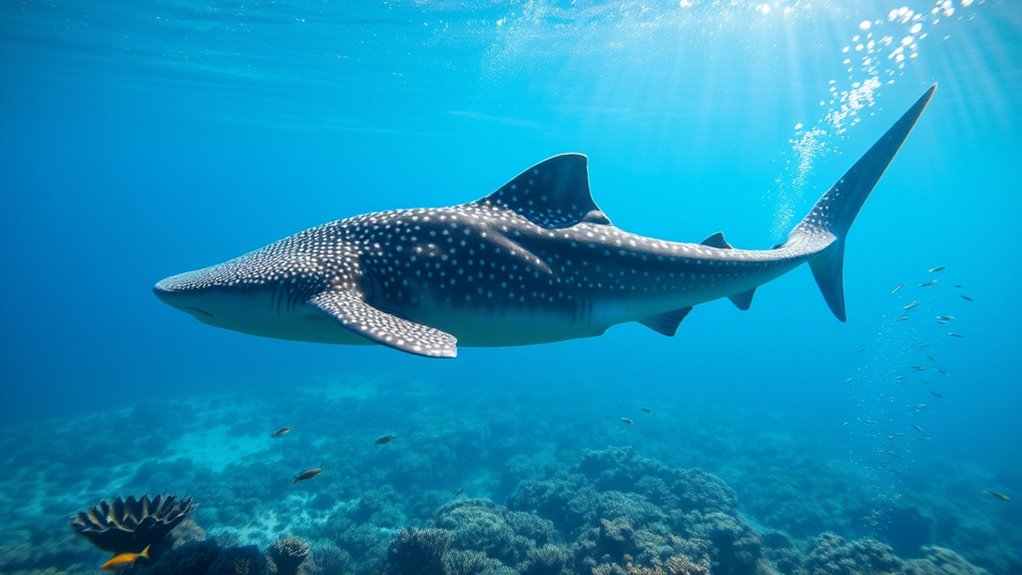
You might wonder how whale sharks sleep since they don’t do it like humans. Instead, they enter restful periods where their activity slows down or stops, often near the surface or at shallow depths.
Whale sharks keep breathing using spiracles and buccal pumping, letting water flow over their gills without swimming.
During these times, they conserve energy but stay alert. This unique sleeping behavior helps them survive in their ocean environment.
If you want to understand their sleeping habits more deeply, there’s plenty more fascinating info to explore.
Do Whale Sharks Sleep?
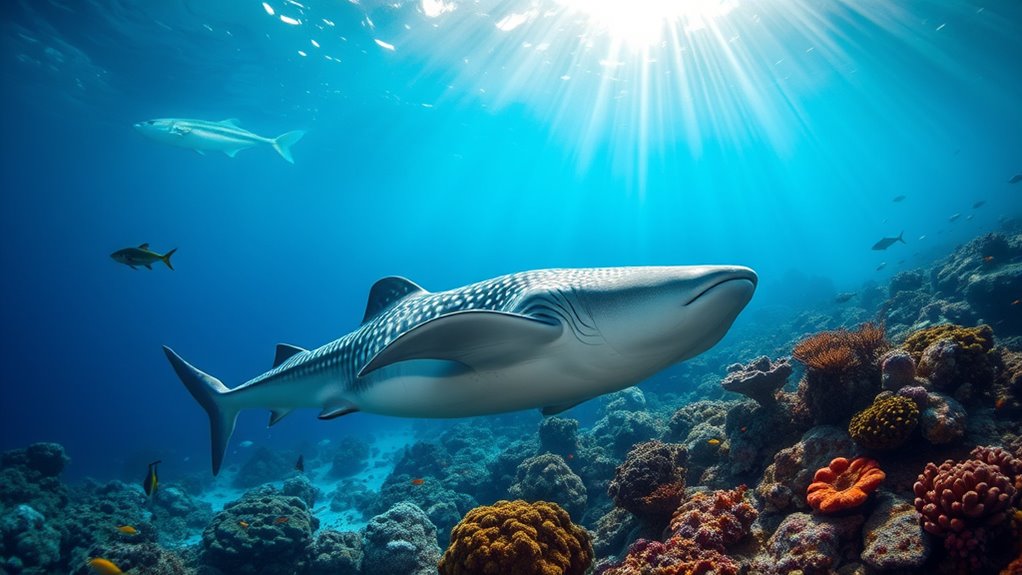
While whale sharks don’t sleep like humans do, they do enter periods of reduced activity that resemble rest. When you observe whale sharks resting, you’ll notice their movement slows considerably or even stops, often near the surface or at various depths. They use their spiracles to help maintain oxygen intake without constant swimming.
These gentle giants can stay stationary, conserving energy while their bodies adopt a relaxed posture. Evidence shows whale sharks experience sleep-like states characterized by decreased oxygen consumption and minimal movement. So, although they don’t have traditional sleep cycles, whale sharks do rest in a way that lets them recharge.
You’ll find their resting behavior essential for balancing energy needs with the ocean’s demands, making their version of sleep quite unique.
How Whale Sharks Breathe While Resting
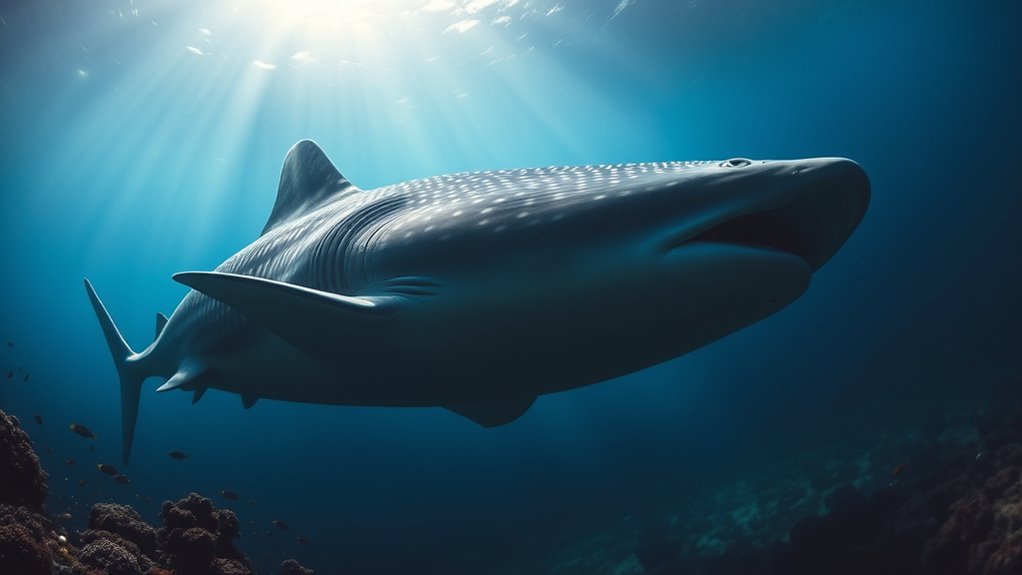
Because whale sharks need a continuous flow of water over their gills to breathe, they use specialized methods when resting to maintain oxygen intake without swimming. When you watch these sharks resting, you’ll notice they rely heavily on their spiracles—small openings behind their eyes that actively pump water over the gills. This allows them to stay still while ensuring a steady water flow.
Additionally, whale sharks use buccal pumping by pulling water in and pushing it out with cheek muscles, helping them breathe while remaining stationary. During rest, they often keep their mouths slightly open to assist this process. These adaptations let whale sharks breathe efficiently during rest without the constant need to swim, a vital function for their survival.
How Whale Sharks Balance Sleep and Feeding
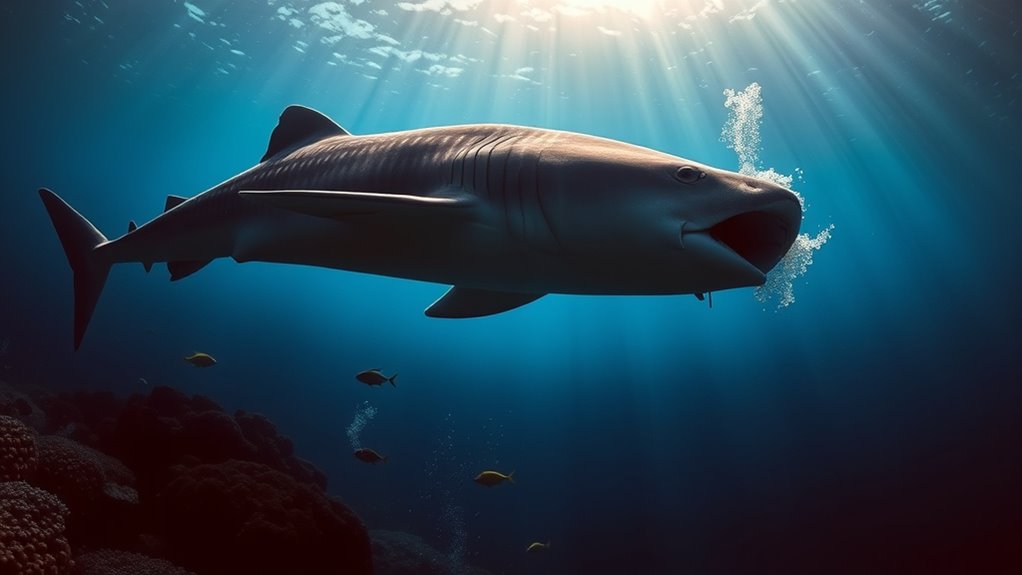
How do whale sharks manage to rest without missing out on feeding? They alternate between feeding and resting periods to balance these needs. While feeding, they engage in active swimming with their mouths wide open, filtering plankton and small fish.
When it’s time to rest, whale sharks remain stationary in the water, using their spiracles to draw water over their gills. This allows them to sleep without the need to swim constantly. During resting, they reduce activity but stay alert enough to respond to their surroundings.
Their large size and slow swimming pace make these shifts smooth, enabling them to sleep deeply while still surfacing for air and feeding efficiently. This balance keeps them healthy and energized in their vast ocean habitat.
Where and When Do Whale Sharks Sleep?
If you’ve ever wondered where whale sharks catch their rest, they often choose shallow, calm waters like lagoons and coastal areas during the day. In these protected, low-disturbance areas, you’ll find whale sharks resting either alone or in groups. While sleeping, they may remain stationary or drift slowly near the surface or at mid-depths.
Because they need to keep moving to pass water over their gills, their resting periods are usually short—ranging from a few minutes to several hours. These resting intervals often occur in early mornings or late afternoons but can happen anytime based on environmental conditions. So, when you spot whale sharks in shallow water during these times, you’re likely witnessing their natural resting behavior.
What Scientists Have Learned About Whale Shark Sleep
Understanding where and when whale sharks rest sets the stage for uncovering what happens during their sleep. Scientists have learned that whale sharks enter sleep-like states marked by physiological signs such as decreased oxygen intake and slowed metabolism.
These gentle giants often rest near the surface or at shallow depths, remaining mostly stationary.
Here’s a quick summary of key findings:
| Aspect | Observation |
|---|---|
| Resting behavior | Stationary, relaxed posture near surface |
| Sleep-like states | Brief, intermittent during migrations |
| Physiological signs | Lower metabolism, reduced movement |
Frequently Asked Questions
How Do Sharks Sleep if They Can’t Stop Swimming?
If you’re a shark that can’t stop swimming, like a great white, you rest by entering a sleep-like state while continuously moving.
This movement keeps water flowing over your gills so you can breathe and stay alive.
How to Tell if a Shark Is Sleeping?
You might think sharks never sleep, but you can tell when they do by spotting slower movements, relaxed posture, or closed eyes.
Watch for decreased activity and steady breathing—that’s when they’re catching some rest underwater.
Has a Whale Shark Ever Attacked a Human?
No, a whale shark has never attacked a human. You can feel safe around them since they’re gentle, docile giants that feed on plankton, posing no threat or aggression toward people in any documented cases.
Why Do Sharks Bump Before Attacking?
Imagine you’re feeling the weight of a door before entering; sharks bump before attacking to size up prey, test its strength, and avoid danger.
This cautious tap helps you gather essential info and strike safely.
Conclusion
Imagine you’re a gentle giant drifting through an endless ocean, eyes closed but never fully still. Like a sailor who rests while steering, whale sharks find a way to sleep without stopping their journey.
You see, their rest isn’t like yours—it’s a quiet dance between survival and slumber. So, when you think about whale sharks sleeping, remember: sometimes, true rest means moving forward even when the world never stops.
Whale sharks sleep by slowly swimming, allowing water to flow over their gills to breathe. This unique behavior lets them rest while staying safe in the vast ocean. Understanding how whale sharks sleep reveals the incredible adaptations of these gentle giants.