How Fast Can a Blue Whale Swim?
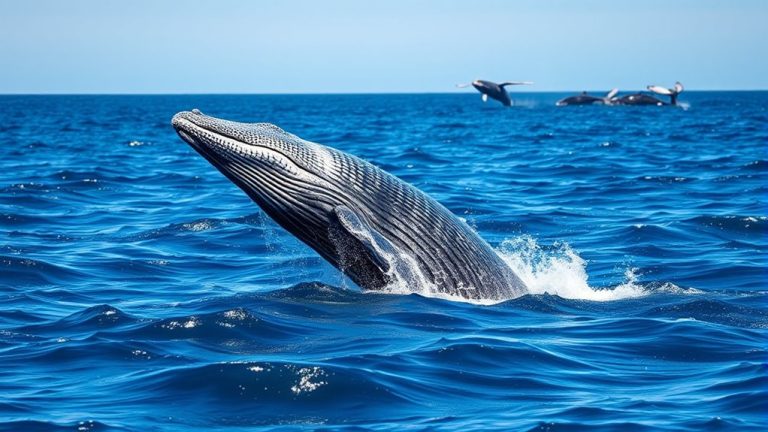
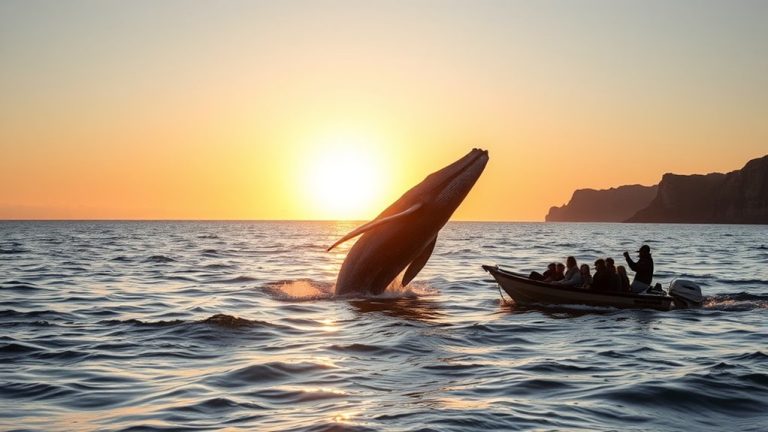
You can expect a blue whale to cruise steadily around 5 miles per hour, conserving energy during long migrations. When needed, they can burst up to 20 miles per hour to catch prey or evade threats.
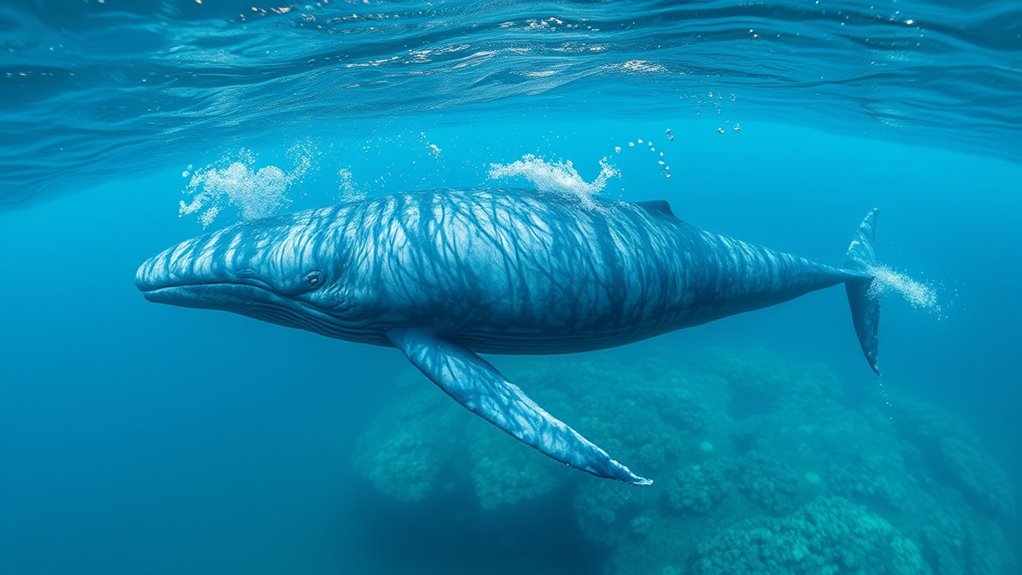
Their massive size, streamlined shape, and powerful tail flukes help them swim efficiently and quickly despite their bulk.
If you want to understand how they balance speed with feeding and travel, there’s plenty more to explore about their incredible swimming abilities.
How Fast Do Blue Whales Swim at Cruising Speeds?
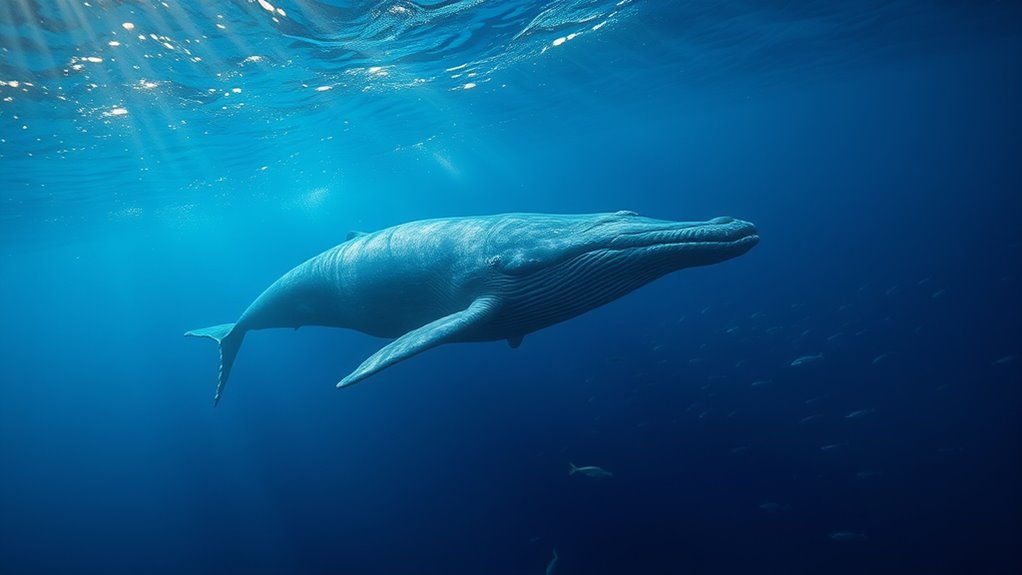
While blue whales can burst up to 36 km/h (22 mph), they usually cruise between 2 and 8 km/h (1.2 to 5 mph) during migrations. When you watch blue whales swim at this cruising speed, you’ll notice they maintain a steady, slow pace that’s perfect for covering long distances efficiently.
This cruising speed helps them conserve energy as they travel thousands of kilometers between feeding and breeding grounds. Despite their massive size, blue whales don’t need to rush; their endurance at these moderate speeds allows them to swim across vast oceans without exhausting themselves.
What Top Speeds Can Blue Whales Reach in Short Bursts?
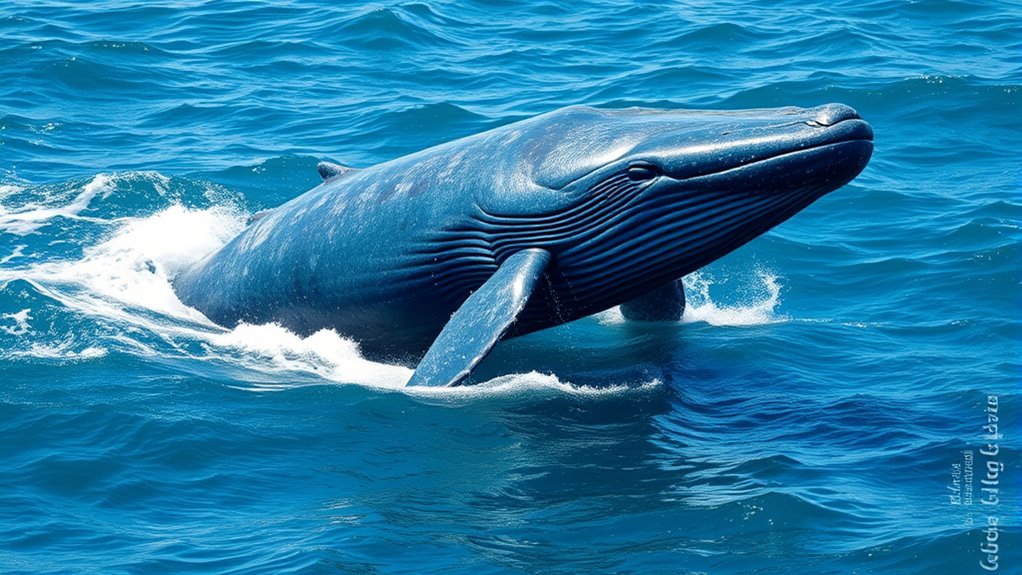
Even though blue whales usually swim slowly, they can suddenly accelerate to impressive speeds of up to 36 km/h (about 22 mph) in short bursts. When you observe blue whales, you’ll notice that while their cruising speed ranges between 2-8 km/h, these short burst speeds show their surprising agility.
Their maximum speed is primarily used during escape or aggressive behaviors. Here’s what you should know about their burst speed capabilities:
- Blue whales swim at speeds up to 36 km/h for brief moments.
- Powerful muscles and streamlined bodies enable rapid acceleration.
- Short burst speeds help them evade threats or capture prey.
- Despite their huge size, these whales are among the fastest large ocean animals.
You’ll be amazed at how quickly these giants can move when needed!
Why Does Size Matter for Blue Whale Swimming Speed?
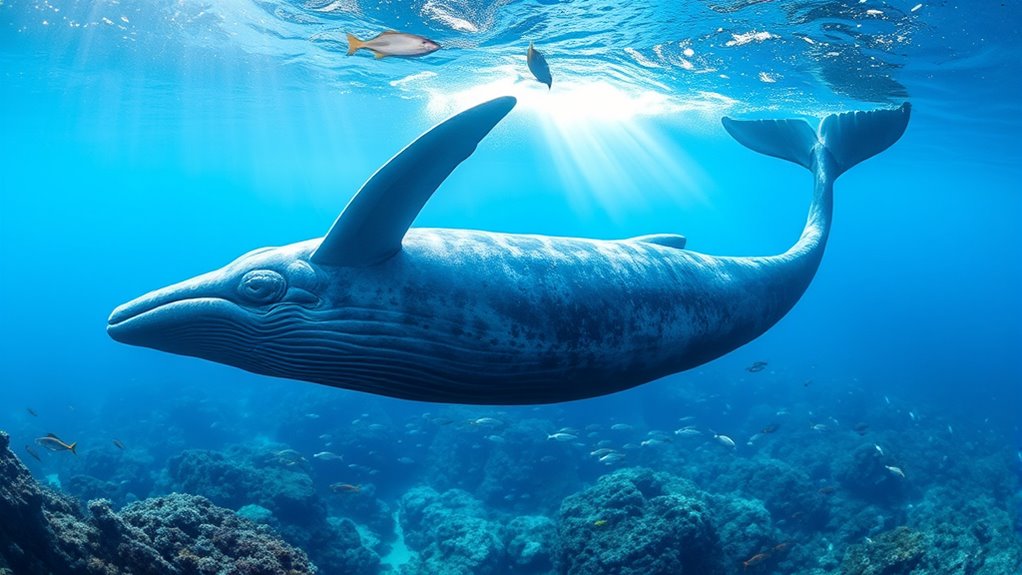
You might think a giant like the blue whale would struggle to move quickly, but its massive body actually helps generate powerful propulsion. Its streamlined shape cuts through water efficiently, reducing drag despite the sheer size.
Understanding how body mass and hydrodynamics work together explains why size truly matters for swimming speed.
Impact Of Body Mass
Because blue whales have massive bodies, they generate tremendous muscle power and momentum that let them reach impressive burst speeds. Their huge body mass isn’t just for show; it plays a key role in their movement and speed. When you consider how they propel through the ocean, several factors come into play:
- Greater muscle power helps them accelerate quickly to burst speeds up to 25 mph.
- Thick blubber adds buoyancy, easing movement through cold waters.
- Enormous hearts and strong cardiovascular systems supply muscles with oxygen during fast swims.
- Their size supports long migrations and helps them escape predators efficiently.
Understanding body mass shows you why these giants can swim so fast despite their enormous size.
Hydrodynamic Efficiency
While their immense size might suggest slow movement, blue whales swim impressively fast thanks to their hydrodynamic efficiency. Their streamlined bodies reduce water resistance, allowing you to cut through the ocean with surprising speed. You rely heavily on your large, muscular tail flukes, which generate powerful thrust to overcome the drag caused by your massive bulk.
Even though your thick blubber adds weight, your body design compensates by minimizing resistance, making rapid acceleration and sustained swimming possible. This hydrodynamic advantage lets you cover vast distances during long migrations without wasting energy.
How Do Blue Whales Use Speed During Migration and Feeding?
Although blue whales can sprint up to 36 km/hr, they usually cruise at a slower 2-8 km/hr during migration to conserve energy. You’ll notice that speed plays a crucial role in their migration and feeding habits. Blue whales use their fastest bursts strategically to maximize survival and efficiency.
Here’s how speed factors into their routine:
- They cover thousands of kilometers between feeding and breeding grounds without exhausting themselves.
- Rapid acceleration helps them catch dense swarms of krill during feeding.
- Short high-speed chases allow them to engulf prey quickly and effectively.
- Maintaining a moderate pace during migration ensures energy reserves for reproduction and growth.
How Does Blue Whale Swimming Speed Compare to Other Large Whales?
You might be surprised to learn that while blue whales can reach speeds up to 36 km/hr, some large whales swim even faster.
The fin whale, often called the “greyhound of the sea,” tops out around 40 km/hr, and sei whales can exceed 55 km/hr.
Let’s see how blue whales stack up against these speedy giants.
Speed Comparison Among Whales
When you compare the swimming speeds of large whales, blue whales cruise at a modest 2-8 km/h but can burst up to 36 km/h. While impressive, their swim speeds are generally slower than some other large whale species.
Here’s how they stack up:
- Fin whales swim faster, reaching speeds up to 40 km/h.
- Sei whales are among the quickest, exceeding 55 km/h.
- Minke whales can hit about 39 km/h, outpacing blue whales.
- Dall’s porpoise, though smaller, tops many whales at 55 km/h.
Record-Holding Fastest Species
Blue whales hold an impressive spot among the fastest large whales, capable of swimming up to 36 km/h (22 mph) in short bursts. While blue whales showcase remarkable swimming speed, some large whale species outpace them. For instance, fin whales reach speeds of 40 km/h (25 mph), slightly faster than blue whales.
Sei whales are the record-holders, swimming over 55 km/h (34 mph), markedly surpassing blue whales. Minke whales also swim at speeds up to 39 km/h (24 mph), comparable to or just ahead of blue whales. Despite their massive size, blue whales rival other large whale species in bursts of speed, but when it comes to the absolute fastest large whales, they fall just short of the top record-holders.
What Adaptations Enable Blue Whales to Swim Efficiently and Fast?
Although they’re the largest animals on Earth, blue whales swim with surprising speed and efficiency thanks to several key adaptations. Their streamlined body shape and thick blubber reduce water resistance and provide insulation, letting them glide smoothly. Their powerful tail flukes generate strong propulsion, enabling bursts of speed.
Large, muscular neck and back muscles support rapid acceleration and sustained cruising. Here’s what helps you understand their swimming prowess:
- Tail flukes produce powerful thrusts for quick movement
- Streamlined body shape minimizes drag in water
- Thick blubber insulates and smooths flow around the body
- Strong muscles help with both acceleration and endurance
These adaptations work together, making blue whales impressive swimmers despite their massive size.
How Do Blue Whales Breathe During Fast Swimming?
How exactly do these giant mammals manage to breathe efficiently while swimming fast? Blue whales rely on their highly efficient respiratory system to take quick, deep breaths at the surface. Their blowholes, located on top of their heads, open briefly to exhale and inhale, allowing for rapid oxygen intake.
Even during fast swimming, they surface every 10 to 15 minutes but minimize time spent above water to conserve energy. Their large lung capacity enables them to absorb substantial amounts of air in a single breath, supporting both rapid movement and extended dives.
This remarkable adaptation ensures blue whales maintain sufficient oxygen levels while swimming swiftly, allowing them to stay active without compromising their need to breathe.
What Threats Affect Blue Whales’ Ability to Swim Safely?
Maintaining swift and safe swimming is essential for these giants, but several threats can disrupt their ability to move freely. You need to be aware that blue whales face dangers affecting their safety and speed. These include:
- Ship strikes, which cause injuries or death, directly impairing their swimming.
- Ocean noise pollution from vessels and military activities, disrupting their communication and navigation.
- Entanglement in fishing gear or debris, restricting movement and causing harm.
- Habitat degradation, which reduces prey availability and safe areas to swim.
Each of these threats challenges blue whales’ capacity to swim effectively, forcing them to adapt or risk injury. Understanding these dangers helps emphasize why protecting their environment is vital for their survival and safe movement.
How Do Researchers Measure and Track Blue Whale Swimming Speeds?
Because blue whales spend much of their time underwater and cover vast distances, researchers rely on advanced technology like satellite tags and drones to accurately measure and track their swimming speeds. Satellite tags record movement and location data over time, allowing you to analyze the whales’ movement patterns and understand their typical cruising speeds.
Drones offer real-time observations, helping you estimate swimming speeds directly. Acoustic monitoring complements these methods by tracking vocalizations, which helps infer speed and behavior during migrations.
Frequently Asked Questions
Can Blue Whales Live 100 Years?
Yes, blue whales can live up to 100 years or more. You’ll find they grow slowly and stay protected in the ocean, which helps them reach such impressive ages despite environmental threats.
What Is the Fastest Whale in the World?
The fastest whale in the world is the sei whale, reaching speeds over 55 km/h (34 mph).
You’ll notice blue whales swim slower, topping around 36 km/h (22 mph), so sei whales really own the speed title.
Has a Blue Whale Ever Attacked a Human?
You won’t find any records of a blue whale attacking humans—they’re gentle giants, often growing over 100 feet long. They’re curious but avoid confrontation, so you can safely admire them without fear of aggression.
What Whale Lives 300 Years?
You’re looking for the whale that can live 300 years—that’s the Bowhead whale.
Scientists have confirmed some live over two centuries, thanks to their unique genetics and Arctic adaptations, making them one of the longest-living mammals.
Conclusion
You might be surprised to learn that blue whales can reach speeds up to 20 miles per hour in short bursts, despite their massive size. This incredible speed helps them evade predators and navigate vast oceans during migration. Understanding how these giants swim so efficiently highlights their remarkable adaptations.
Next time you think about blue whales, remember—they’re not just the largest animals on Earth, but also surprisingly swift swimmers when they need to be. Blue whales’ ability to swim fast plays a crucial role in their survival and migration across the world’s oceans.