Top 3 Places to See a Blue Whale in the Wild
You can see blue whales up close in three amazing spots. Head to Los Cabos, Mexico, from November to April when thousands migrate through warm waters.
On California’s coast, June to September offers prime viewing, especially around Monterey Bay.
If you want an ethical whale watching adventure, Mirissa, Sri Lanka, is ideal between December and March, even offering permit-guided swims.
These destinations combine great sightings with conservation care—keep exploring to find out what makes each unique.
Los Cabos, Mexico: Best Blue Whale Viewing Spots
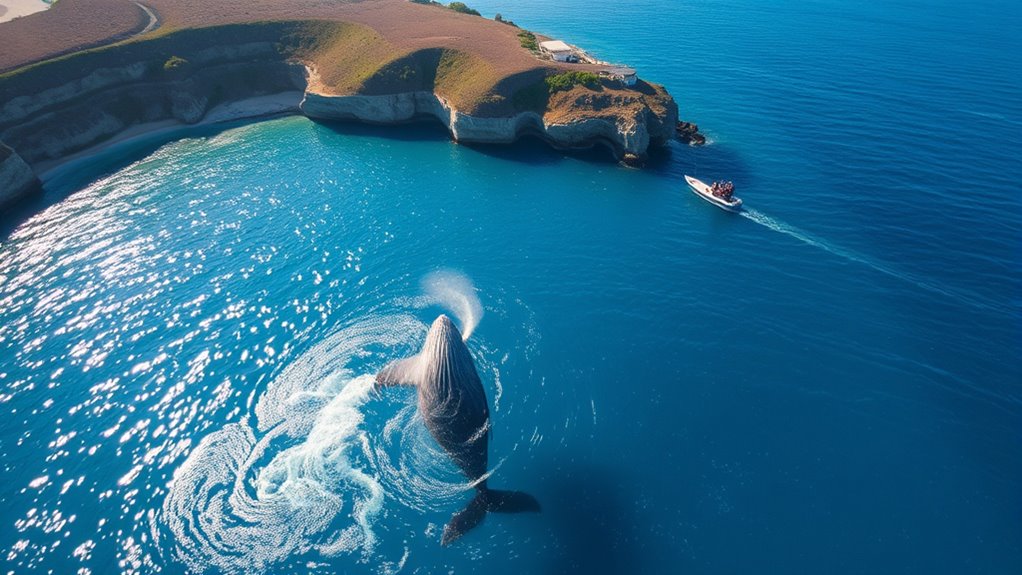
While blue whales migrate north through the eastern Pacific from November to April, you can catch an incredible show in Los Cabos, Mexico. This hotspot offers some of the best blue whale viewing as up to 3,000 blue whales migrate through the rich feeding grounds where the Pacific Ocean meets the Sea of Cortez.
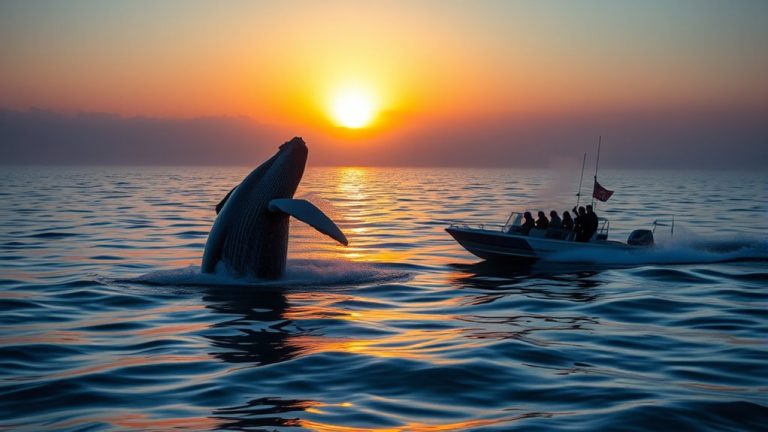
You’ll find whale watching tours and offshore boat trips that get you close to these gentle giants, maximizing your chances for unforgettable whale sightings. The most favorable water temperatures, ranging from 68-75°F, encourage vibrant marine life activity, making every excursion a dynamic experience.
Easy access via Los Cabos International Airport means you can quickly start your adventure exploring the stunning marine ecosystem and witnessing the majestic blue whales in their natural habitat.
California Coast: Top Locations and Seasons for Blue Whale Watching
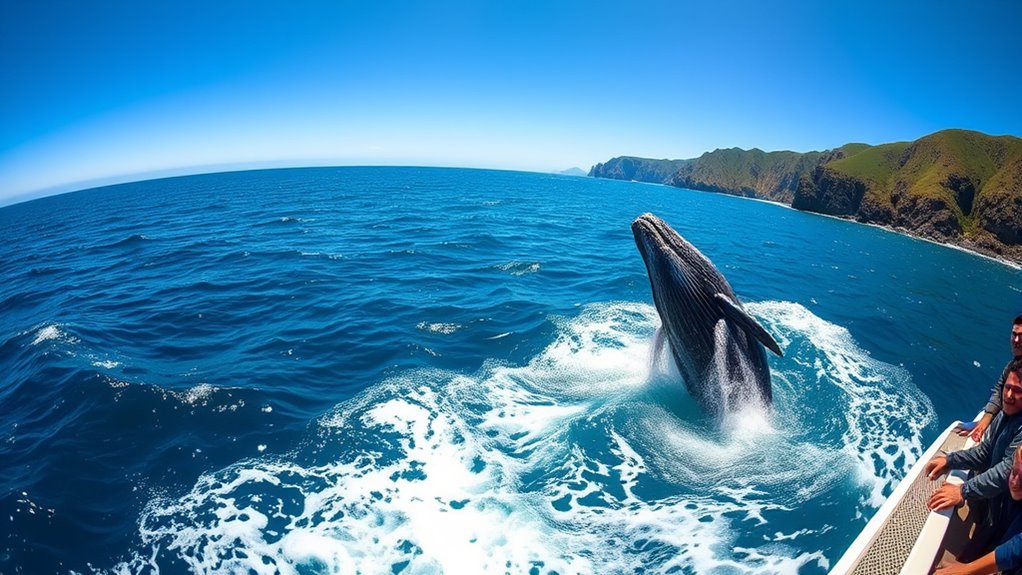
If you plan your trip between June and September, you’ll have excellent chances to see blue whales feeding along the California coast. During this summer season, these marine mammals migrate here to feast on abundant krill, making whale sightings frequent and spectacular.
Monterey Bay stands out as one of the prime locations for blue whale watching, offering both land-based views and boat tours that get you closer to these giants. Water temperatures range from 57°F to 75°F, with late summer providing ideal conditions for spotting.
Besides Monterey Bay, spots like the Farallon Islands and Santa Barbara also attract many blue whales. Taking a boat tour in these areas greatly increases your chance of close encounters, letting you witness the awe-inspiring krill feeding behavior of the largest animals on Earth.
Mirissa, Sri Lanka: Responsible Whale Watching and Swimming Opportunities
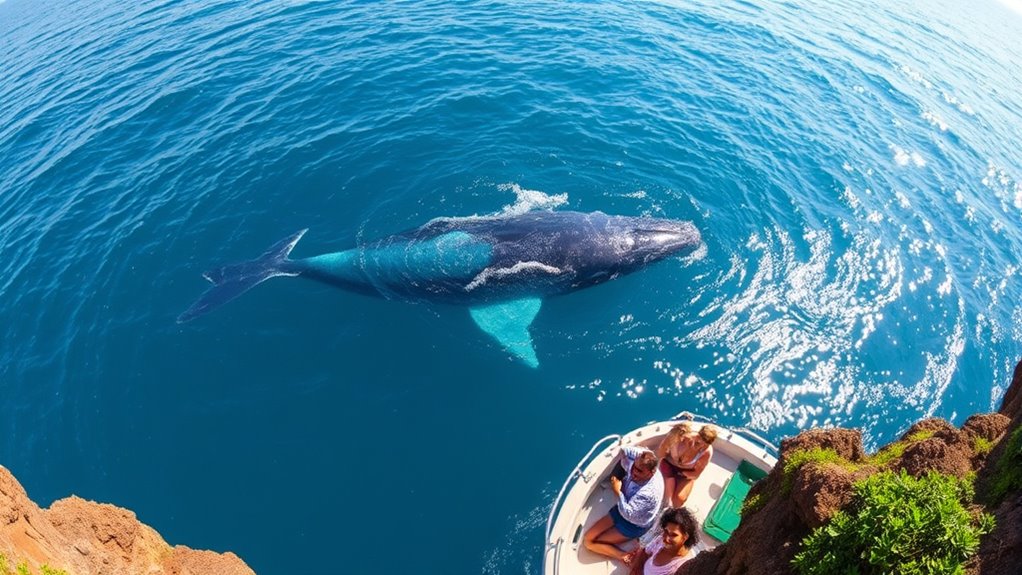
California’s coastline offers incredible blue whale encounters, but crossing oceans leads you to Mirissa, Sri Lanka, another top spot for whale watching. Between December and March, Mirissa attracts numerous blue whales, giving you multiple whale sightings in their natural habitat.
Here, responsible whale watching is a priority; operators follow strict eco-friendly tourism practices, keeping respectful distances to protect these endangered species. If swimming with blue whales excites you, Mirissa offers guided, permit-required tours that ensure safety and uphold ethical standards.
The local whale-watching industry also educates visitors on blue whale behavior and conservation, deepening your appreciation for these gentle giants. By choosing Mirissa, Sri Lanka, you support efforts that minimize environmental impact while enjoying unforgettable encounters with these majestic creatures.
Frequently Asked Questions
Where Is the Best Place to See a Blue Whale?
The best place to see a blue whale is Baja California Sur, Mexico. You’ll have the most reliable sightings from December to April in the Sea of Cortez, where these giants migrate and feed close to shore.
What Is the Deadliest Whale in the Ocean?
The deadliest whale in the ocean is the killer whale, or orca. You’ll find its hunting skills and teamwork make it a top predator, capable of taking down large marine mammals, even great white sharks.
Can a Blue Whale Live 200 Years?
No, blue whales can’t live 200 years. Scientists estimate their lifespan at around 80 to 90 years, with some rare cases possibly exceeding 100.
However, there’s no evidence supporting a 200-year lifespan for them.
How Many Blue Whales Are Left in the World in 2025?
Like searching for a rare myth, you’ll find roughly 10,000 to 25,000 blue whales swimming in our oceans in 2025.
Their numbers are fragile, so you’ll need hope and care to keep them thriving.
Conclusion
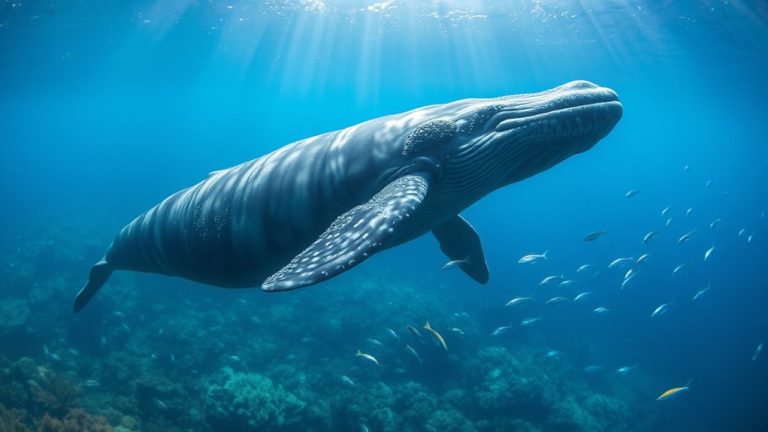
If you’re enthusiastic to see a blue whale in the wild, Los Cabos, the California Coast, and Mirissa are top spots you shouldn’t miss. Did you know blue whales can reach lengths of up to 100 feet—longer than a basketball court? Seeing these gentle giants up close is unforgettable.
With responsible tours available, you can enjoy this incredible experience while helping protect these magnificent creatures for future generations. Get ready for a whale of a time!
Experience the thrill of blue whale watching in these prime locations and contribute to whale conservation efforts. These top places to see a blue whale in the wild offer breathtaking encounters that will stay with you forever.