When Is Whale Watching in Hawaii and How to Do It
You can see humpback whales in Hawaii from November to May, with the best chances between January and March during calm early mornings or late afternoons. Whale watching in Hawaii is a spectacular experience, especially when you plan your trip around the optimal times for sightings.
Plan your trip for low wind, clear skies, and calm seas to maximize sightings. You can join guided boat tours or watch from shore vantage points like Maui’s northwest coast or Oahu’s Makapuʻu Lighthouse.
Keep scanning horizons patiently—there’s plenty more to discover about timing, spots, and tips to make your trip unforgettable.
When Is the Best Time to See Whales in Hawaii?
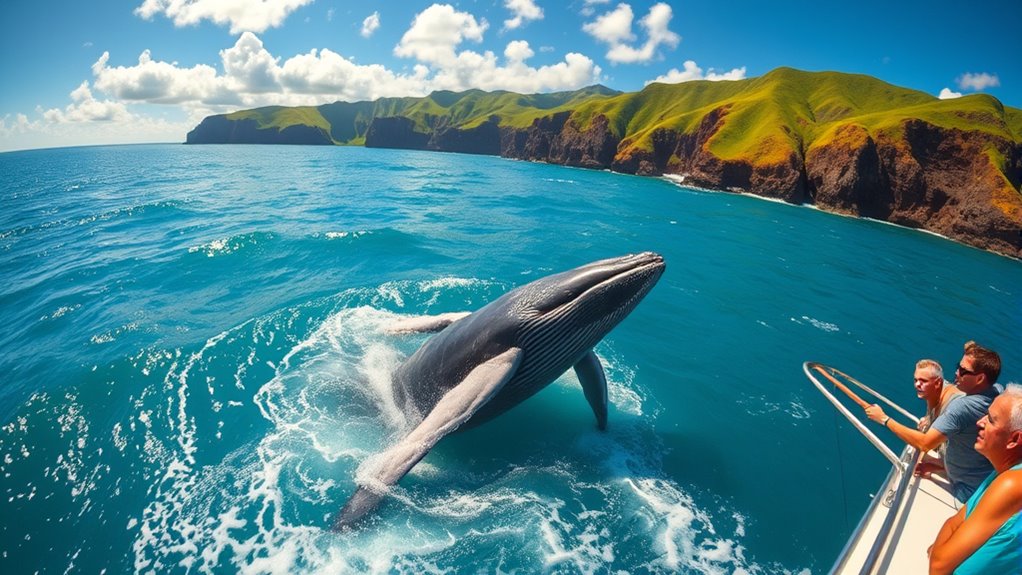
If you want to catch the best whale sightings in Hawaii, plan your visit between mid-February and mid-March when humpback whales are at their peak population. This period marks the height of the whale watching season, offering the best time to see whales during their winter months migration.
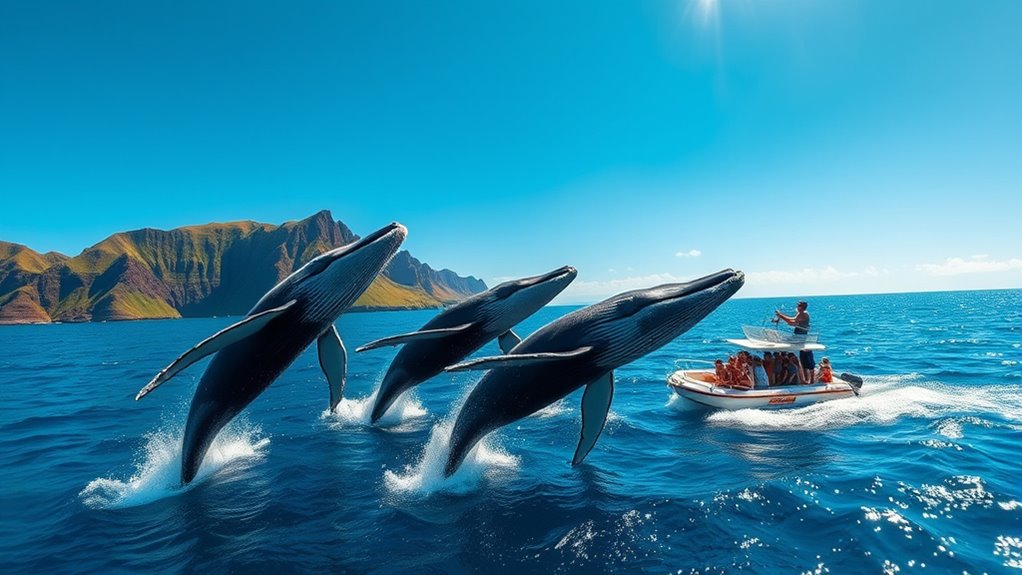
Whale sightings start as early as November and extend into May, but the highest concentration of these marine mammals occurs in the peak months. January and February especially showcase active behaviors like breaching and tail slapping.
To maximize your experience, join whale tours early in the morning or late afternoon when whales are most active and conditions are calm. Watching humpback whales during their whale migration in Hawaii is truly a remarkable sight you won’t want to miss.
How Whale Behavior Changes During Whale Watching Season
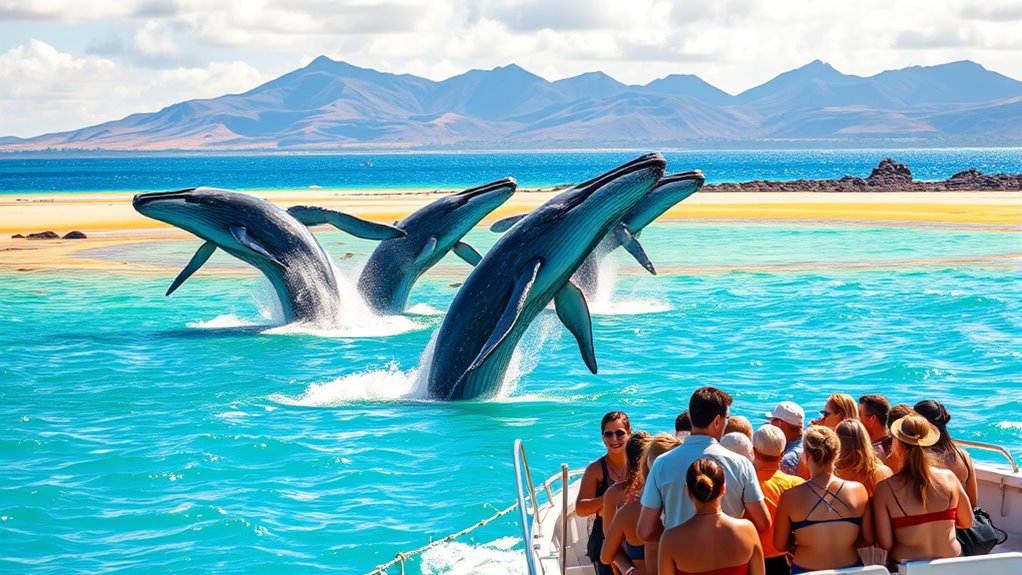
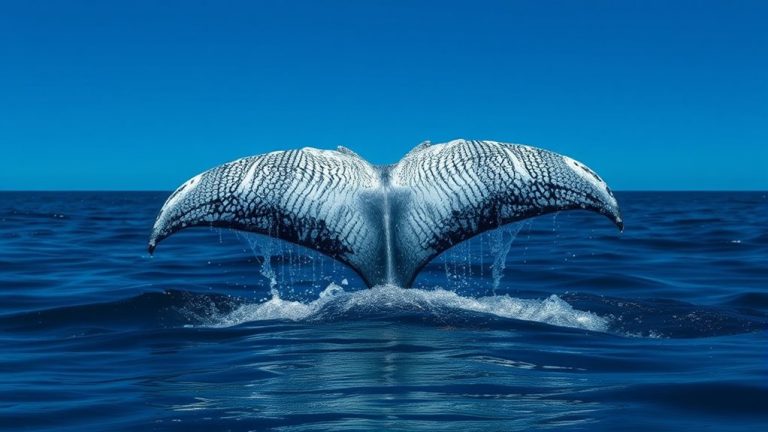
As whale watching season unfolds, you’ll notice humpback whales dramatically change their behaviors to communicate and compete. During peak whale watching, these migrating whales showcase energetic surface behaviors like breaching and tail slapping to attract mates and signal dominance. In March, mating rituals become intense as males engage in aggressive displays to win females.
You might even witness close encounters, where whales approach vessels within 100 yards, a behavior known as mugging. As the season progresses toward spring, whale behavior shifts—breaching and spyhopping decrease, signaling that migrating whales are preparing for their journey back to colder waters. By summer, feeding and migration activities dominate, and surface behaviors become rare.
Watching these dynamic changes gives you a front-row seat to the whales’ seasonal rhythm.
Best Whale Watching Spots: Maui, Oahu, and Big Island
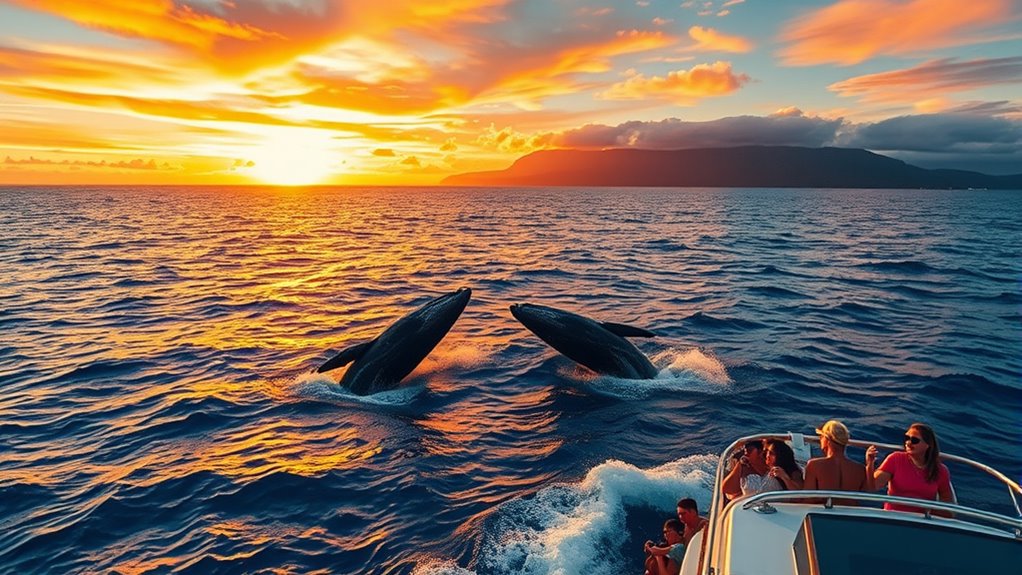
Three Hawaiian islands stand out as the best spots for whale watching: Maui, Oahu, and the Big Island. On Maui, head to the northwest coast near the Penguin Banks during peak migration months from December to May. You’ll find the most active humpback whales, especially mid-February to mid-March, making it one of the best spots for whale sightings.
Oahu offers whale watching tours and excellent land views at Makapuʻu Lighthouse, where you can see younger, energetic whales performing breaches and tail slaps. Meanwhile, the Big Island’s Kohala Coast and Hilo Bay attract whales mainly in January and February. Each location showcases unique whale behavior, so whether you’re on a boat or shore, these islands offer unforgettable whale watching experiences during peak migration months.
What to Expect on a Whale Watching Tour
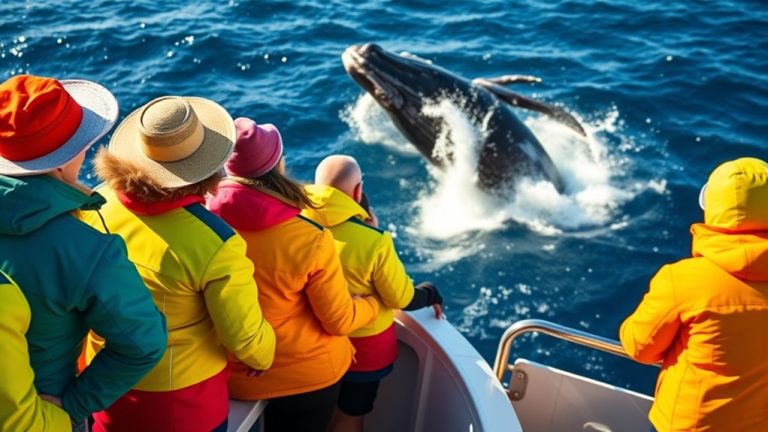
While whale watching tours typically last between two to four hours, you’ll find every moment packed with excitement and learning. Expert guides share fascinating insights about whale behaviors like breaching and tail slapping, enhancing your appreciation of these majestic creatures.
You’ll maintain a safe viewing distance, usually about 100 yards, ensuring the whales remain undisturbed while you enjoy spectacular sightings.
Onboard, you might hear whale sounds through hydrophones, connecting you deeper with marine life. Most whale tours run during early mornings or late afternoons, increasing your chances to spot pods communicating or spyhopping.
Expect to experience:
- Up-close views of breaching and tail slapping
- Educational commentary from expert guides on whale behaviors
- Immersive listening to whale sounds via hydrophones
This makes whale watching in Hawaii unforgettable and enriching.
How to Spot Whales From Shore During Whale Watching
You don’t need to be on a boat to enjoy whale watching in Hawaii. Shoreline spotting offers excellent views if you know where to look. Head to coastal parks or high vantage points like Puʻukohola Heiau or Kapaa Beach Park to increase your chances.
Use binoculars to catch distant whale spouts, which can shoot 10-20 feet high and signal nearby active whales. Watch for breaches and tail slaps, clear signs of whale behavior visible from shore. Early mornings and late afternoons are prime times, as whales tend to be more active then.
Be patient and scan the ocean horizon carefully—spotting these majestic creatures from land can be just as thrilling as a boat tour.
Can You Swim With or Safely Get Close to Whales in Hawaii?
Although swimming with whales might sound like an unforgettable experience, Hawaii’s laws strictly prohibit getting closer than 100 yards to protect these majestic creatures. Both federal regulations and whale watching laws require maintaining this safe distance from humpback whales, which are protected species.
Swimming with whales is generally banned, though snorkeling near them is allowed if you keep your distance. If a whale approaches you or your vessel, stay calm and avoid sudden movements to ensure a respectful whale encounter.
Swimming with whales is banned, but snorkeling nearby is allowed if you maintain a safe distance and remain calm.
- Never initiate a whale approach; let the marine wildlife come to you
- Keep at least 100 yards away to comply with federal regulations
- Remember that violating these rules can lead to heavy fines and penalties
Respecting these guidelines helps protect Hawaii’s humpback whales and ensures your safety.
Tips for Planning Your Hawaii Whale Watching Trip
Plan your whale watching trip between December and March for the best chances to see whales, especially in the early morning when the ocean is calm.
Choose tours with naturalist guides and special equipment to get the most from your experience. Don’t forget to prepare for variable weather by dressing in layers and checking local updates before you go.
Best Viewing Times
Since whale activity peaks between mid-February and mid-March, timing your visit during these months considerably boosts your chances of spectacular sightings. The best time to see whales is during the peak winter months when their behaviors, like breaching and tail slapping, are most active. The whale watching season runs through the winter months, with peak sightings often centered around the Maui Nui Basin.
Early mornings offer calmer ocean conditions, increasing your chances of spotting whales by about 50%.
To maximize your experience, keep these in mind:
- Visit between December and March, focusing on February for peak sightings.
- Head out early around 8:00 a.m. for better visibility and calmer seas.
- Monitor local reports for real-time whale activity updates during the peak winter months.
Choosing Tour Types
When choosing a whale watching tour in Hawaii, consider what kind of experience you want on the water. Large boat tours provide comfort, tour amenities, and naturalists to enrich your whale watching experience. Small boats offer closer encounters but can be rougher.
Tours during peak season from December to March maximize sightings. Some tours combine snorkeling, letting you explore marine life after whales. Always pick operators committed to responsible tourism.
| Tour Type | Highlights |
|---|---|
| Large Boat | Comfort, naturalists, hydrophones |
| Small/Speedboat | Close encounters, thrilling ride |
| Half-Day | Maximize whale sightings |
| Combo Tours | Snorkeling and marine life |
Preparing For Weather
Although Hawaii’s whale watching season offers mild temperatures and generally calm seas, you’ll want to check local weather forecasts before heading out to guarantee the best conditions for your trip. The sea state can change quickly with wind and rain, impacting visibility and safety. Planning your excursion during calm ocean conditions, often found in the mornings and evenings, will enhance your experience.
Keep an eye on the weather forecast for any shifts in sea conditions. To prepare, consider these tips:
- Choose days with low wind speeds and clear skies for ideal visibility.
- Pack layers and waterproof gear to stay comfortable during unexpected rain.
- Aim for early morning or late afternoon trips when the ocean is typically calmer.
Being weather-aware ensures a safe, enjoyable whale watching adventure.
Frequently Asked Questions
What Is the Best Month to Go Whale Watching in Hawaii?
You’ll want to plan your trip for February, the best month for whale watching in Hawaii.
You’ll see the highest concentration of whales and their active behaviors, like breaching and tail slapping, making it unforgettable.
What Equipment Do I Need for Whale Watching?
You’ll want binoculars with 8x magnification since whales can be miles away. Don’t forget a zoom camera, polarized sunglasses to cut glare, waterproof gear for splashes, and a whale guide app to spot species easily.
Which Hawaiian Island Is the Best for Whale Watching?
You’ll find the best whale watching on Maui, thanks to its dense humpback population and prime spots like the Maui Nui Basin.
It offers the most consistent and abundant sightings, making your experience unforgettable.
How Much Does It Cost to Whale Watch in Hawaii?
You’ll pay about $100 to $150 for a 2-3 hour whale watching tour in Hawaii.
Expect prices to rise for private charters or special add-ons like underwater hydrophones, making your experience truly unforgettable.
Conclusion
If you’re dreaming of seeing whales dance beneath Hawaii’s waves, now’s the time to plan your trip! From December to April, these majestic giants put on a spectacular show just for you. Whether you’re on a boat or spotting from shore, every moment feels like catching a glimpse of nature’s poetry in motion.
So grab your binoculars and sense of adventure—Hawaii’s whale season is calling your name! For the best whale watching in Hawaii, be sure to visit during these months to experience the magic up close. Don’t miss out on this unforgettable opportunity to witness one of the ocean’s most incredible displays.