10 Best Times to Go Whale Watching Adventures
The best times for whale watching adventures depend on the species and location. Planning your whale watching trips around these peak seasons ensures the best sightings and unforgettable experiences.
In Southern California, go from late April to October to catch blue, humpback, and fin whales feeding.
For gray whales, plan December to April during their migration.
Early mornings offer calmer seas and better sightings.
Choose top spots like Monterey Bay, Provincetown, and San Diego for peak encounters.
Understanding these patterns guarantees more memorable wildlife encounters. There’s plenty more to help you plan the perfect trip.
Best Whale Watching Months in Southern California
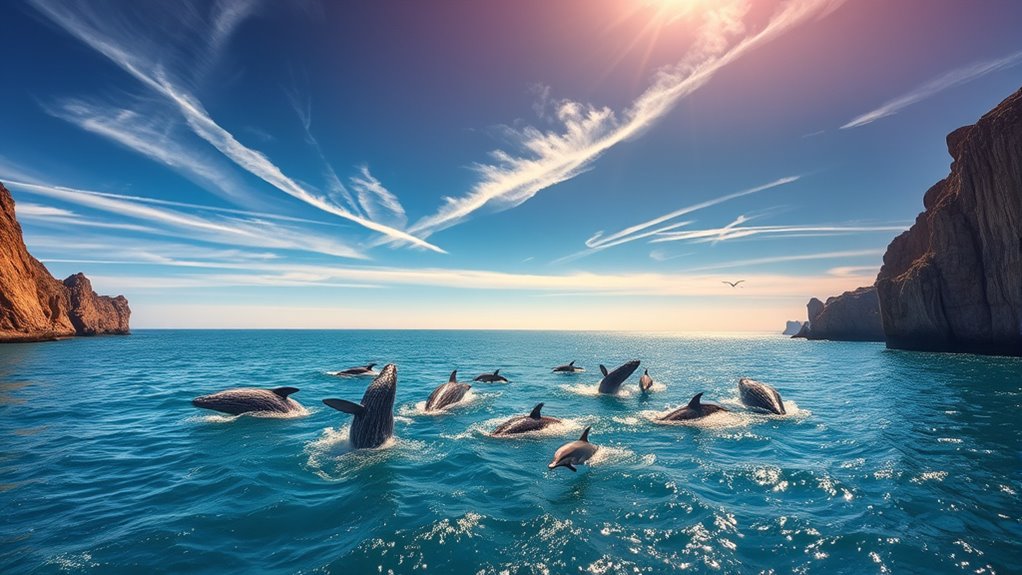
If you want to catch the best whale sightings in Southern California, plan your trip between late April or early May and October. These whale watching months offer the highest chances to see various whale species actively feeding and moving along the coast.
During this period, you’ll experience peak sightings of blue whales from July to September and fin whales from June through October. Humpback whales, which you can spot year-round, also reach peak visibility between July and September. While gray whales migrate mainly from December to April, they become less common during these warmer months.
Focusing your trip on these whale watching months in Southern California guarantees you witness a vibrant display of marine life, making your adventure memorable and rewarding.
Whale Watching Seasons by Species: Gray, Blue, Humpback, Fin
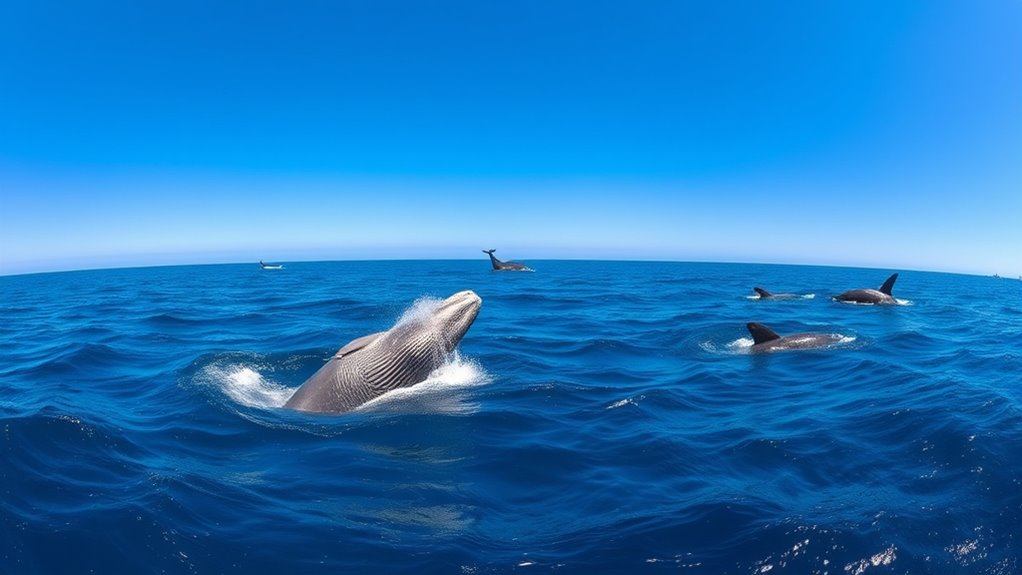
You’ll find gray whales most often from December to April, especially in January and March.
Blue, humpback, and fin whales peak in the summer months, with their sightings tied closely to feeding and migration habits.
Knowing these seasonal patterns helps you plan the best time to spot each species.
Species Peak Viewing Months
Although whale watching is possible year-round, the best times to see specific species vary depending on their migration and feeding patterns. Gray whales reach peak sightings between January and March, especially in February, as they migrate along coastal routes.
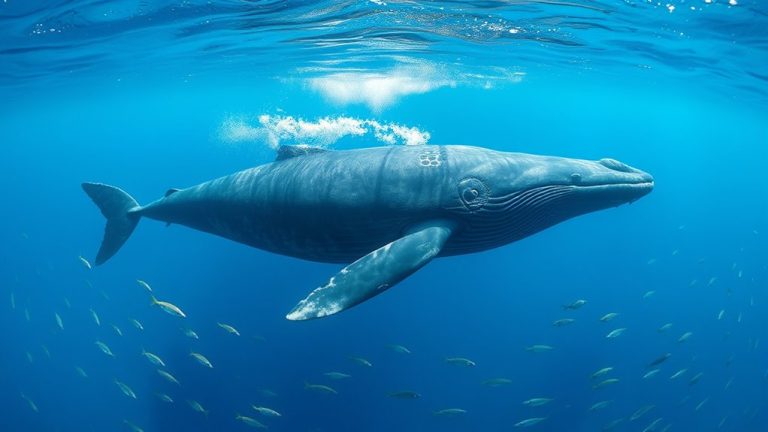
Blue whales are best spotted from July through September while feeding on krill near California’s rich summer feeding grounds. Humpback whales, visible year-round, show peak activity during the same summer months, from July to September, when they take advantage of abundant food sources.
Fin whales also follow this pattern, with most sightings occurring from mid-July to September during their summer feeding period. By planning your trip around these peak months, you’ll maximize your chances of encountering these majestic species during their most active migration and feeding times.
Migration And Feeding Patterns
When you plan a whale watching trip, understanding the migration and feeding patterns of different species helps you choose the best season to visit. Each species follows seasonal migration routes linked to feeding habits and reproductive cycles. Knowing these patterns boosts your chances of sightings.
- Gray whales migrate along the California coast from December to April, peaking in January and March.
- Blue whales feed on krill from mid-June to mid-September, making summer ideal for viewing.
- Humpback whales are active year-round but peak in feeding and migration between July and September.
- Fin whales appear mainly from mid-July to September during their summer feeding season.
When to See Gray Whales on Their Migration
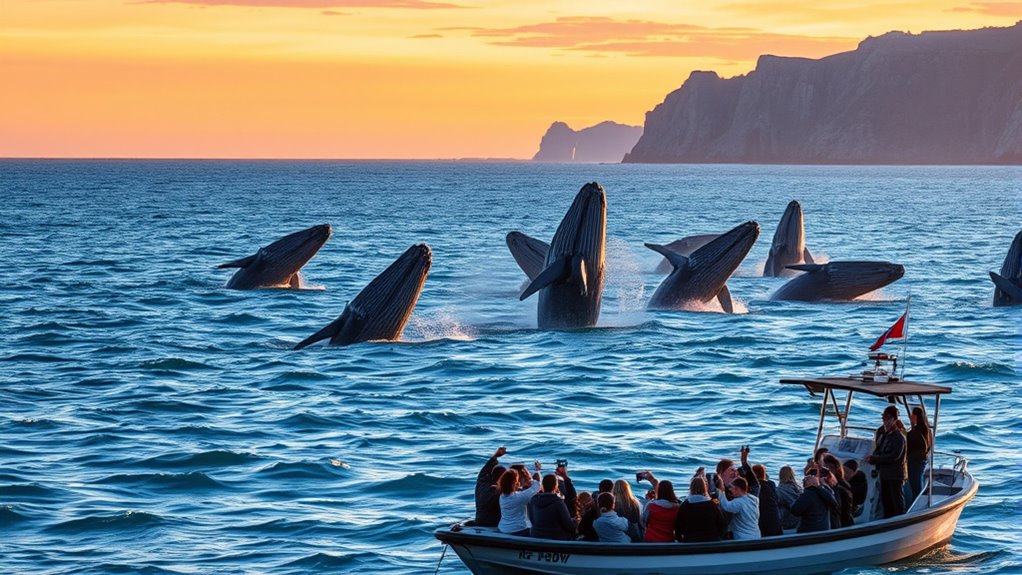
If you want to catch gray whales during their impressive migration, plan your trip between December and April along the California coast. You’ll find peak sightings typically occur in January and March when these whales travel approximately 5,000 miles round trip from Arctic feeding grounds to Baja California breeding areas.
The best time to see gray whales in migration is mid-January to mid-March, coinciding with their breeding and calving season. During this period, sightings increase, especially in San Diego and Monterey Bay. To maximize your chances, choose days with calm weather conditions.
Summer and Fall Blue Whale Watching Opportunities
After witnessing the awe-inspiring migration of gray whales in early spring, you can shift your focus to the summer and fall months for a chance to see the largest animals on Earth. Blue whales frequent the California coast from June through October, with peak sightings in the summer months—July, August, and September.
These months offer ideal conditions: calm seas and longer daylight that boost your chances of spotting blue whales feeding on abundant krill.
Keep in mind:
- Blue whales gather along the California coast during their peak feeding season
- July to September provides the highest sighting rates
- Summer and early fall offer the best weather for clear views
- Blue whales migrate south by late fall, so act before October ends
Plan your trip accordingly to witness these majestic giants up close!
Humpback and Fin Whale Watching: Peak Times and Locations
Though the California coast hosts various whale species year-round, you’ll find the best chances to spot humpback and fin whales from July through September, especially near Monterey Bay and San Diego. Humpback whales are most commonly seen during summer, with peak sightings stretching from June to October.
Fin whales appear primarily between mid-July and mid-September, aligning with their feeding period. To maximize your experience, head out during these months when the waters are calm and clear. These peak sightings offer you a unique opportunity to observe these magnificent creatures feeding and breaching close to shore.
How Time of Day Affects Whale Watching Success
Because whales tend to be more active during certain times of the day, planning your whale watching trip around these periods can greatly boost your chances of sightings. Morning is often the best time, as whale activity peaks when waters are calm, improving visibility and allowing you to catch dynamic behaviors like breaching and spyhopping.
Late afternoon also offers opportunities as whales prepare to rest or feed more.
Consider these time-of-day factors:
- Early morning provides calmer waters and clearer visibility
- Whales start daily routines at dawn, increasing active behavior
- Late afternoon can reveal feeding or resting behaviors
- Midday tends to have less whale activity and lower sighting chances
Timing your trip smartly helps you enjoy the most thrilling whale watching experience.
Why Early Morning Whale Watching Tours Are Best
When you choose an early morning whale watching tour, you take advantage of calmer waters and clearer visibility that make spotting whales much easier. In the early morning, whale activity peaks as these majestic creatures start feeding or traveling, giving you a better chance to witness exciting behaviors like breaching and spyhopping.
The reduced boat traffic and lighter winds during this time create a peaceful environment, allowing you to detect whale presence more effectively. Plus, starting your whale watching adventure early means more time on the water to increase your chances of success.
How Weather and Sea Conditions Impact Whale Watching
If you want the best chance of spotting whales, you need to pay close attention to weather and sea conditions. Calm sea conditions with low waves and minimal wind improve visibility, making it easier to see whales near the surface. Clear, stable weather enhances the sea state, increasing your chances of a successful trip.
On the other hand, rough seas and overcast skies can reduce visibility and cause discomfort, sometimes leading to cancellations.
Keep these tips in mind:
- Choose days with calm sea conditions for ideal visibility
- Avoid trips during rough sea states or high swell
- Be cautious of overcast weather that lowers light levels
- Watch for sudden weather changes that may disrupt your adventure
Good weather and sea conditions directly impact your whale watching success.
Choosing the Best Locations for Seasonal Whale Watching
You’ll want to pick your whale watching spots based on the season and which species are migrating through.
Coastal areas like Provincetown, Monterey Bay, and Baja California each offer unique viewing opportunities at different times of the year.
Knowing these seasonal highlights helps you plan the best trips for unforgettable whale encounters.
Top Coastal Spots
Five coastal spots stand out as the best places to catch seasonal whale watching. These coastal spots offer prime opportunities to witness whales during their migration seasons. You’ll find the best time to see whales varies by location, so choosing your spot carefully maximizes your experience.
- Provincetown, Massachusetts: peak whale watching from late April to October
- San Diego: year-round sightings; gray whales December-April, blue whales June-October
- Monterey Bay: excellent mid-June to September for gray, humpback, and blue whales
- Gloucester and Boston: key East Coast departure points during migration seasons
Seasonal Location Highlights
Selecting the right location based on the season can greatly enhance your whale watching experience. For seasonal sightings, Provincetown, Massachusetts, shines from late April to October, thanks to its closeness to major migration routes and diverse whale species. Along the California coast, San Diego offers prime whale watching from December to April, focusing on gray whales during their migration.
If you visit Monterey Bay between mid-June and mid-September, you’ll spot blue whales, humpbacks, and fin whales feeding actively. The Boston and Gloucester areas also provide excellent summer whale watching, especially for humpbacks and minkes. Don’t miss Cape Cod’s Stellwagen Bank National Marine Sanctuary from May through October, where you can see humpbacks, fin whales, and sometimes orcas.
Choosing your spot wisely based on these seasonal highlights guarantees a memorable whale watching adventure.
How to Book Whale Watching Tours for the Best Experience
Booking your whale watching tour well in advance, especially during peak season from April to October, guarantees you secure a spot with reputable operators who offer knowledgeable guides and up-to-date information on whale migrations. To get the best experience, reserve and book early, as tours fill quickly during these popular months.
Choose operators with naturalist guides and consider morning departures when whales are most active and waters are calmer. Don’t forget to check the weather and dress accordingly.
Keep these tips in mind:
- Reserve your tour online or by phone to avoid last-minute hassles.
- Book during peak seasons early to ensure availability.
- Confirm your reservation and arrive early for smooth check-in.
- Dress in layers and waterproof clothing for comfort and safety.
Frequently Asked Questions
What Is the Best Month to Go Whale Watching?
You’ll want to go whale watching between June and September for the best chance to see humpbacks and blue whales.
These months offer peak activity, making your adventure rewarding and memorable with abundant marine life.
Is It Better to Go Whale Watching in the Morning or Afternoon?
You might think afternoon’s the best, but mornings actually give you calmer seas and more active whales.
Is It Better to Whale Watch on a Sunny or Cloudy Day?
You’ll find sunny days offer clearer visibility, but cloudy days reduce glare and often bring calmer seas, making it easier to spot whales naturally and enjoy a more comfortable trip without worrying about reflections or seasickness.
What State Is Best for Whale Watching?
You’ll find California’s Monterey Bay is the best for whale watching, thanks to diverse species and peak migration seasons. It offers incredible sightings year-round, making it the top choice for your whale watching adventure.
Conclusion
Now that you know the best times and places for whale watching adventures, it’s time to plunge in and catch these gentle giants in action. Whether it’s the majestic gray whales migrating or the elusive blue whales in summer, each season offers a unique show.
Remember, early mornings often set the stage for the grandest performances. So, grab your binoculars, book that tour, and let the ocean’s rhythm guide your unforgettable journey.
For the best whale watching adventures, timing and location are key. Plan your trip accordingly to experience the breathtaking moments that nature’s most magnificent creatures have to offer.