How Does the Blue Whale Defend Itself?
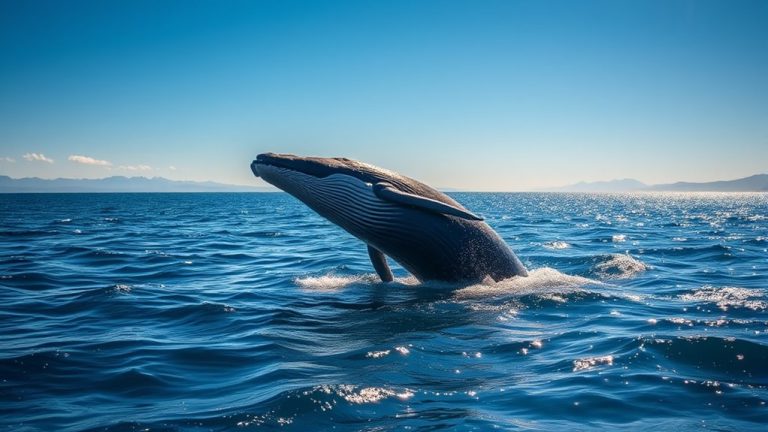
You’ll find the blue whale defends itself mostly through its massive size and strength, which naturally deters most predators. Its enormous body acts as a powerful shield against attacks from sharks and killer whales.
When threatened, the blue whale uses powerful tail flicks to injure or warn off potential predators. These defensive movements are strong enough to keep many dangers at bay and protect the whale from harm.
In groups, blue whales protect their calves by surrounding them and coordinating their defense strategies. Despite these collective efforts, young whales remain vulnerable to threats.
If you want to understand how these giants navigate threats and the impact of human activities on their survival, there’s more to explore.
How the Blue Whale’s Size Protects It From Predators
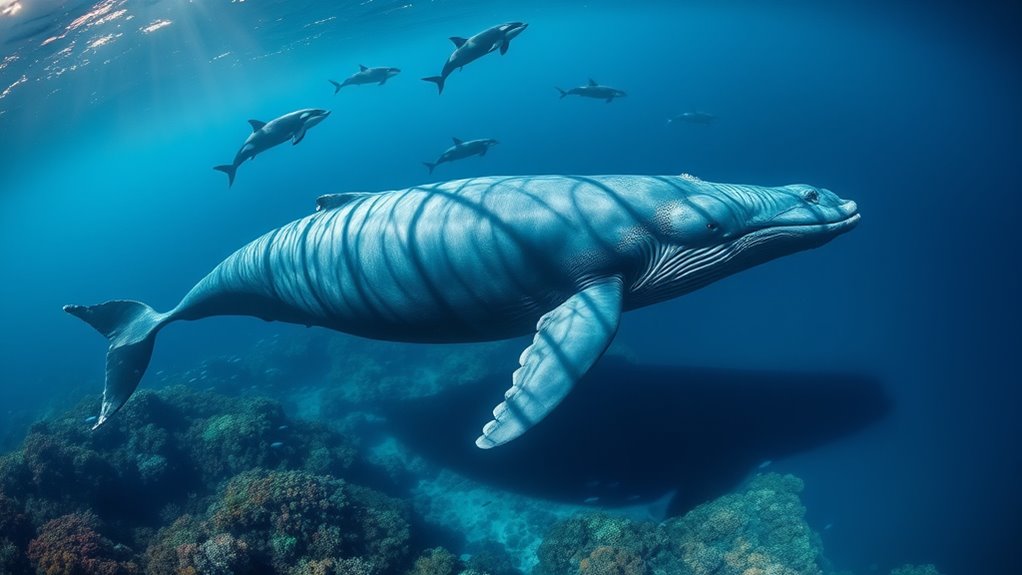
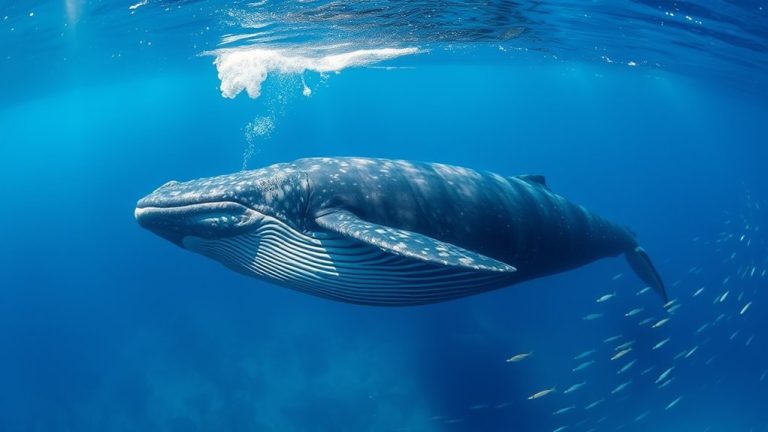
Because blue whales grow up to 33 meters long and weigh around 200 tons, their sheer size keeps most predators at bay. As the largest animal on Earth, blue whales naturally deter attacks from creatures like killer whales and sharks. You’ll find it tough to imagine anything able to challenge such a massive presence.
Their enormous body mass gives them strength and resilience, so even bites from predators rarely cause fatal harm. When danger approaches, blue whales use their size to dive deep or swim quickly over long distances, escaping threats with ease.
This combination of size, speed, and power means blue whales rely heavily on their physical scale to stay safe in the ocean, making their giant stature their most effective defense.
What Predators Threaten Blue Whales
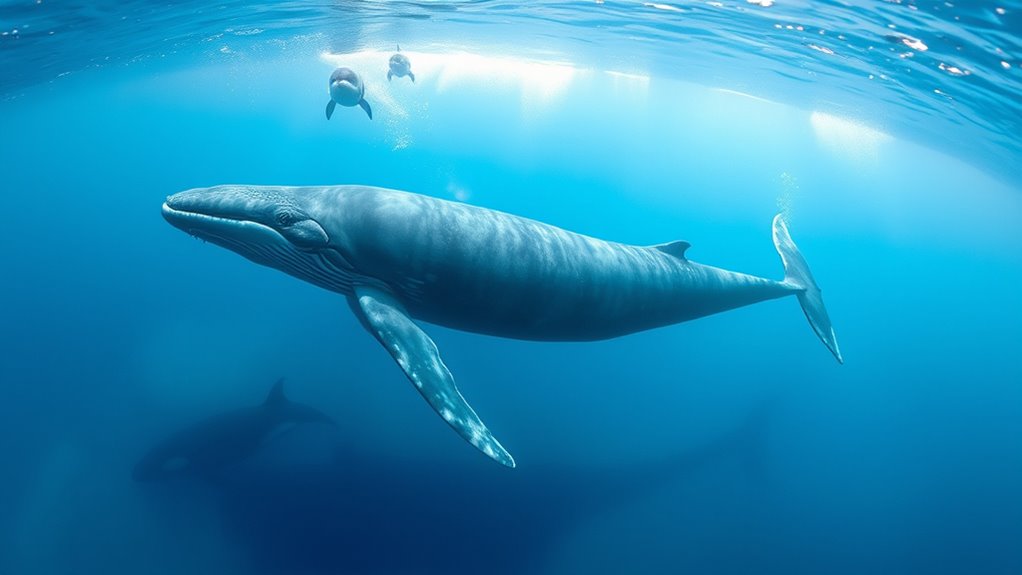
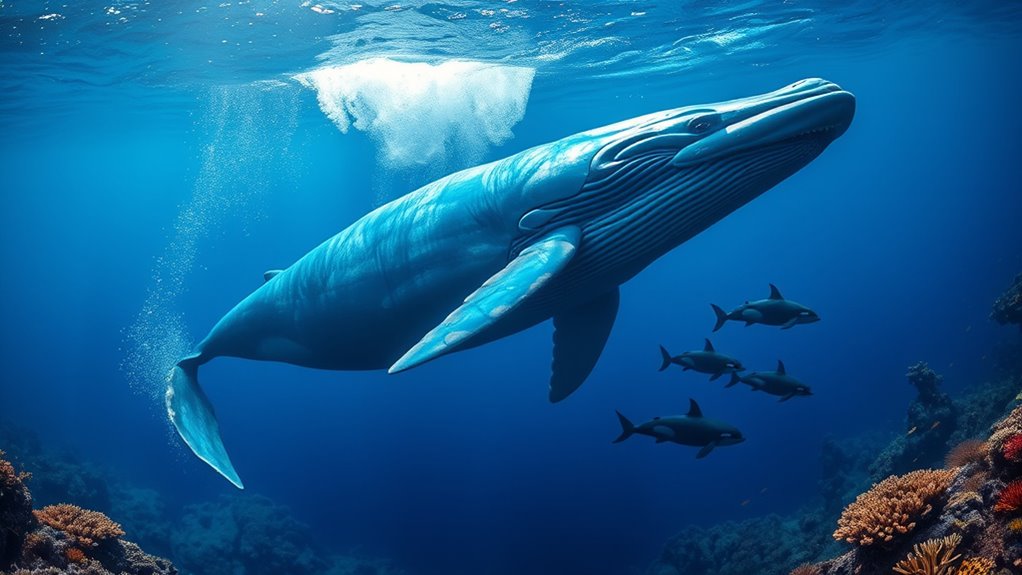
While the blue whale’s enormous size keeps most predators away, a few still pose a threat. Killer whales, a type of marine mammal, actively hunt blue whales, especially targeting calves or weaker individuals. About 25% of blue whales in the Gulf of California show evidence of killer whale attacks.
Sharks, like great whites, rarely prey on blue whales but may bite injured or dead ones. Other marine mammals or larger whales usually don’t threaten blue whales due to their massive size.
| Predator Type | Threat Level |
|---|---|
| Killer Whales | High – Active hunters |
| Great White Sharks | Low – Scavenge only |
| Other Marine Mammals | Very Low |
| Larger Whale Species | Minimal |
How Killer Whales Hunt Blue Whales
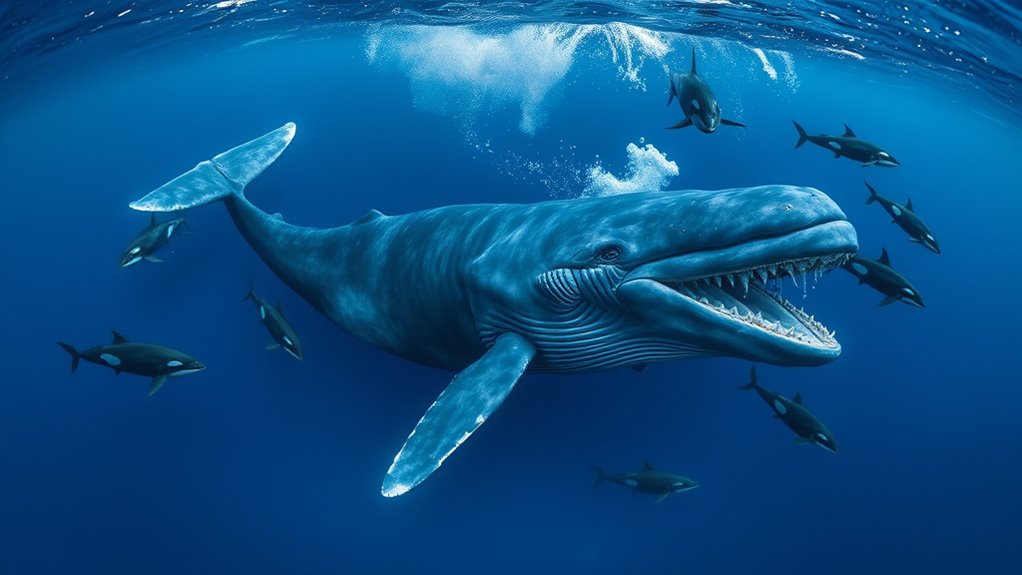
How do killer whales manage to hunt the massive blue whale? They work in coordinated groups, often targeting the young or weak blue whales. You’ll see killer whales stalking quietly before launching rapid, aggressive attacks to overwhelm their prey.
They breach and slap their fins or tails on the water, stunning or scaring the blue whale to disrupt its escape. You might notice them working together to bite or tear at vulnerable areas like the tail or flippers, aiming to immobilize the giant mammal.
Studies reveal that about 25% of blue whales in regions such as the Gulf of California bear teeth marks from killer whale attacks, showing how persistent and strategic killer whales are in hunting these enormous creatures.
How Blue Whales Use Their Tails to Defend Themselves
You’ll be amazed by how blue whales use their enormous tails as powerful weapons. When threatened, they flick their tails with incredible force to scare off predators like killer whales.
That size and strength don’t just help them swim—they’re essential for defense.
Tail Size And Power
A blue whale’s tail can span as wide as a soccer net, giving it incredible power to defend itself. When you consider its tail size, you realize just how formidable this marine giant is. The massive, muscular tail isn’t just for swimming; it’s a powerful weapon.
With that tail power, the whale can generate forceful movements capable of deterring predators. You’ll see that the tail’s sheer size allows it to create loud splashes and impactful strikes in the water, which can injure or scare off attackers like killer whales.
Defensive Tail Flicks
The blue whale doesn’t just rely on the size and strength of its tail—it uses swift, powerful flicks to defend itself. When you witness tail flicks in action, you’re seeing a vital defense strategy. These massive tails, as wide as a soccer net, can strike with incredible force, injuring or deterring predators like killer whales.
If you find yourself near a threatened blue whale, you’ll notice it positions its body to deliver these sharp, forceful strikes. Tail flicks don’t just fend off attackers—they also warn other whales nearby, signaling danger.
Scaring Off Predators
When blue whales feel threatened, they don’t hesitate to use their massive tails to protect themselves. Their tail-flicking is a powerful defense tactic that scares off predators like killer whales. You’ll notice how the whale thrashes its tail from behind, creating loud slaps that warn attackers to back off.
Here’s how this defense works:
- The enormous tail, as wide as a soccer net, delivers forceful flicks.
- Tail slaps produce sharp noises underwater, signaling danger.
- Physical strikes can injure or deter predators.
- Repeated tail-flicking shows the whale’s strength and willingness to defend itself.
How Blue Whales Use Pods for Protection
Although blue whales are enormous and powerful, they rely on traveling in pods to stay safe from predators. When you go whale watching, you might notice these marine giants moving together in coordinated groups. Pods make it tougher for predators like killer whales to single out one whale.
If danger approaches, whales form a protective circle, heads inward and tails outward, creating a barrier against attacks. Traveling in pods also lets whales communicate quickly, alerting each other to potential threats. This teamwork deters predators since attacking a coordinated group is far more challenging than targeting an individual.
How Blue Whales Protect Their Calves From Predators
Pods don’t just protect blue whales as a whole—they play a vital role in keeping their calves safe from predators. When you observe a blue whale mother, you’ll notice she’s never alone; she’s surrounded by other adults ready to protect her young. Here’s how they do it:
- Mothers form a protective circle, heads inward and tails outward, shielding the calves.
- Calves stay close to their mothers, minimizing exposure to threats.
- Powerful tail flicks from the mother deter predators like killer whales.
- The pod uses vocalizations to alert each other, coordinating defense.
Why Young and Weak Blue Whales Are Most Vulnerable to Predators
You’ll notice that calves face greater risks because their smaller size makes them easier targets for predators like killer whales. When a young or weak blue whale is sick or injured, its chances of escape drop considerably.
Understanding these vulnerabilities helps explain why predators often go after them first.
Predation Risks for Calves
Why do young blue whale calves face greater danger from predators? Calves are smaller and less developed, making them prime targets for predators like killer whales. You’ll notice calves depend heavily on their mothers for protection, as they don’t yet have the size or strength to fend off attacks.
Predators usually focus on calves, especially if they’re separated or injured. Here are key reasons calves face higher predation risks:
- Calves lack physical maturity and strength compared to adults.
- Predators such as killer whales specifically target vulnerable calves.
- Calves rely on their mothers and group defense for safety.
- Group traveling helps confuse predators, reducing the chance of attacks on calves.
Understanding these risks highlights why calves need constant protection from predators.
Health Impact on Vulnerability
How does poor health increase a blue whale’s risk of falling prey to predators? When young or weak, blue whales struggle to protect themselves due to underdeveloped physical defenses. Their smaller size and limited swimming strength make escaping orcas much harder.
If they’re injured or sick, they can’t deliver powerful tail slaps or execute quick evasive maneuvers, leaving them exposed. Juvenile blue whales often travel alone or in small groups, unlike adults who stick in larger pods, which lowers their protection. Predators like orcas naturally target these vulnerable individuals because they’re easier to catch and pose less risk.
How Blue Whales Deter Shark Attacks
What makes blue whales so effective at deterring shark attacks? You’ll find it’s their combination of size, strength, and behavior that keeps sharks at bay. Here’s how blue whales defend themselves:
- Their enormous size makes shark attacks unlikely and difficult to succeed.
- They use their large, powerful tail to thrash and injure sharks trying to attack.
- Rapid tail flicks serve as a warning or can injure sharks attempting to bite.
- Thick skin and massive bodies act as natural armor against shark bites.
Additionally, blue whales usually avoid sharks by swimming away quickly and staying in deep, open waters where sharks are less common. These strategies make blue whales formidable opponents and help them stay safe in the ocean.
Visible Signs of Predator Attacks on Blue Whales
Have you ever noticed the scars and marks on a blue whale’s massive body? Those visible signs often tell a story of past predator attacks. About 25% of blue whales in the Gulf of California bear teeth marks from killer whales, revealing frequent encounters.
These predators leave deep cuts and scars caused by powerful bites. You might also spot broken baleen plates or torn patches on their skin, evidence of fierce struggles. After an attack, blue whales sometimes show distress through rapid swimming or tail thrashing.
These injuries and markings can last for years, serving as a testament to the whale’s survival. By observing these visible signs, you gain insight into how blue whales endure and defend themselves against predators in the wild.
How Human Activities Impact Blue Whale Safety and Survival
You might not realize how much commercial whaling has slashed blue whale numbers, especially before bans took effect.
Today, pollution and heavy ship traffic still put these giants at risk every day.
Understanding these threats is key to protecting their safety and survival.
Commercial Whaling Effects
More than 11,000 blue whales were hunted in the North Atlantic alone between the late 19th century and 1960, causing a dramatic population decline. Even though the International Whaling Commission banned blue whale hunting in 1955, whales like these still face dangers. You should know that:
- Illegal hunting continues to threaten blue whale populations in some areas.
- Unregulated fishing gear can entangle whales, restricting their movement.
- Ship strikes pose a serious risk to these gentle giants.
- Despite their size, blue whales can’t easily defend against human-made hazards like these.
Unlike whales and sharks, which rely on natural defenses, blue whales depend on human efforts to ensure their survival after years of commercial whaling. You play a role by supporting conservation and responsible marine policies.
Pollution and Vessel Threats
Although blue whales have faced threats from hunting in the past, human activities like shipping and boating now pose significant risks to their safety and survival. Vessel threats such as collisions often cause serious injury or death to these gentle giants. Noise pollution from ships disrupts their communication and navigation, making it harder for them to detect dangers and avoid accidents.
You might not realize that marine debris and chemical pollution can entangle whales or harm their health, affecting reproduction and movement. Fortunately, measures like speed restrictions and marine protected areas help reduce these risks. By understanding how vessel threats and pollution impact blue whales, you can appreciate the importance of protecting their environment to ensure their survival.
Frequently Asked Questions
Do Blue Whales Defend Themselves?
Yes, blue whales do defend themselves. You’ll see them use powerful tail flicks and thrash to scare off threats. Their massive size also deters predators, and they protect calves by traveling in groups together.
Can a Blue Whale Live 200 Years?
You might think living 200 years is impossible, yet some blue whales may reach that age.
While most live up to 90-100 years, rare individuals defy odds, reminding you nature’s mysteries aren’t easily measured.
What Is the Only Predator of the Blue Whale?
The only predator you’ll find hunting blue whales is the killer whale, or orca. They use teamwork to target young, sick, or weak blue whales, making them the main threat to these giants in the ocean.
What Can Beat a Blue Whale in a Fight?
You won’t find many that can beat a blue whale in a fight. Killer whales working in pods might succeed by targeting vulnerable individuals, but adult blue whales’ size and strength make them nearly unbeatable opponents in the ocean.
Conclusion
Imagine you’re a towering skyscraper in an ocean of threats—blue whales stand tall, their massive size alone warding off many dangers.
But when killer whales strike, these giants don’t just rely on size; they swing powerful tails like mighty hammers and gather in pods for safety.
Just like a fortress with watchful guards, blue whales combine strength and teamwork to survive, proving that even the largest creatures need allies to face the wild’s fiercest storms.
In conclusion, the blue whale defends itself through its enormous size, powerful tail strikes, and protective pod behavior, showcasing a remarkable blend of strength and cooperation in the ocean’s challenging environment.