How Old Does a Whale Live?
Whales live anywhere from about 45 to over 200 years, depending on their species. Understanding how old a whale can live is fascinating because it varies greatly among different types.
For example, humpbacks live around 45–50 years, while bowhead whales can exceed 200 years, making them the longest-living whales.
Baleen whales often live longer than toothed whales due to slower metabolisms and colder habitats.
Captivity usually shortens their lives because of stress and limited space.
If you want to understand what influences their lifespan and how scientists track their age, there’s a lot more to explore.
How Long Do Different Whale Species Live?
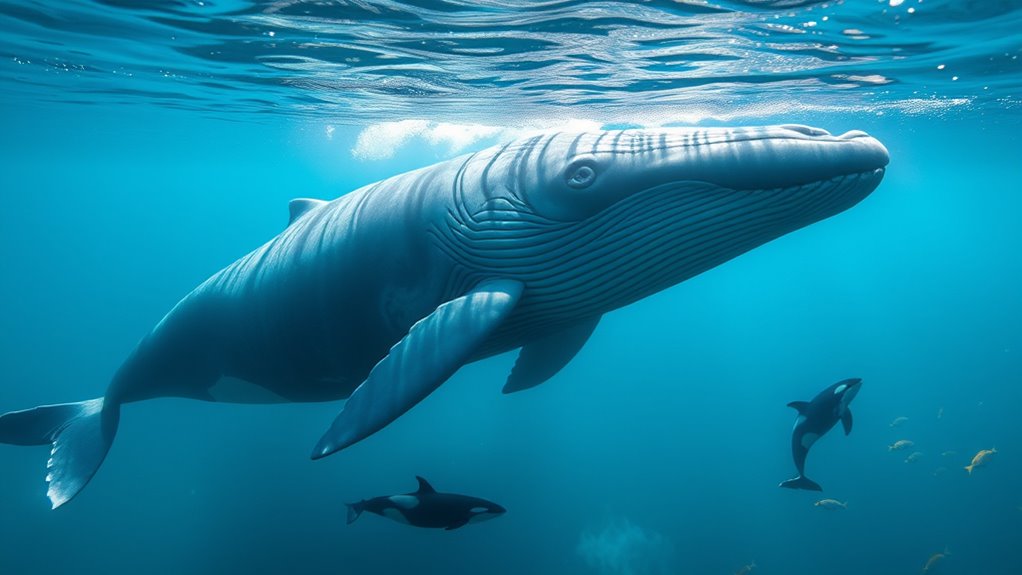
Although whale species vary widely, their lifespans offer fascinating insights into their biology. You’ll find that the blue whale’s lifespan of whales ranges typically between 70 and 90 years, with some surpassing 100. Gray whales, another baleen whales example, live around 55 to 70 years, occasionally longer.
Bowhead whales stand out for their incredible longevity of whales, often exceeding 200 years, making them the longest-living whale species known. Other whale species like humpbacks usually live about 45 to 50 years, while sperm whales live around 60 to 70 years. Understanding these differences helps you appreciate how diverse whale species are and how lifespan varies considerably among baleen whales and others.
Why Do Baleen Whales Live Longer Than Toothed Whales?
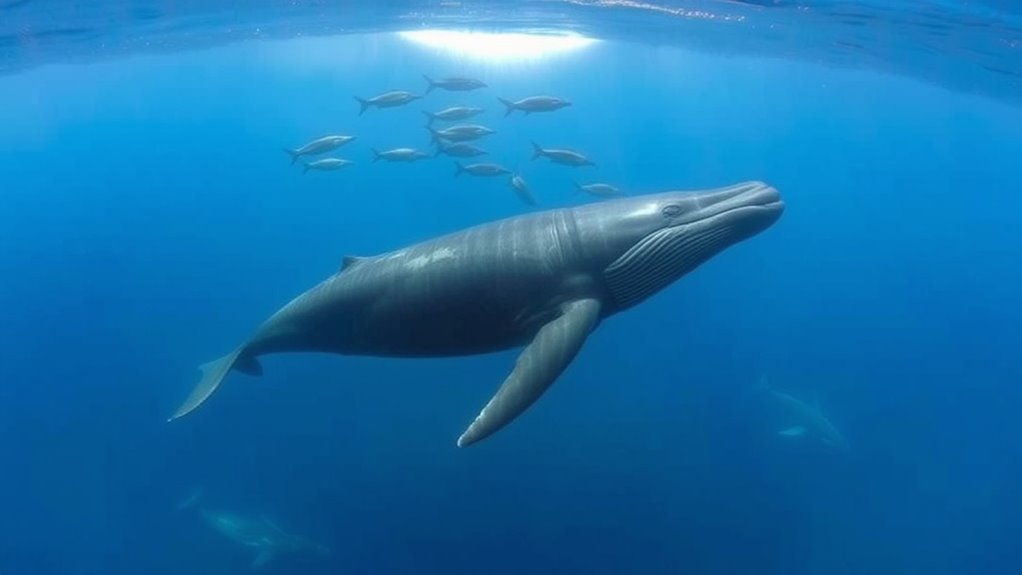
When you compare baleen whales to toothed whales, you’ll notice that baleen species tend to live longer because of several key factors. Baleen whales, like the bowhead, have a slower metabolism and growth rate, which contributes to their longer lifespan. Genetic mutations in these marine mammals enhance DNA repair, helping them avoid damage that speeds aging in toothed whales.
Additionally, many baleen whales inhabit colder Arctic environments, reducing disease risks and predation, further supporting their longevity. Their large size and unique physical features, such as massive mouths and baleen plates, also play a role in their extended lifespan.
In contrast, toothed whales have higher metabolic rates and more active lifestyles, which lead to faster biological aging and shorter lifespans.
What Factors Affect Whale Lifespan?
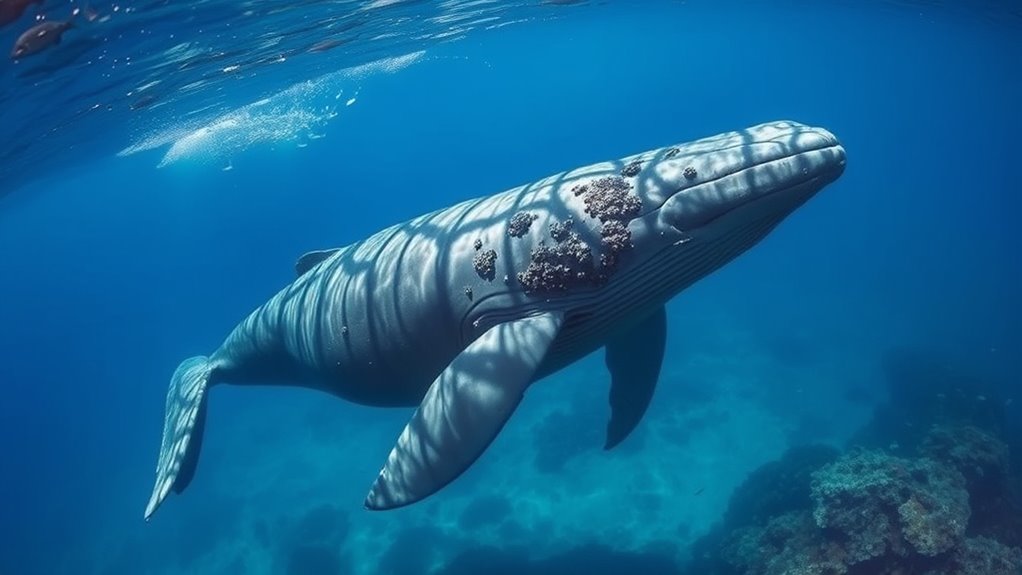
Because many factors influence how long whales live, understanding these elements helps you appreciate the complexity of their lifespans. Different species have unique genetic traits that set their potential longevity. The environment plays a big role, where pollution and habitat degradation can shorten their lives.
Human activities, such as ship strikes and entanglement, also pose serious risks. Whales depend on healthy habitats with enough prey, affecting their overall health and survival. Climate change disrupts habitats and food availability, further impacting lifespan.
Here’s what affects whale lifespan:
- Species-specific genetic traits
- Environmental pollution and habitat quality
- Human activities like whaling and ship collisions
- Availability of prey and health status
- Climate change altering habitats and food sources
How Do Scientists Estimate Whale Age in Living and Dead Specimens?
Scientists use several innovative methods to estimate the age of whales, whether they’re alive or deceased. For living whales, you can rely on genetic analysis, photo identification of unique markings, and growth tracking through tagging or drones—these non-invasive techniques provide valuable age estimation data.
In deceased whales, earwax analysis reveals growth layers that act like tree rings, giving precise age and environmental histories. Molecular methods also support age estimation by examining DNA changes and fatty acids but are still emerging.
| Specimen Type | Estimation Methods |
|---|---|
| Living | Genetic analysis, photo ID, growth tracking |
| Dead | Earwax analysis, molecular methods |
| Both | Non-invasive techniques |
These combined approaches help you determine whale age accurately while minimizing harm.
How Are New Molecular Tools Improving Whale Age Research?
You’re seeing how epigenetic age estimation uses DNA changes to pinpoint whale ages more accurately. By analyzing blubber samples, researchers can find chemical markers that work across different species.
However, these molecular methods still face challenges before they fully replace traditional age assessments.
Epigenetic Age Estimation
When you explore whale age, new molecular tools let you look beyond traditional methods by analyzing DNA methylation patterns. Epigenetic age estimation uses specific DNA modifications to reveal a whale’s biological age, offering a clearer picture of its whale lifespan. These molecular tools detect age-related methylation markers that align closely with chronological age, making aging assessments more accurate.
Unlike invasive techniques, epigenetic assays provide a less disruptive approach to studying whales. Standardizing these methods across populations helps improve reliability, while advances in sequencing technology speed up and reduce the cost of age estimation.
- Analyze DNA methylation patterns to estimate age
- Identify age-related epigenetic markers in whales
- Use less invasive molecular tools than traditional methods
- Standardize assays for population-wide accuracy
- Employ cutting-edge sequencing for rapid results
Blubber Sample Analysis
How can analyzing whale blubber samples advance age research? By using molecular analysis on blubber, scientists can improve age determination methods for different whale species. Variations in fatty acid compositions within blubber serve as species-specific markers, helping estimate a whale’s age more accurately.
Additionally, studying epigenetic modifications, like DNA methylation patterns in blubber tissue, offers a promising, non-invasive technique to assess age without harming the animal. Chemical analysis combined with genetic sequencing enhances these insights, providing reliable data on whale lifespan.
These molecular tools allow researchers to develop standardized, cost-effective approaches that refine age estimation, essential for conservation efforts. By focusing on blubber samples, you can support more precise, ethical studies that reveal important details about whale populations and their longevity.
Molecular Method Challenges
Although molecular tools like DNA methylation analysis offer promising advances in estimating whale age, they come with several challenges researchers must overcome. Epigenetic analysis aims to use biological clocks within DNA methylation patterns to improve age estimation, but the complexity of whale lifespan and species differences complicate this approach. You’ll find that standardizing molecular techniques across populations is tough, and aging challenges remain due to limited sample sizes and environmental influences.
Here are key hurdles in applying these new methods:
- Identifying consistent age-related DNA methylation markers across species
- Obtaining sufficient, high-quality blubber samples non-invasively
- Correlating molecular data precisely with chronological age
- Addressing variability caused by environmental and physiological factors
- Developing universal molecular protocols for reliable age estimation
These challenges highlight the ongoing work needed to refine molecular age assessments in whales.
Why Do Whales Live Shorter Lives in Captivity?
You might wonder why whales in captivity live much shorter lives than those in the wild. Emotional distress and the lack of natural environments take a serious toll on their health and well-being.
Let’s explore how these factors lead to significant differences in their lifespan.
Emotional Distress Effects
When whales endure captivity, they often face severe emotional distress that drastically shortens their lifespan. This psychological stress disrupts their natural behaviors and harms whale health, leading to a significant behavioral impact. Unlike their wild counterparts, who can live over 90 years, captive whales rarely exceed 40 years due to these stressors.
You’ll notice that emotional distress in captivity triggers harmful behaviors and weakens immune systems, contributing to their shorter lives.
- Pacing repetitively in confined spaces
- Exhibiting self-harm or aggression
- Loss of natural social bonds
- Increased vulnerability to illness
- Reduced overall lifespan compared to wild whales
Understanding these emotional distress effects helps explain why captivity severely limits whales’ lifespan and well-being.
Environmental Deprivation Impact
Emotional distress plays a major role in shortening whales’ lives in captivity, but it’s only part of the problem. Environmental deprivation severely impacts their longevity by restricting space and eliminating opportunities to perform natural behaviors like migration and foraging.
In captivity, whales face constant stress due to confined tanks, which weakens their immune system and makes them more prone to health issues. Without access to diverse habitats and social structures, they experience nutritional deficiencies and psychological strain.
This combination of factors prevents whales from thriving as they would in the wild. When you consider how environmental deprivation disrupts their physical and mental well-being, it becomes clear why captivity shortens their lives so drastically compared to their wild counterparts.
Lifespan Differences Captivity
Why do whales live considerably shorter lives in captivity compared to the wild? The difference in whale lifespan between wild vs captive settings mainly stems from environmental stress and health issues. In captivity, whales face confinement that limits natural behaviors, causing physical and psychological strain.
This stress weakens their immune systems and increases susceptibility to infections and metabolic disorders, reducing longevity. Wild whales benefit from vast spaces, natural foraging, social bonds, and migration, all vital for their health and lifespan. Unfortunately, captivity restricts these essential elements, impacting conservation efforts aimed at preserving whale longevity.
Consider these key factors affecting captive whales:
- Limited space and lack of natural stimuli
- Psychological stress from confinement
- Increased risk of infections and dental problems
- Absence of natural social interactions
- Restricted foraging and migration opportunities
What Conservation Efforts Help Extend Whale Lifespans?
A variety of conservation efforts directly help extend whale lifespans by reducing human-related threats. You can see this in marine protected areas that safeguard habitats, reducing stress on marine ecosystems. Regulation of whaling and international agreements like the IWC and CITES play key roles in maintaining healthy whale populations.
Efforts to minimize fishery gear entanglement through gear modifications and rescue programs also prevent fatal injuries. Additionally, whale monitoring using advanced technologies such as passive acoustics and remote tracking informs better management strategies. Vessel speed limits and rerouted shipping lanes further reduce vessel strikes, protecting whales from harm.
Frequently Asked Questions
Can Whales Live 200 Years?
Yes, some whales like the bowhead can live over 200 years. You’ll find their DNA repair abilities and slow Arctic growth help them reach such impressive ages, far beyond most other whale species.
What Animal Can Live up to 1000 Years?
You won’t find any animal living 1,000 years—nature hasn’t handed out those century-plus birthdays yet.
Still, some clams and sharks impress with 400-500 years, proving patience truly is a marine virtue.
What Animal Can Live to Be 500 Years Old?
You won’t find any animal living 500 years. The Greenland shark lives up to about 400 years, the longest known vertebrate lifespan, but no animal has been scientifically confirmed to reach 500 years or more.
Which Whale Can Live up to 400 Years?
You might think only mythical giants live centuries, but the bowhead whale can live up to 400 years!
Its ancient DNA repair lets it outlast most creatures, making it the true ocean’s time traveler.
Conclusion
Now that you know how long whales live and what affects their lifespan, it’s clear these majestic creatures face many challenges. From habitat threats to captivity stress, their lives can be cut short, but conservation efforts are turning the tide.
With new molecular tools revealing secrets of their age, we’re better equipped to protect them. Don’t forget, every little bit helps—after all, slow and steady wins the race when it comes to saving whales. Understanding how old a whale lives helps us focus on effective conservation strategies.