How to Identify Animals That Eat Whale Sharks
You can identify animals that eat whale sharks by spotting large predators like great white sharks, tiger sharks, or orcas, each with distinct hunting styles. Recognizing these whale shark predators involves observing their unique behaviors and the marks they leave behind.
Orcas, for example, flip young whale sharks and target soft belly areas, leaving unique scars and bleed marks. Sharks and marlins use their powerful bites, causing jagged wounds.
Noticing these physical traits, hunting behaviors, and specific injuries helps you recognize whale shark predators.
There’s more to uncover about their methods and impact, revealing the complex interactions within the ocean ecosystem. Understanding these details provides insight into the challenges whale sharks face in their environment.
Spot Key Physical Traits of Whale Shark Predators
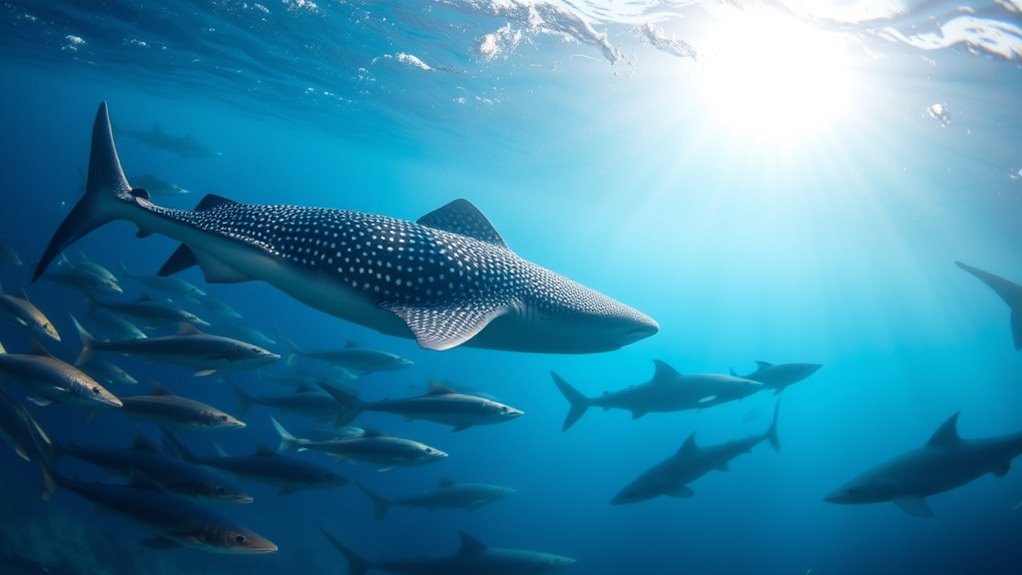
How can you quickly spot a predator threatening a whale shark? Look for marine predators with distinct predator physical traits: large size, elongated bodies, and sharp teeth. Great white sharks and tiger sharks, reaching up to 20 and 14 feet respectively, fit this description perfectly.
Killer whales, even bigger at around 32 feet, often target the vulnerable ventral side of juvenile whale sharks. These predators use their size and sharp teeth to overpower their prey. Black marlins and blue sharks, though smaller, also pose threats due to their predation strategies focused on weaker whale sharks.
Understand How Predators Hunt Whale Sharks
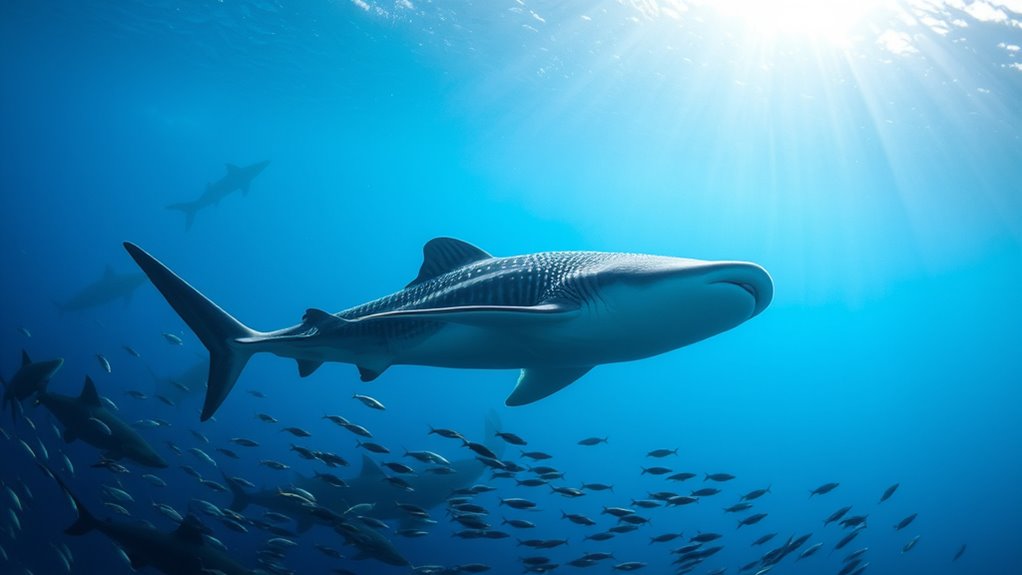
Although whale sharks are massive, predators like orcas and great white sharks have developed effective hunting strategies to exploit their vulnerabilities. You’ll notice orca whales use coordinated hunting to flip juvenile whale sharks, inducing tonic immobility. This tactic allows apex predators to perform organ extraction, primarily targeting the soft ventral side.
Predation events reveal that marine mammals and large sharks focus on these vulnerable areas, especially the pelvic region, to immobilize their prey quickly. When you observe predation by marine mammals, you’ll see they rely on teamwork and precision, honing their hunt strategies to overcome the whale shark’s size.
Understanding these behaviors helps you identify how and why predators attack, emphasizing their role as apex predators targeting juvenile whale sharks through specific, strategic approaches.
Identify Orcas by Their Unique Hunting Signs
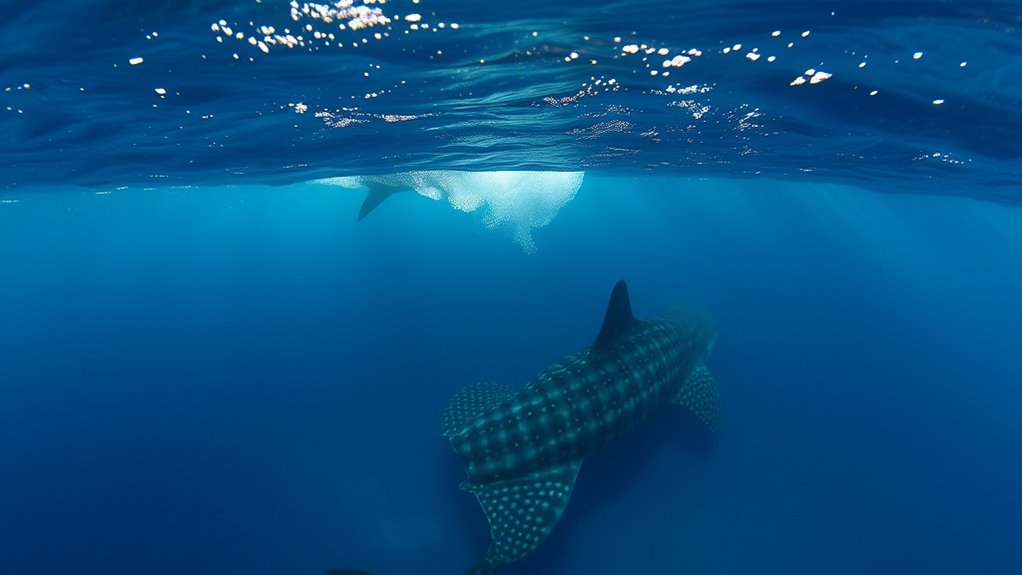
When you spot a group of orcas hunting whale sharks, look closely for their distinctive dorsal fins and unique white patches, which help you identify individual predators. Orca whales show specific dorsal fin features and scars that distinguish them during hunts. Their hunting behavior includes coordinated strategies, where they execute focused attacks on the whale shark’s ventral side, especially targeting the pelvic area.
These attack patterns often involve flipping the shark upside down to induce tonic immobility, temporarily paralyzing the prey. You’ll notice characteristic bleeding signs on the whale shark from these precise strikes. By observing dorsal fin scars and white patches, you can track individual orcas and better understand their sophisticated predation tactics.
These unique hunting signs clearly mark orca whales as skilled and strategic apex predators.
Recognize Other Whale Shark Predators: Sharks and Marlins
Besides orcas, several other formidable marine predators target whale sharks, especially the juveniles with their softer underbellies. Large sharks like great whites and tiger sharks use their size and speed to hunt whale sharks, while black marlins focus on vulnerable juvenile whale sharks. These whale shark predators rely on agility and power during predation.
Killer whales (orcas) are apex predators, but these sharks and marlins also play a critical role in controlling whale shark populations by prey targeting.
| Predator | Key Traits |
|---|---|
| Great White | Up to 20 ft, powerful jaws |
| Tiger Shark | 10-14 ft, aggressive |
| Black Marlin | 15 ft, fast and heavy |
| Blue Shark | Sharp teeth, swift swimmer |
Track Predator Scars to Detect Whale Shark Threats
How can you tell if a whale shark has faced a predator recently? By tracking whale shark scars, you can detect signs of predation and identify the predators involved. Orca whale attacks often leave deep puncture wounds and linear predation marks, especially near the pelvic and ventral scars.
Large shark bites, from species like white or tiger sharks, produce irregular, jagged scars different from environmental injuries. Monitoring these marine predator scars helps with predator identification and predation detection. Consistent scar patterns across individuals reveal ongoing threats from specific predators.
Paying close attention to ventral scars and the nature of predation marks allows you to assess recent predation attempts accurately and understand the predator landscape threatening whale sharks in their habitats.
Frequently Asked Questions
What Animals Eat Whale Sharks?
You’ll find great white sharks, tiger sharks, and orcas preying on whale sharks, especially juveniles. Sperm whales, pinnipeds, black marlins, and blue sharks also pose threats, while humans contribute through hunting and accidental capture.
What Animal Preys on Whale Sharks?
Picture orcas slicing through turquoise waves, targeting juvenile whale sharks’ soft bellies.
You’ll know great whites, tiger sharks, and even sperm whales can prey on these gentle giants, especially when they’re young or vulnerable.
What Is the Whale Sharks Biggest Enemy?
You’ll find that orcas are the whale shark’s biggest enemies, targeting their soft undersides. Juvenile whale sharks face threats from large sharks, while humans pose significant indirect dangers through hunting and accidental captures.
What’s the Biggest Threat to Whale Sharks?
You’ll find the biggest threat to whale sharks comes from human activities like overfishing, habitat destruction, and illegal hunting. These factors drastically reduce their numbers and disrupt their environment, putting their survival at serious risk.
Conclusion
Now that you know how to spot the signs—those deep scars or the sleek shadow of an orca—you can picture the silent struggle beneath the waves.
You might wonder if these gentle giants truly face such fierce hunters, but the evidence is clear. Imagine a whale shark gliding peacefully, suddenly aware of the sharp eyes and deadly precision of its predators.
By recognizing these clues, you become a witness to nature’s raw and riveting dance. Identifying animals that eat whale sharks helps us understand the complex ecosystem they inhabit and the challenges these majestic creatures endure.