What Does the Gray Whale Eat in the Wild?
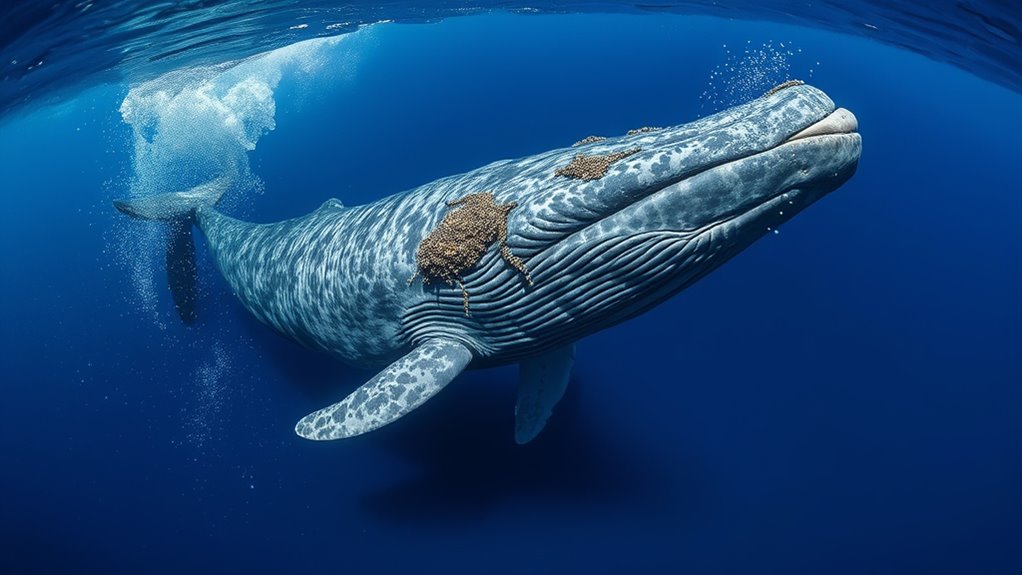
If you spot a gray whale in the wild, you’ll notice it primarily eating tiny crustaceans like mysid shrimp, amphipods, and ghost shrimp. These small creatures form the main part of the gray whale diet in the wild.
It scoops up sediment from the ocean floor or filters dense swarms of shrimp through its baleen plates.
Remarkably, gray whales consume about a ton of these small creatures each day to fuel their long migrations.
Their unique feeding style is adapted perfectly to their environment.
Want to know how their feeding habits and diet shift with the seasons?
Gray Whale Diet: Main Prey in Natural Habitat
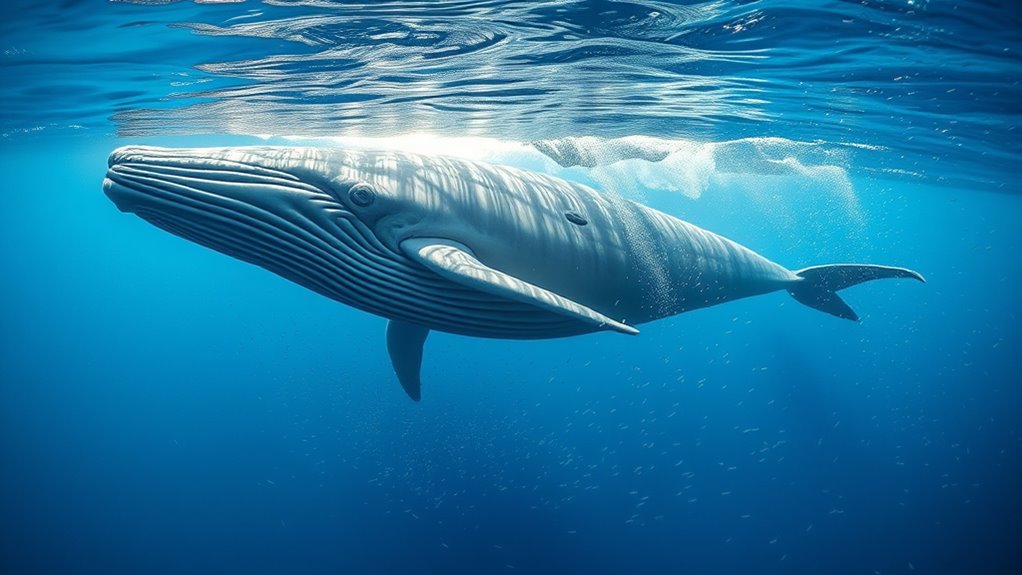
While you might picture whales feeding near the surface, gray whales dive to the ocean floor to scoop up benthic crustaceans like amphipods and ghost shrimp. You’ll see them use sediment-scraping techniques to disturb the sand and mud, exposing their prey. Then, gray whales sweep the sediment with side-scooping motions, trapping small invertebrates in their baleen plates.
These specialized plates act as filters, letting water and sediment escape while holding onto amphipods and other crustaceans. During summer in Arctic waters, you’d find gray whales consuming amphipods at astonishing densities—sometimes up to 20,000 per square yard. Their diet mainly revolves around these benthic crustaceans, with mysid shrimp adding variety.
This sediment-scraping behavior makes gray whales uniquely adapted to their benthic feeding lifestyle.
Where Gray Whales Find Food Along the Coast
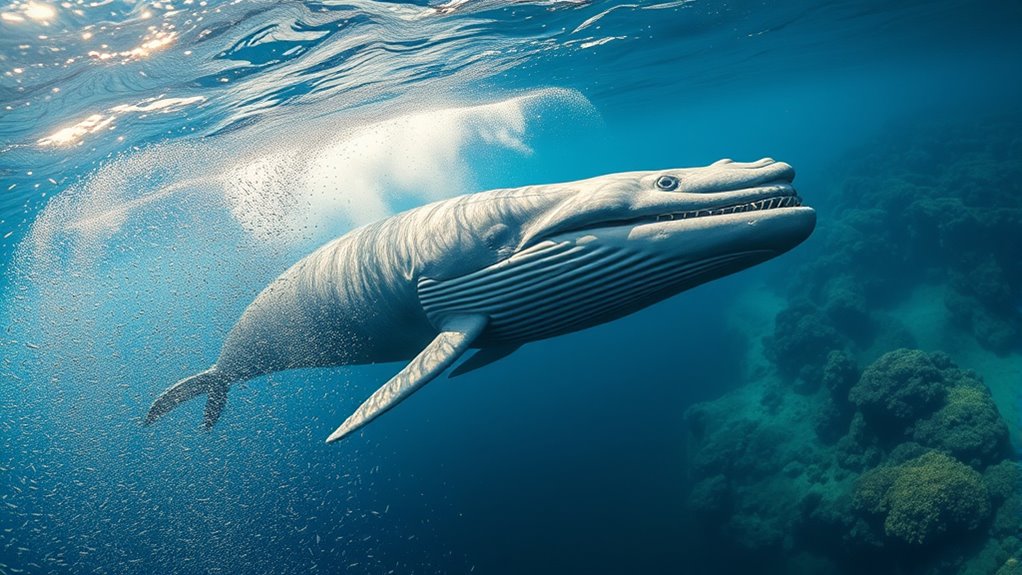
Because gray whales rely on abundant coastal food sources, they concentrate their feeding in shallow waters and kelp beds ranging from 10 to 60 feet deep. You’ll find them targeting dense swarms of mysid shrimp, which gather in thick layers near the coastline. These feeding sites provide billions of mysids, making them ideal spots for gray whales to feed efficiently.
When you observe a gray whale, notice how it uses its large tongue to create suction, trapping mysid shrimp on its baleen plates. Gray whales don’t stay in one place too long; they move between feeding sites, depleting one area before heading to the next. This movement ensures they always find fresh food in the coastal kelp beds and shallow waters they depend on.
Seasonal Changes in Gray Whale Feeding and Habitat
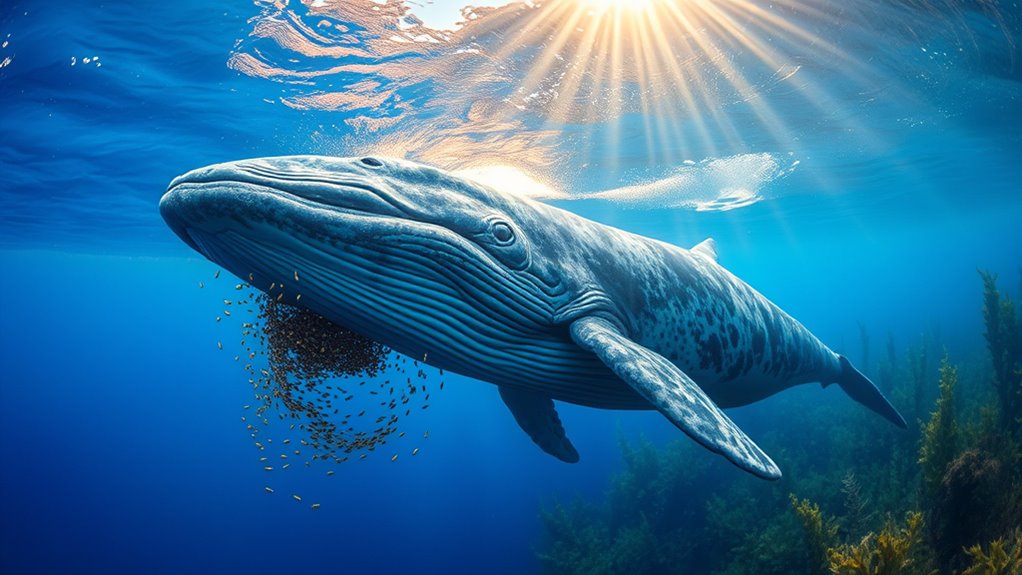
As seasons change, gray whales adjust their feeding habits and habitats to match shifting prey availability. During seasonal feeding, they focus on benthic feeding in Arctic waters throughout summer, consuming dense populations of amphipod crustaceans found in the sediment. When spring, summer, and early fall arrive along the coast, they target mysid shrimp near kelp beds in shallow waters.
Their migration brings opportunistic surface skimming where they supplement their diet with plankton, squid, krill, and crab larvae, depending on what’s available. These seasonal shifts in prey availability directly influence where and when gray whales feed, guiding their migration routes and timing. By adapting their feeding strategies and habitats, gray whales efficiently meet their nutritional needs throughout the year.
How Baleen Filters Food for Gray Whales
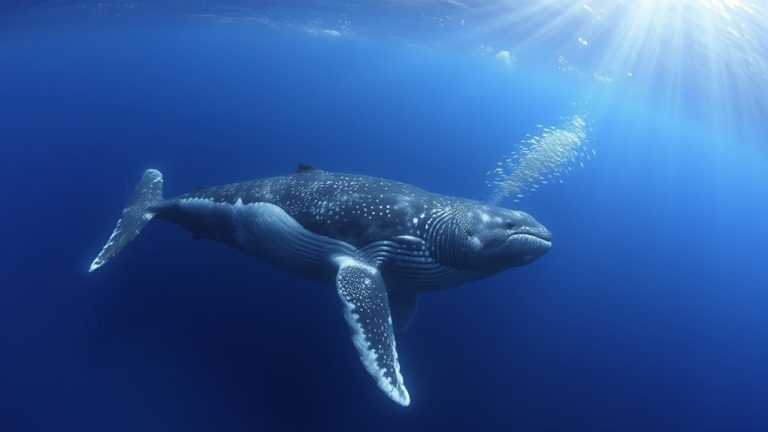
You’ll see that gray whales rely on baleen plates fringed with bristles to filter tiny prey from the water. By using suction to gulp in water, they trap small creatures while letting water pass through.
This efficient feeding mechanism guarantees they catch enough food to thrive.
Baleen Structure And Function
The baleen plates in gray whales’ upper jaws play a crucial role in their feeding process by filtering small prey from seawater. These plates, each about a foot long, overlap to create an efficient filtering surface. Fringe-like bristles along the baleen trap tiny organisms such as mysid shrimp, amphipods, krill, and crab larvae while allowing water to flow through.
When the whale uses suction to draw water and prey into its mouth, the bristles act like a sieve, capturing the prey. As water is expelled through the baleen, the trapped prey remains on the bristles for the whale to swallow. This baleen structure and function make it possible for gray whales to feed on small prey effectively in their aquatic environment.
Suction Feeding Mechanism
Understanding how baleen plates filter food wouldn’t be complete without looking at the suction feeding mechanism gray whales use. You’ll see, gray whales create strong suction by depressing their massive, muscular tongue, drawing water and prey like mysid shrimp into their mouths. This suction feeding allows them to capture large volumes of water mixed with sediment and tiny prey.
Their baleen plates then act as natural filters, trapping these small organisms while letting water escape. The baleen bristles, fringed with hair-like structures, efficiently sieve out prey during filter feeding. As the whale lifts its tongue, water exits through the baleen plates, leaving the trapped mysid shrimp and other prey behind for swallowing.
This prey capture technique is essential for the gray whale’s diet and survival.
Filtering Prey Efficiency
Although gray whales rely on suction to draw in water and prey, their baleen plates play the essential role of efficiently filtering out tiny organisms like mysid shrimp. When feeding, the whale depresses its muscular tongue to suck in water filled with small prey. The baleen plates, fringed with bristles about a foot long, trap these tiny crustaceans while letting water pass through.
This filtering prey method ensures that the whale captures billions of small organisms during each feeding session. Water exits through openings between the baleen plates, leaving trapped prey ready for ingestion. Thanks to the baleen plates’ design, gray whales achieve impressive feeding efficiency, maximizing their intake of small prey in every gulp of seawater.
Gray Whale Feeding: Suction and Tongue Movements
When you watch a gray whale feed, you’ll see it create powerful suction by pressing its massive tongue down to pull in water and prey. The tongue then lifts, helping to trap tiny shrimp against the baleen filters.
This coordinated movement lets the whale efficiently separate food from water as it feeds.
Suction Feeding Mechanism
As gray whales feed, they depress their massive 2,000-pound tongues to create powerful suction that pulls water and prey into their mouths. This suction feeding technique lets you see how they efficiently capture tiny ocean creatures in their feeding grounds.
Their baleen plates, fringed with baleen bristles, act like filters, trapping prey such as mysid shrimp and amphipods while letting water escape. During suction feeding, the whale’s throat grooves expand, increasing surface area and allowing it to take in large volumes of water and prey at once.
This method guarantees they consume billions of small organisms quickly and effectively. Watching this process, you’ll understand how suction feeding combined with baleen filtration plays a crucial role in the gray whale’s survival.
Tongue Role Ingestion
Because gray whales rely on suction to feed, their massive tongue plays a vital role in drawing water and prey into their mouths. During feeding, the gray whale depresses its 2,000-pound tongue, generating powerful buccal suction that pulls in large volumes of water and prey like mysid shrimp.
As water flows out through the baleen plates, the lifted tongue traps tiny prey on the baleen bristles. The whale’s expandable throat grooves accommodate this intake, ensuring smooth passage of water and food. After trapping prey, you’d see the whale lick its tongue clean before swallowing the concentrated meal.
This coordinated tongue movement and suction mechanism make feeding efficient, allowing gray whales to capture and ingest prey effectively while filtering water through their baleen.
How Much Food a Gray Whale Eats Daily
A single gray whale can eat up to one ton of mysid shrimp each day during peak feeding seasons. When you observe a gray whale feeding, you’ll notice how it filters water through its baleen plates, trapping tiny creatures like mysid shrimp to sustain its diet.
Here’s what you need to know about how much food a gray whale consumes daily:
- It filters vast amounts of water, capturing thousands of tiny crustaceans in one gulp.
- Feeding often takes place in dense kelp beds, where mysid shrimp swarm in billions.
- The whale’s massive tongue creates suction, pulling water and prey inside.
- Despite its massive size, the gray whale relies on small prey, eating huge quantities every day to meet energy needs.
You’ll see just how specialized and efficient their feeding strategy is!
Why Mysid Shrimp Are Key to Gray Whale Diet
When you watch a gray whale filter massive amounts of water, you’re seeing how it targets mysid shrimp, the mainstay of its diet. These tiny crustaceans swarm in kelp beds, especially off Oregon and Alaska, offering a rich, abundant food source. During the feeding season—from spring through early fall—gray whales rely heavily on mysid shrimp to fuel their energy needs.
Using their baleen plates and powerful tongue suction, gray whales efficiently filter billions of mysids from the water. In fact, a single gray whale can consume about one ton of mysid shrimp daily. This remarkable feeding strategy highlights why mysid shrimp are key to the gray whales’ diet, sustaining them through long migrations and ensuring their survival in the wild.
Other Small Creatures in the Gray Whale Diet
Although mysid shrimp make up a large part of a gray whale’s diet, these whales also eat other small creatures like amphipods, ghost shrimp, and krill. You’ll find that gray whales are opportunistic feeders, shifting their focus based on prey availability.
Here’s what else they consume:
- Amphipods, small crustaceans found in sediment, are a common benthic food source.
- Ghost shrimp, another crustacean, provide nutritious meals when abundant.
- Krill, tiny planktonic crustaceans, form part of their diet during surface feeding.
- Various zooplankton, including crab larvae, drift in the water and supplement their intake.
Frequently Asked Questions
Does the Gray Whale Have Any Predators?
Yes, gray whales have predators, mainly orcas that target calves and sometimes adults.
You’ll also find large sharks occasionally attacking juveniles. Adults are usually safe due to their size and thick blubber protection.
Are Gray Whales Aggressive?
No, gray whales aren’t aggressive. You’ll find they’re curious and gentle, usually avoiding conflict.
They mostly defend themselves calmly and rarely show aggression, even during mating season when males compete with displays, not fights.
Are Gray Whales Friendly to Humans?
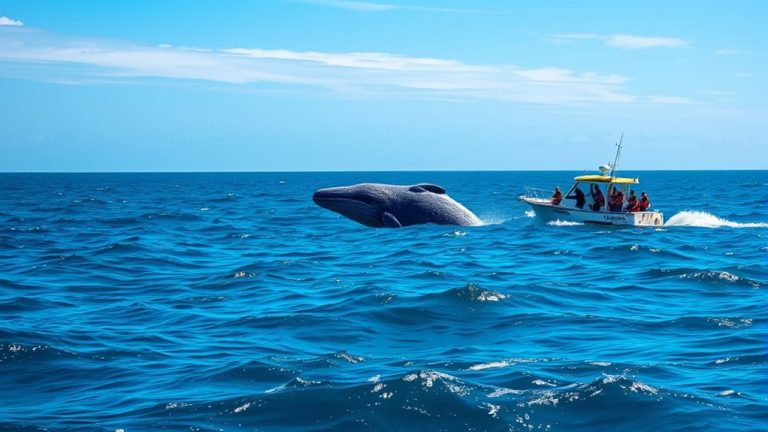
Yes, gray whales are friendly to humans. You’ll often see them approach boats closely, swim alongside, and even nudge them gently.
Just remember to respect their space since they’re wild and can react unpredictably if threatened.
Do Gray Whales Eat Meat?
No, gray whales don’t eat meat; they’re more like underwater vacuum cleaners, sucking up tiny crustaceans and invertebrates. You won’t see them hunting fish or other animals—they filter-feed on small, soft-bodied creatures instead.
Conclusion
You might be surprised to learn that a gray whale can eat up to 1,000 pounds of food every day! In the wild, they mainly feast on tiny creatures like mysid shrimp and other small invertebrates found along coastal waters.
Using their baleen plates, they efficiently filter these delicacies from the sediment. Understanding their diet helps you appreciate how these gentle giants thrive seasonally in their natural habitat.
By knowing what gray whales eat in the wild, you gain insight into their feeding habits and the important role they play in marine ecosystems.