What Does Whale Eyes Mean in Dogs and How Should You Respond
When your dog shows whale eye—that visible white part on the side of their eyes—it usually means they’re feeling uneasy, stressed, or threatened. Recognizing what whale eyes mean in dogs is important for responding appropriately.
You should respond calmly by avoiding direct eye contact, moving slowly, and giving them space to relax. Speak softly and stay calm to help ease their anxiety.
Recognizing these signals helps you respect your dog’s emotions and build trust. Keep exploring to understand how to handle and prevent whale eye effectively.
What Does Whale Eye Look Like in Dogs?
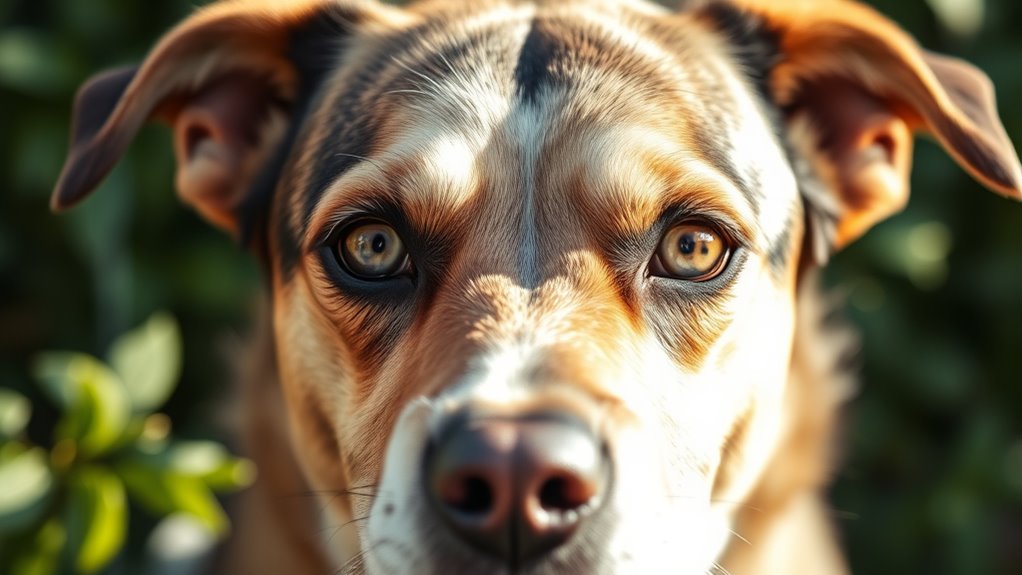
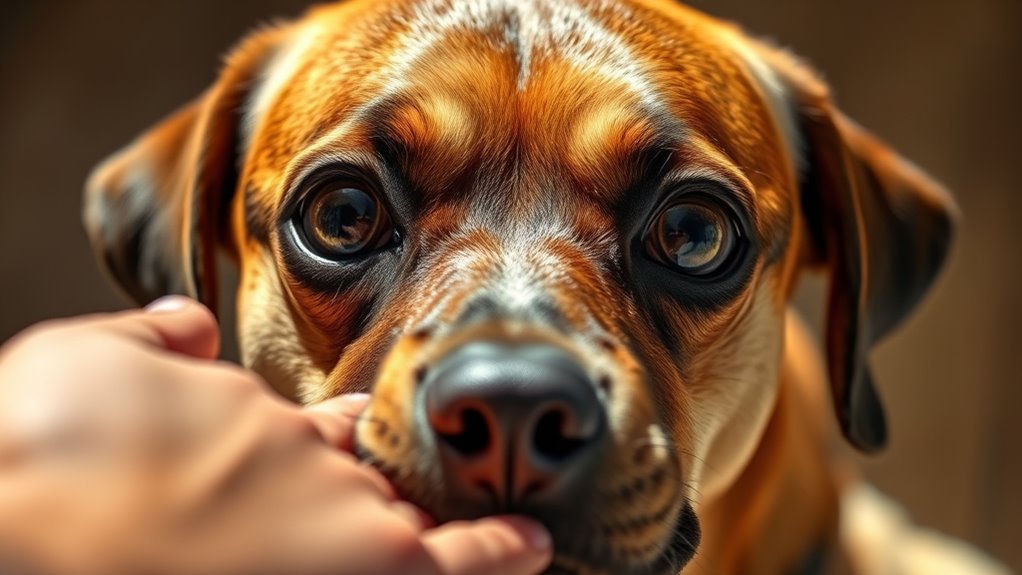
When you notice a dog’s eyes showing a visible crescent of white, often on one side, that’s what’s called whale eye. This expression occurs when the dog slightly turns its head but keeps eye contact, revealing more of the sclera—the white part of the eye. Whale eye can range from subtle to obvious, influenced by the dog’s breed and size.
Dogs with short muzzles or brachycephalic breeds often show whale eye more clearly. In terms of canine body language, this eye expression signals that the dog is feeling uneasy or alert. Paying attention to whale eye helps you read your dog’s emotions better, as the visible white of the eye is a key indicator of their current state.
Why Do Dogs Show Whale Eye?
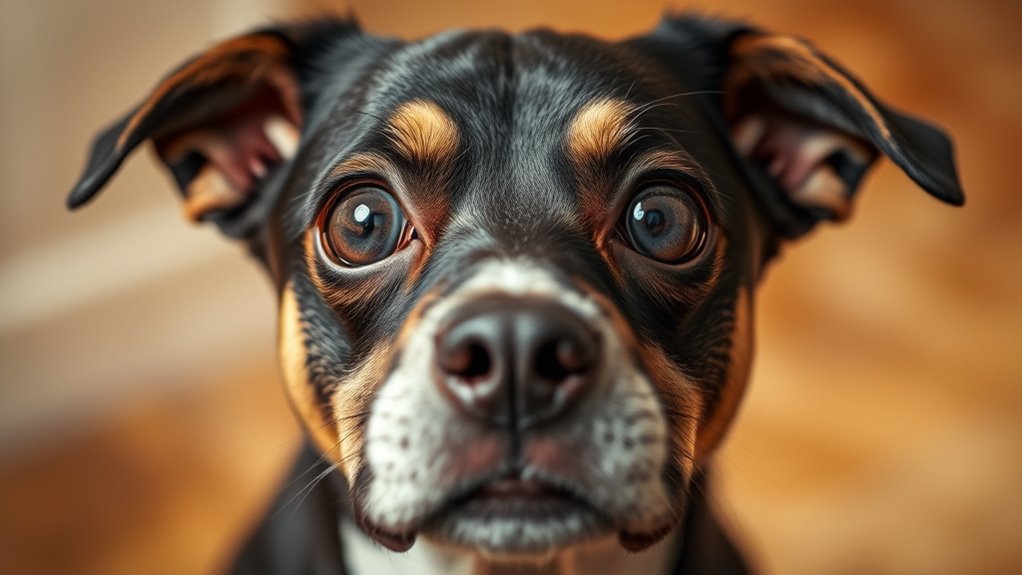
Although it might seem subtle, a dog showing whale eye is often trying to communicate fear, stress, or discomfort. This distinct display of the white sclera reveals important clues in dog body language. You’ll notice it mostly when your dog feels uneasy or threatened.
A dog showing whale eye often signals fear, stress, or discomfort, offering key insights into their emotions.
Understanding why they show whale eye helps you respond appropriately.
Common reasons include:
- Feeling threatened or anxious in a new environment
- Guarding resources like toys or food
- Reacting to stress and anxiety during interactions
Sometimes, whale eye appears during play or anticipation, signaling curiosity or caution. Keep in mind, frequent whale eye can indicate ongoing stress and anxiety.
Paying attention to this signal helps you support your dog’s well-being effectively.
What Signs Accompany Whale Eye in Dogs?
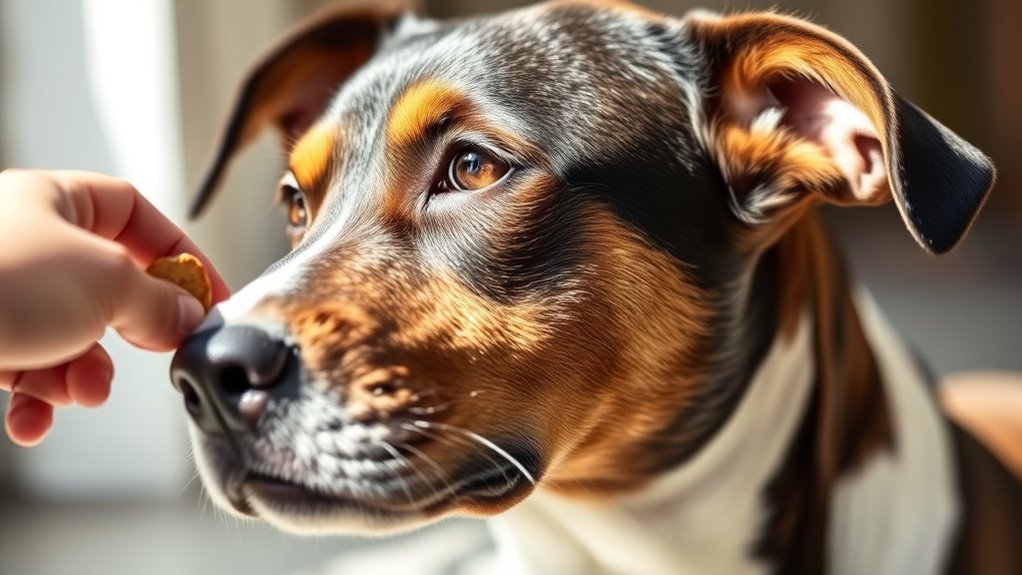
If your dog shows whale eye, you’ll likely notice other signs of stress or discomfort alongside it. Look for lip licking, yawning, or hair standing on end—these are subtle clues that your dog feels uneasy. Their body language might include body rigidity, a tucked tail, or lowered ears, all of which reinforce that whale eye is a sign of fear or anxiety.
You might also see panting or shallow breathing, indicating your dog is overwhelmed. Changes in behavior, such as withdrawal or increased agitation, often accompany whale eye, signaling distress. Paying attention to these signs together helps you understand your dog’s emotional state better, enabling you to respond with care and prevent further stress.
What Does Whale Eye Reveal About Your Dog’s Emotions?
How can you tell what your dog is feeling just by looking into their eyes? When you notice the whale eye—where the white of the eye shows more than usual—it’s a clear sign your dog is stressed or uneasy. This subtle cue in dog body language reveals a lot about your dog’s emotional state.
Whale eye often indicates feelings like fear or anxiety when facing a threat or unfamiliar situation. It can also show discomfort or uncertainty towards a person or environment. Additionally, it serves as a warning signal that your dog needs space or calm.
When Should You Be Concerned About Whale Eye and Aggression?
You need to watch closely when your dog shows whale eye along with stiff body language, growling, or baring teeth, as these are clear signs of aggression. Recognizing these warning signals early helps you respond appropriately and keep everyone safe.
Let’s explore how to identify aggressive whale eye and the best ways to handle it.
Identifying Aggressive Whale Eye
When a dog shows whale eye with an intense, fixed stare and fully visible sclera, it often signals aggression, especially if accompanied by lip curling or baring teeth. You need to pay close attention to the dog’s body language and facial expressions to identify aggressive whale eye accurately.
Look for these signs: raised hackles and a stiff body posture indicating tension; growling, snapping, or lunging that may follow if the dog feels threatened; persistent or exaggerated whale eye that doesn’t relax with distance or calming cues.
Recognizing these cues helps you respond appropriately. When you spot aggressive whale eye, avoid direct eye contact, back away calmly, and give the dog plenty of space to prevent escalation. Understanding these signals ensures you keep both yourself and the dog safe.
Warning Signs To Watch
Although whale eye alone doesn’t always signal danger, you should be concerned when it appears alongside other stress signals like growling, a stiff body, or baring teeth. These warning signs in your dog’s body language often indicate rising tension and potential aggression.
Pay close attention if the whale eye is persistent or intense, especially when your dog’s posture is tense, as this can signal a higher risk of biting. Sudden or frequent whale eye responses in unfamiliar situations, such as around new people, animals, or loud noises, also deserve your attention.
Recognizing these warning signs early lets you act before aggression escalates. Observing your dog’s body language carefully helps you understand when whale eye signals more serious distress, prompting timely safety measures.
Appropriate Response Strategies
Noticing whale eye alongside other stress signals like a stiff body or growling calls for immediate caution. When your canine shows this body language, it’s a sign you should act carefully to prevent aggression. Use these appropriate response strategies to keep both you and your dog safe:
- Back away slowly if you see whale eye combined with raised hackles or a rigid stance.
- Avoid direct eye contact and sudden movements, which can escalate tension.
- Seek professional behavior consultation if whale eye appears frequently with signs like lip-licking or a lowered tail.
Understanding your dog’s body language helps you recognize when to intervene. Be alert and respond calmly to reduce stress and avoid potential bites.
How Should You Respond to Whale Eye?
How should you respond if your dog shows whale eye? First, stay calm and recognize this body language as a sign of stress or discomfort. Avoid approaching or scolding, which can worsen anxiety.
Instead, give your dog space and use a gentle voice to reassure them. Redirect their focus to a positive activity or toy, aiding in their relaxation. Observing additional body language cues helps you adjust your response and prevent escalation.
Incorporate these steps into your dog training routine to promote trust and reduce stress.
| Action | Purpose |
|---|---|
| Remove stressors | Eliminate cause of discomfort |
| Use calm voice | Provide reassurance |
| Redirect attention | Shift focus to positive stimuli |
What Common Situations Trigger Whale Eye in Dogs?
When your dog feels threatened or anxious, you’ll often see whale eye as a clear sign of their discomfort. This distinct dog behavior acts as a stress signal, warning you that your pet is uneasy. Understanding common triggers can help you recognize when your dog is stressed.
Typical situations that prompt whale eye include:
- Being approached during grooming or vet exams, where unfamiliar handling feels invasive
- Encountering new environments or loud noises that make your dog wary
- Resource guarding, such as protecting food, toys, or spaces from others
How Can You Prevent Whale Eye by Reducing Stress?
Recognizing the triggers that cause whale eye is just the first step in helping your dog feel more at ease. You can prevent this stress-related behavior by creating a calm, predictable environment where your dog feels secure. Proper socialization from a young age helps reduce anxiety by exposing your dog gradually to new people, places, and situations.
Regular physical and mental exercise also plays a pivotal role in alleviating boredom and stress, which lowers the chances of whale eye. Pay close attention to your dog’s behavior to identify stress signs early. If anxiety persists, consulting a veterinarian or behaviorist can provide targeted strategies or medication to manage stress effectively.
How to Build Trust by Understanding Whale Eye Signals
When you learn to read whale eye signs, you can better respect your dog’s boundaries and respond calmly. This helps create calm interactions that build trust over time.
Paying attention to these signals shows your dog that you understand and care about their feelings.
Reading Whale Eye Signs
Although it might seem subtle, noticing the visible white of your dog’s eye—known as whale eye—can tell you a lot about how they’re feeling. Reading whale eye signs means paying close attention to your dog’s body language and overall behavior. When you catch these signals early, you can better understand their emotional state and respond appropriately.
Look for these key signs:
- The sclera (white part) becomes visible while their gaze shifts away, signaling discomfort or anxiety.
- Accompanying body language, like tucked tails or pinned ears, intensifies the message.
- Avoiding direct eye contact often means your dog feels unsure or stressed.
Respecting Dog Boundaries
If you notice your dog showing whale eye, it’s a clear sign they need space and calm. Respecting dog boundaries by recognizing this body language prevents stress and potential aggression. When you give your dog room and avoid confrontation, you build trust and safety.
Understanding whale eye signals helps you respond calmly, reinforcing positive experiences and fostering a respectful relationship.
| Whale Eye Signal | How to Respond |
|---|---|
| Showing the whites of eyes | Step back, give space |
| Tense body posture | Avoid direct eye contact |
| Lip licking or yawning | Speak softly, remain calm |
Respecting these signals supports better communication and bonding. It shows you value your dog’s comfort.
Building Calm Interactions
Understanding whale eye signals lets you recognize when your dog feels uneasy, so you can respond with patience and reassurance that builds trust.
Watching your dog’s body language alongside whale eye cues helps you create calm interactions and reduce their anxiety.
When you notice whale eye, try these steps:
- Use a calm voice tone to soothe your dog and signal safety.
- Avoid sudden movements to prevent escalating their stress.
- Provide a quiet, safe space where your dog can relax and feel secure.
Calming Techniques for Dogs Showing Whale Eye
When your dog shows whale eye, you can help calm them by speaking softly and moving slowly to reduce their anxiety. Using effective calming techniques, focus on creating a quiet environment by removing stressors and giving your dog space to relax. Pay close attention to dog body language and avoid direct eye contact, which can increase their stress.
Instead, use gentle, non-threatening gestures to soothe them. Offering a favorite calming treat or toy can help redirect their focus and provide comfort. Over time, practice gradual desensitization by exposing your dog to stress-inducing stimuli in short, positive sessions.
This approach helps your dog build confidence and reduces whale eye occurrences, improving your connection and their overall well-being.
Frequently Asked Questions
What to Do When Your Dog Has Whale Eyes?
When your dog has whale eyes, stop what you’re doing and give them space. Calmly remove any stressors, speak softly, and offer treats.
Avoid punishment, watch their body language, and let them relax before trying again.
How Do I Approach a Dog Showing a Whale’s Eye?
You approach a dog showing whale eyes by moving slowly and calmly, avoiding direct eye contact. Keep your body relaxed, speak softly, and let the dog come to you, showing patience and respect for its space.
What Does It Mean When a Dog Looks at You With Whale Eyes?
When a dog looks at you with whale eyes, it means they’re feeling stressed or uncomfortable.
You should recognize this as a warning, give them space, and avoid pressuring them to prevent escalating their anxiety.
What Triggers Whale Eyes in Dogs?
Loud noises, new people, tight spaces—these triggers make your dog show whale eyes. When you notice this, stay calm, give space, and avoid forcing interaction to help your dog feel safe and less stressed.
Conclusion
You might notice your dog’s whale eye just as you’re about to give them a hug or call them away from something they love—funny how their stress shows up right when you’re trying to connect. Recognizing this subtle signal helps you respond with calm and care, turning tension into trust.
By paying attention and easing their worries, you’ll build a stronger bond, making those whale eye moments fewer and your shared joy even greater. Understanding what whale eyes mean in dogs is key to nurturing a healthy relationship. When you respond thoughtfully, you create a safe space where your dog feels secure and loved.