7 Best Times for Whale Watching in Alaska
You’ll find the best whale watching in Alaska between May and September, with peak activity from June through early September.
Humpbacks are most visible in summer, orcas are active from May to August, and gray whales feed primarily from June to September.
Longer daylight and calm seas make July and August ideal for sightings. Planning your trip during these months boosts your chances, and as you explore further, you’ll uncover the prime locations and tips to maximize your whale encounters.
Best Time to See Humpback Whales in Alaska
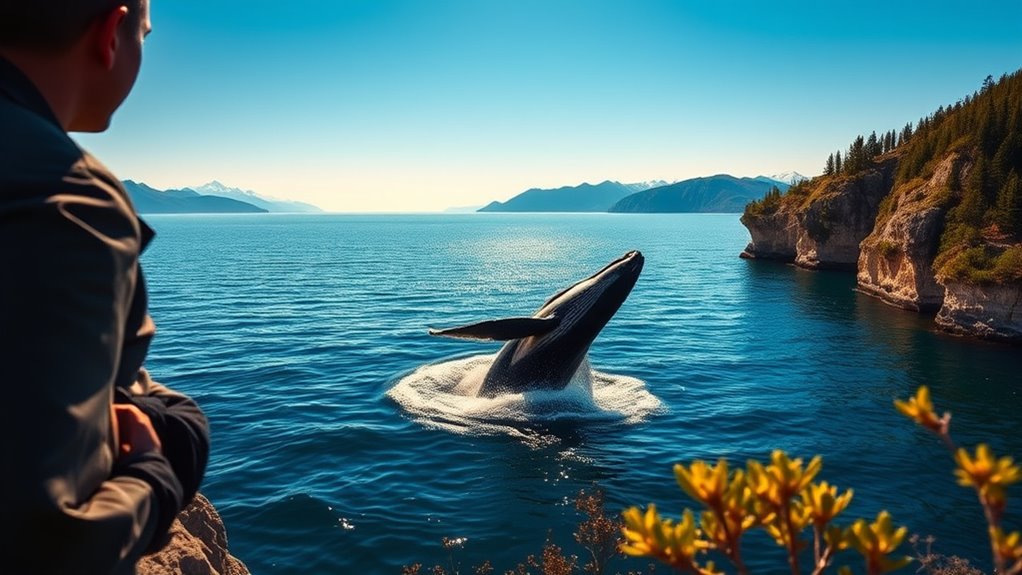
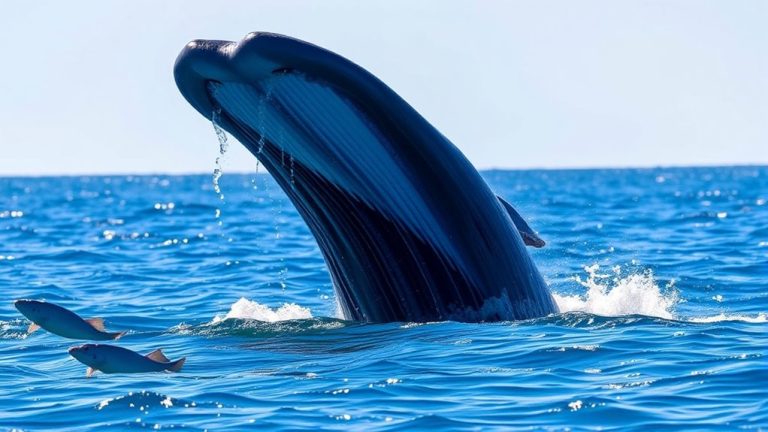
While humpback whales arrive in Alaska as early as May, you’ll have the best chance to see them from June through September when they migrate to feeding grounds. During these summer months, humpbacks actively feed on krill and fish, making their behaviors more visible.
Peak sightings usually occur in July and August, which is why most Alaska whale watching tours are scheduled then. With longer daylight hours, you’ll have more opportunities to spot these majestic creatures in their natural habitat.
Whether you join a guided tour or explore on your own, the best time to see whales is during this vibrant feeding season. If you want a memorable Alaska whale watching experience, plan your trip between June and September for the highest chances of humpback whale encounters.
When Orcas Are Most Active for Viewing
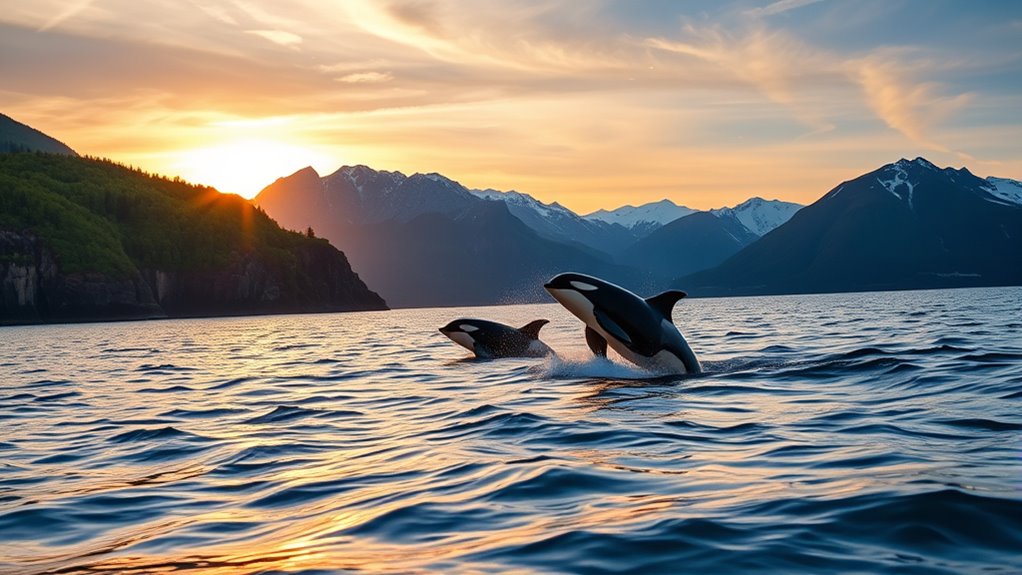
You’ll find orcas most active from April through September, especially along Alaska’s coast where their pods gather.
Keep an eye on popular spots between May and July when they’re hunting, socializing, and communicating. Understanding their behavior patterns helps you pick the best locations and times for unforgettable sightings.
Orca Activity Seasons
Because orcas migrate northward along Alaska’s coast from May to August, you’ll find them most active and easiest to observe during spring and summer. This whale watching season offers prime opportunities for summer sightings as orcas follow their migration route in large pods.
Resident orcas, which stick close to coastal areas like Juneau and Prince William Sound, are visible year-round but peak between May and September. Transient orcas, hunting marine mammals, also increase their activity during these months when prey is abundant.
You’ll notice orca activity intensify with more socializing and vocalizing, making it a thrilling time for observers. The peak viewing period aligns with warmer months, maximizing your chances of spotting these majestic creatures in their natural habitat along Alaska’s vibrant coast.
Peak Viewing Locations
When orcas are most active between May and June, the Inside Passage becomes one of the best places to catch a glimpse of these remarkable whales. This area in Alaska offers peak viewing locations, especially around Juneau and Ketchikan, where whale sightings surge during this time.
You’ll find both resident and transient orca pods more visible, with residents hunting fish year-round and transients appearing more frequently in late spring and early summer. As you explore these waters, you’ll witness orcas breaching, socializing, and actively hunting.
Whether you’re on a boat tour or watching from the shore, the Inside Passage provides unmatched opportunities to see orcas in their natural habitat during their peak activity months. Don’t miss your chance to experience Alaska’s spectacular whale watching scene firsthand.
Pod Behavior Patterns
Although orcas can be spotted year-round, they’re most active and visible from April to September as they migrate northward to hunt in Alaska’s nutrient-rich waters.
During spring and summer, you’ll notice distinct pod behavior as orca pods travel in groups of up to 40, engaging in heightened social behaviors like breaching, tail slapping, and vocalizations. Peak activity occurs between June and August, when these pods focus on hunting fish such as salmon and herring.
You’ll find the best viewing times in early morning and late afternoon, as orcas intensify their hunting behaviors and social interactions. Watching these dynamic moments up close offers a vivid glimpse into the complex lives of orcas during their most active season along Alaska’s coast.
Peak Months for Spotting Beluga Whales

If you want the best chance to spot beluga whales in Alaska, plan your visit between mid-June and August. These peak months offer the most reliable opportunities for whale watching, especially in Turnagain Arm. While sightings are rare in early June, beluga whales gather in July to feed on salmon and hooligan fish, making it the prime time to observe their social and vocal behaviors.
Anchorage and surrounding areas also provide excellent viewing spots during mid to late summer. By timing your trip during these months, you’ll maximize your chances of seeing these distinctive white whales. Whether you’re a seasoned whale watcher or a first-timer, focusing on this period will make your Alaska experience unforgettable.
Optimal Season for Gray Whale Sightings
Beluga whales offer a spectacular sight during Alaska’s summer, but gray whales provide their own unique experience a bit earlier in the year. If you want to catch the peak gray whale sightings, plan your trip between May and June when their northward migration is at its height. Gray whales migrate along Alaska’s coast from April to June, heading to their feeding grounds.
During summer, from June to September, they feast in shallow coastal waters. Here’s what you can expect:
From June to September, gray whales feast in shallow coastal waters along Alaska’s stunning shores.
- Massive gray whales cruising close to shore
- Playful breaches and tail slaps in calm bays
- Mothers guiding calves through the feeding grounds
- The serene backdrop of Alaska’s rugged coastline
This migration and summer feeding make Alaska the perfect spot for gray whale encounters.
Best Time to See Blue Whales in Alaska
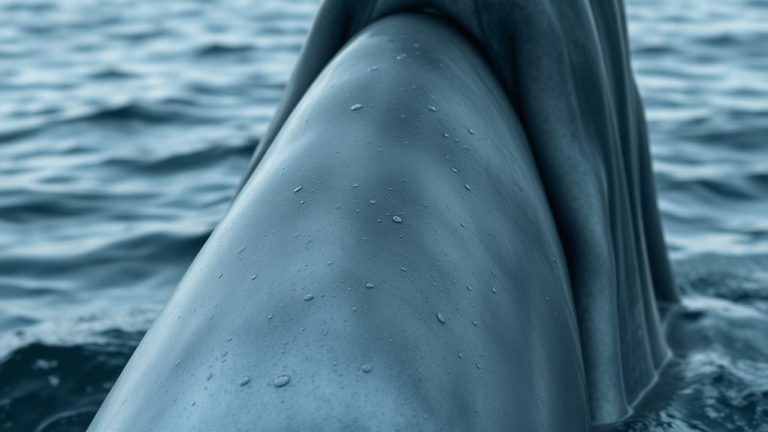
You’ll find the best time to see blue whales in Alaska is during the summer months, from June to August, when they gather in northern and eastern waters. These prime locations offer rich feeding grounds full of krill and small fish, attracting the giants close to shore.
Planning your trip around this seasonal pattern will maximize your chances of spotting these magnificent creatures.
Seasonal Appearance Patterns
Although blue whales migrate along Alaska’s coast from June through September, your best chance to see them is in July and August when their feeding grounds are busiest. During these summer months, blue whales arrive in Alaska waters following their migration to feast on abundant krill.
Peak sightings happen in mid-summer, aligning with ideal weather and prey availability. If you join whale-watching tours at this time, you’re more likely to witness these giants in action.
Expect to see:
- Massive blue whales gliding through nutrient-rich waters
- Groups feeding intensely on dense krill patches
- The calm summer seas perfect for spotting blows and tails
- Frequent surfacing near Alaska’s vibrant coastal feeding grounds
Plan your trip around these seasonal appearance patterns for the best experience.
Prime Viewing Locations
When planning your whale-watching trip, focus on northern and eastern Alaska waters, where blue whales gather most densely from July through September. These prime viewing locations include Glacier Bay and Kodiak, hotspots during the peak season for blue whale sightings.
As you explore Alaska’s coastline, you’ll notice blue whales feeding heavily on krill, making this time ideal for observing their impressive size and behaviors. Kodiak offers accessible tours that maximize your chances to see these giants, while Glacier Bay’s protected waters provide stunning scenery alongside whale watching opportunities.
To get the most from your trip, plan between mid-July and September, when blue whales are most abundant. This peak season ensures you won’t miss the awe-inspiring sight of Alaska’s magnificent blue whales in their natural habitat.
How Whale Migration Affects Whale Watching in Alaska
How does whale migration shape your chances of spotting these majestic creatures in Alaska? Whale migration patterns determine when and where you’ll see whales during Alaska whale watching trips. The best viewing time aligns with their feeding season in nutrient-rich waters from April through September.
Consider these highlights:
- Humpback whales arrive in May, thrilling you with breaching displays through September.
- Gray whales peak in May and June, offering close-up views during their feeding season.
- Orca whales follow prey northward, most active from May to August.
Summer’s long daylight hours boost your chances to catch these giants feeding and socializing.
Understanding whale migration helps you plan for unforgettable encounters with humpback whales, gray whales, and orca whales in Alaska’s spectacular marine environment.
How to Get the Best Whale Views on Your Alaska Cruise
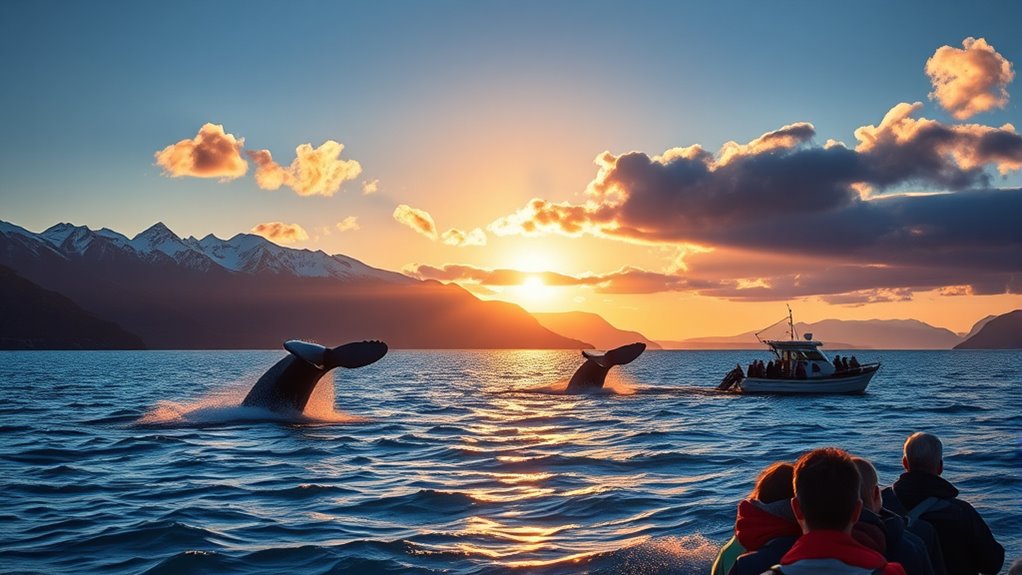
To get the best whale views on your Alaska cruise, you’ll want to book dedicated whale-watching excursions during peak months like June and July, when whales are most active and likely to display behaviors like breaching and feeding.
Choose tours led by experienced guides and naturalists who can identify species and spot signs of whale activity. Opt for vessels with outdoor decks and minimal obstructions, allowing you to scan the waters easily. Keep an eye on the starboard side, as whales often surface near the right side of the ship.
Scheduling your cruise between July to early September also boosts your chances, since whale activity peaks during this period, offering unforgettable sightings and encounters on your journey through Alaska’s stunning coastal waters.
Frequently Asked Questions
What Months Are Best to See Whales in Alaska?
You’ll have the best chance to see whales in Alaska from May through August. Humpbacks peak in June and July, grays arrive in spring, orcas show up all summer, and belugas appear mostly in July and August.
Where in Alaska Is the Best to See Whales?
You’ll find the best whale watching in Alaska at the Inside Passage, Seward, Kodiak Island, and Prince William Sound.
Each offers great chances to see orcas, humpbacks, and gray whales up close during prime months.
Will I See Whales From My Cruise Ship in Alaska?
You might see whales from your cruise ship, but sightings aren’t guaranteed since whales are unpredictable.
To boost your chances, consider booking a dedicated whale-watching tour in hotspots like Juneau or Seward during peak months.
What Are the Odds of Seeing a Whale on a Whale Watch?
You’ve got great odds spotting whales on a dedicated whale watch, especially during peak seasons. Tours get you closer, boosting your chances to see breaching orcas and humpbacks more than just watching from the ship deck.
Conclusion
If you’re planning your Alaska whale watching trip, remember that humpback whales alone put on an incredible show from May to September, with over 10,000 spotted each year! Knowing the best times to see different species will make your adventure unforgettable.
Whether you’re cruising or exploring coastal spots, timing your visit right means you won’t miss these majestic creatures. So, get ready to witness one of nature’s most amazing spectacles up close!
By choosing the best times for whale watching in Alaska, you ensure a memorable experience filled with breathtaking encounters with whales in their natural habitat.