How to Plan Your Trip When Is Whale Season in Cabo
To plan your trip to Cabo for whale watching during the whale season, aim for December through April, with February being the sweet spot for humpback and gray whales. This period offers the best opportunities to witness these majestic creatures in their natural habitat.
Book early morning tours for calmer seas and better sightings, and choose eco-friendly operators for a responsible adventure. Booking multiple tours increases your chances to see more whales and enhances your overall experience.
Pack for variable weather and stay near main marinas for easy access. With a bit of planning, you’ll enjoy a memorable and sustainable experience. More tips can help you make the most of it.
When Is the Best Time to Visit Cabo for Whale Watching?
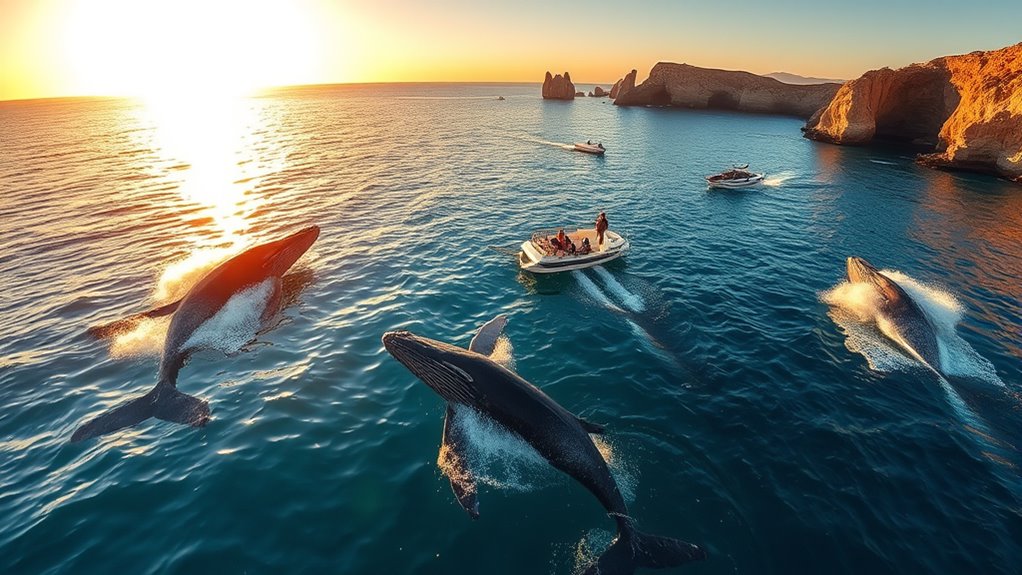
If you want to catch the most whale activity in Cabo San Lucas, plan your trip between December and April. This period marks the peak season for whale watching, with January standing out as one of the best months to see these majestic creatures. The whale watching season kicks off in mid-November, but sightings really pick up from mid-December through late January.
You’ll find early mornings and late afternoons ideal for whale encounters, as activity tends to be higher during those times. February is often considered the best month overall for consistent sightings and lively whale behaviors. So when planning your trip, aim for this whale watching season to maximize your chances of unforgettable whale watching experiences in Cabo.
Which Whale Species Will You See in Cabo?
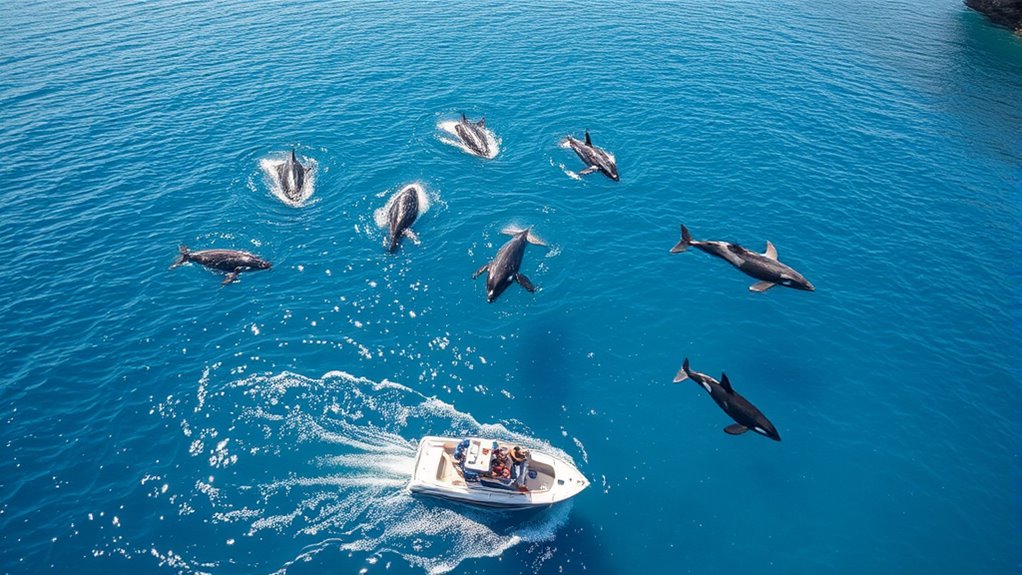
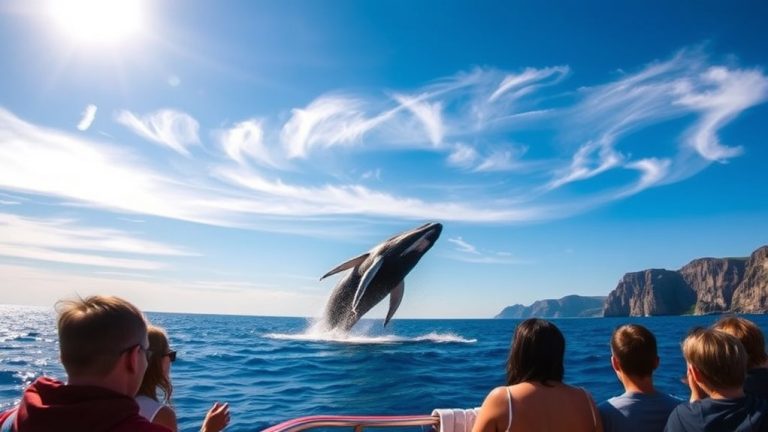
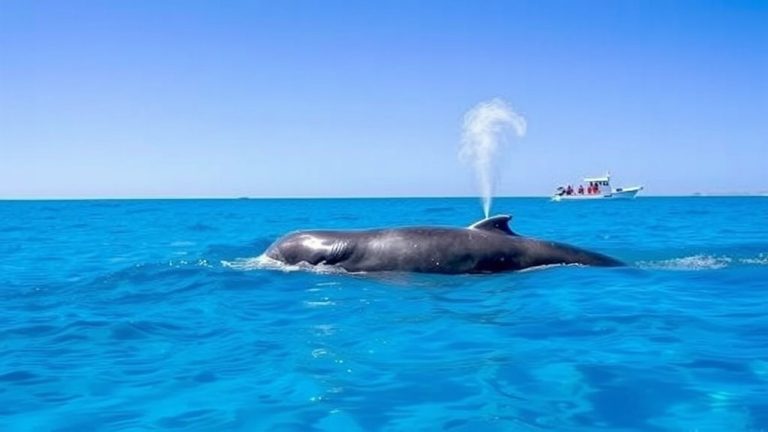
What kinds of whales will you encounter during your Cabo trip? During whale season, humpback whales are the stars, migrating from mid-November to April, with peak activity between mid-December and late January. You’ll often spot their spectacular breaches on whale watching tours.
Gray whales also make a strong appearance, arriving in early January and staying through late March, mostly near shore, making them easier to see from the coast. While blue whales are rare, you might catch a glimpse in deeper waters. Occasionally, other species like orcas or sperm whales show up, but humpback whales and gray whales dominate the scene.
Planning your trip around this peak activity guarantees the best chances to witness these magnificent creatures up close.
How Does Weather and Time of Day Affect Whale Sightings?
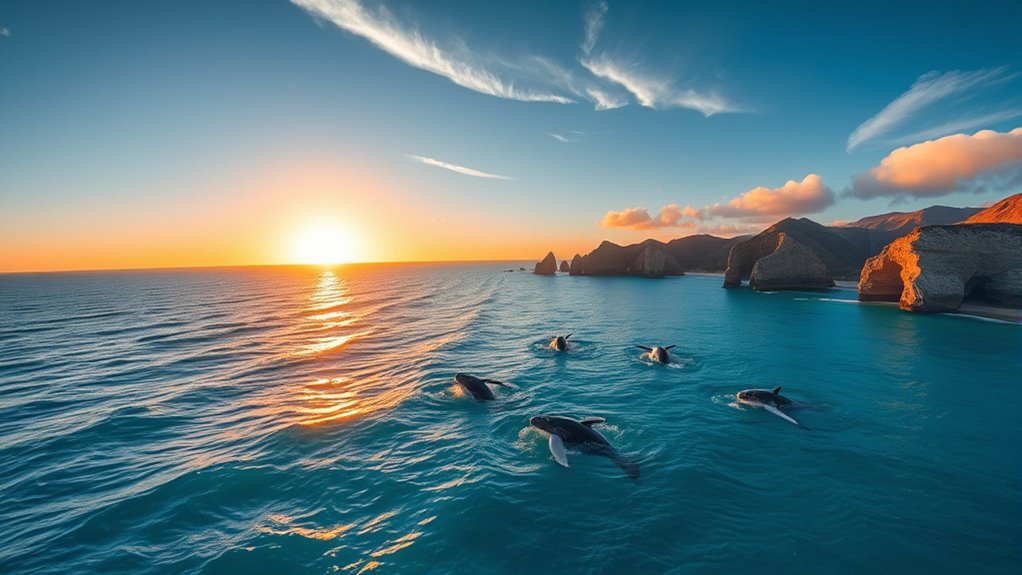
If you head out early in the morning, you’ll enjoy calm seas that make spotting whales easier. Afternoons bring more active whale behavior, especially around high tide, but rougher waters can challenge your view.
Keep in mind that weather like rain or overcast skies can reduce visibility, so timing your trip with the best conditions is key.
Morning Calm Seas
Because early mornings usually bring calm seas and gentle winds, you’ll find it easier to spot whales clearly during this time. The calm seas and stable weather conditions reduce boat motion, so you won’t have to worry about seasickness while you enjoy watching these majestic creatures.
During peak season, whale activity is often higher in the early morning hours, as whales tend to be more active after resting overnight. This means your chances of consistent sightings improve markedly when you set out early. Additionally, the early morning’s tranquil weather conditions offer better visibility compared to midday or afternoon, making it the ideal time for whale watching in Cabo.
Planning your trip for the early morning maximizes your chances of an unforgettable whale encounter.
Afternoon Whale Activity
While afternoon whale activity can be less predictable than in the morning, you might witness some of the most dramatic behaviors during this time. In the warm Sea of Cortez, afternoons often bring higher tides and increased wind, which can trigger impressive whale breaches and tail slaps.
These weather conditions make whale sightings both exciting and challenging—you’ll need patience as waves and wind affect visibility. Whales tend to become more active in the afternoon, preparing for migration or calving, which means you could catch unique behaviors not seen earlier.
Keep in mind that changing weather conditions in the afternoon add unpredictability, so flexibility during your tour will boost your chances of spotting whales. Overall, the afternoon offers a thrilling and dynamic whale-watching experience.
Weather Impact on Visibility
Though weather conditions can change quickly in Cabo, they play a crucial role in how well you’ll spot whales during your tour. Calm weather and clear skies boost visibility, making it easier to see whale activity. Overcast conditions or rain, however, reduce visibility and lower your chances of sightings.
Rough seas caused by wind, especially in the afternoon, can make spotting whales challenging. Early mornings offer the best conditions, with calmer seas and less glare, allowing you to catch more active whale behaviors.
To maximize your whale watching experience, consider these tips:
- Plan tours during early mornings for ideal calm weather and visibility
- Avoid midday tours when rough seas and strong sunlight impair viewing
- Check weather forecasts to anticipate overcast conditions that may reduce sightings
How to Choose the Best Whale Watching Tour in Cabo
When planning your whale watching trip in Cabo, selecting a tour from authorized, eco-friendly providers like Whale Watch Cabo guarantees a responsible and rewarding experience. To choose the best whale watching tour, consider the timing—early morning or late afternoon tours offer the best time to see whales when they’re most active and seas are calmer.
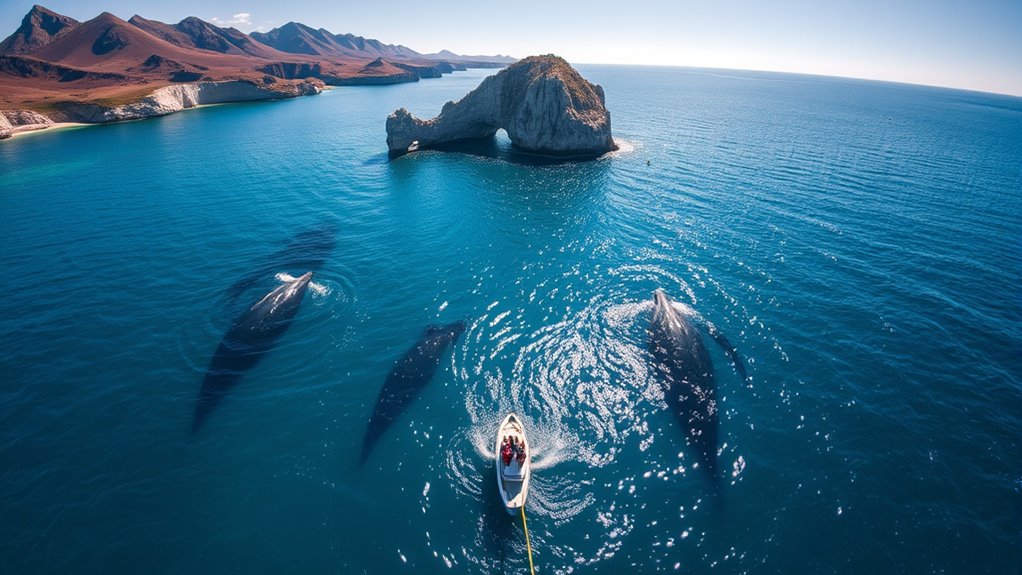
Think about the vessel type: a Zodiac brings you closer to whale behavior, while a luxury catamaran adds comfort. Look for specialized trips focusing on Gray Whales or private tours to customize your adventure.
Why Book Multiple Whale Watching Tours?
Because whale activity can vary every few days, booking multiple whale watching tours markedly boosts your chances of seeing these majestic creatures in action. When you schedule several tours across different days and times, you increase your success rate by catching whales when they’re most active.
This approach lets you experience diverse whale behaviors, from breaching to tail slaps, that might not appear on a single outing. Plus, spacing tours helps you avoid missing out due to sudden weather changes or whale migration shifts.
Consider these tips to maximize your whale watching experience with multiple tours:
- Schedule tours several days apart to track changing whale activity
- Choose different times of day to observe varied whale behaviors
- Book at least three tours to considerably raise your success rate
Where to Stay for Easy Access to Whale Watching Tours
If you want to maximize your whale watching experience in Cabo, choosing where you stay plays an essential role. Opt for accommodations like Krystal Grand® Los Cabos, which offers prime beachfront access, letting you easily reach whale watching tours. Its ocean-view rooms provide chances to spot whales right from your room or common areas.
The hotel’s location just 15 minutes from Los Cabos International Airport means less travel time and more time on the water. Staying near downtown San José del Cabo also allows quick access to local operators and land-based whale watching spots. Alternatively, booking a luxury resort close to the marina in Cabo San Lucas puts you steps away from boats departing on whale excursions.
Prioritize proximity to the marina and airport for seamless tour experiences.
What to Pack for Whale Watching Trips in Cabo
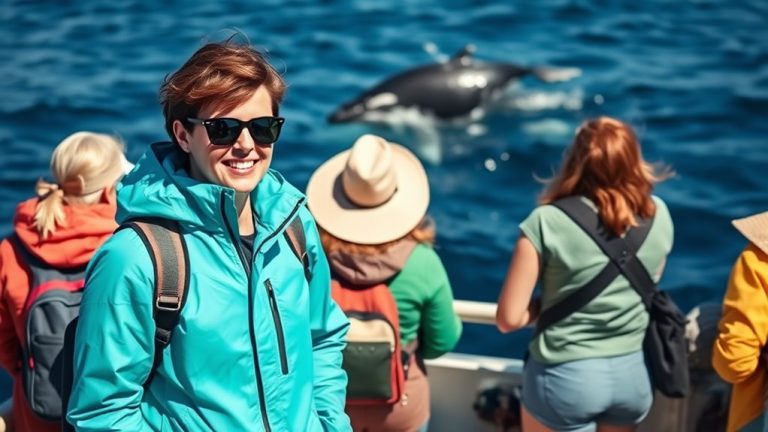
Choosing the right place to stay sets you up for great whale watching, but packing smart helps you enjoy every moment on the water. For whale watching trips in Cabo, weather can shift quickly, so bring layered clothing and a waterproof jacket. Protect yourself from sun exposure with sunscreen and sunglasses.
If you’re prone to seasickness, don’t forget seasickness remedies like pills or wristbands. A camera with a strap is essential to capture those incredible whale moments safely.
Here’s a quick packing checklist to keep your trip smooth:
- Waterproof jacket and layered clothes for changing weather
- Seasickness remedies to stay comfortable on the boat
- Camera or binoculars with strap for amazing whale watching shots
How to Support Whale Watching Conservation During Your Visit
When you book a whale watching tour in Cabo, picking an eco-friendly operator guarantees you’re helping protect these majestic creatures. Choose certified tours that follow strict guidelines to minimize disturbance and promote responsible tourism. Support local conservation by donating to marine protection groups or joining community-based whale preservation programs.
Respect whales by keeping proper viewing distances and never attempting to touch or feed them—this helps maintain their natural behaviors and safety. Also, opt for tours that offer educational commentary to deepen your understanding of whale migration and the importance of protecting their habitats.
Frequently Asked Questions
What Month Is Best for Whale-Watching in Cabo?
The best month for whale-watching in Cabo is February. You’ll catch peak whale activity and consistent sightings then.
January’s great too, marking the start of peak migration, while March and April still offer good chances to see whales.
What Are the Best and Worst Months to Go to Cabo?
The best months to visit Cabo are December through April, especially January to March for whale watching.
Avoid August to October, the worst months, since whales aren’t around and the weather’s less ideal for sightseeing.
Is Whale-Watching Worth It in Cabo?
Like meeting a gentle giant in a fairy tale, whale-watching in Cabo is absolutely worth it. You’ll get close, learn loads, and create unforgettable memories with these majestic creatures between December and April.
Don’t miss out!
Are Cloudy Days Good for Whale-Watching?
Yes, cloudy days can be great for whale-watching since they reduce glare and harsh shadows, making sightings and photos easier. Just avoid heavy rain or storms, and always check the weather before you head out.
Conclusion
Now that you know when and where to catch those majestic whales in Cabo, you’re all set to make the most of your trip. Remember, timing and the right tour can make all the difference—don’t put all your eggs in one basket by booking just one outing.
With a little planning and care for conservation, your whale watching adventure will be unforgettable. Get ready to plunge in and create memories that’ll last a lifetime!
When planning your trip during whale season in Cabo, keep in mind the best times to visit and choose responsible tours that prioritize the protection of these incredible creatures. This way, your experience will be both thrilling and sustainable.