How to Identify Whale Sharks’ Natural Predators
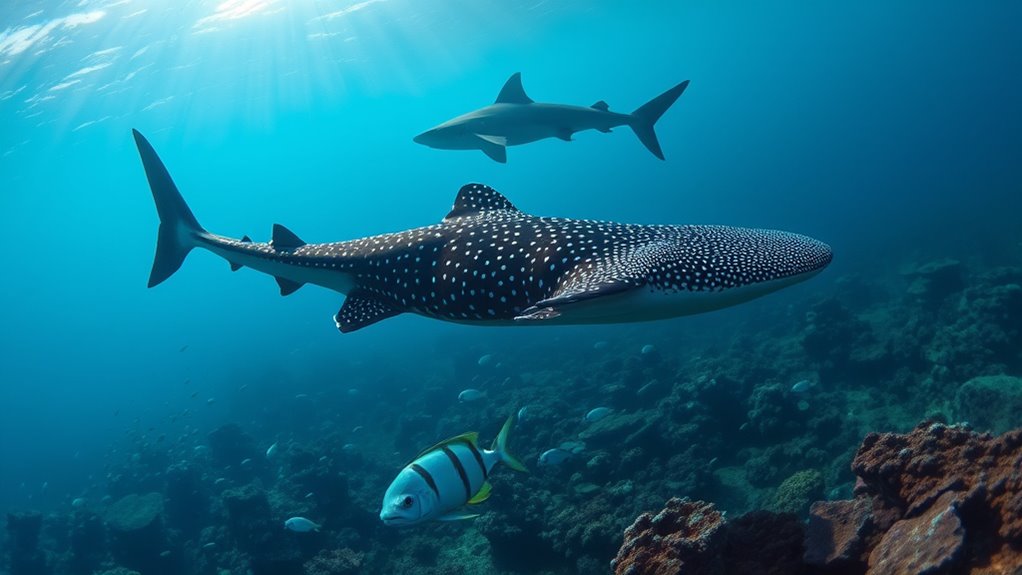
You can identify whale sharks’ natural predators by spotting large sharks like great whites and tiger sharks, along with orcas, which mainly target juveniles or weakened individuals. These predators are key to understanding the dynamics of marine ecosystems and the survival challenges whale sharks face.
Look for distinctive bite marks—deep, V-shaped or crescent-shaped indentations—that signal attacks. Such marks are often the first visible evidence of predator encounters in the wild.
While adults face fewer threats due to their size and thick skin, these predators still pose risks, especially to younger sharks. If you want to understand more about how these predators hunt and the defenses whale sharks use, keep exploring further.
Why Whale Sharks Are Vulnerable to Predators
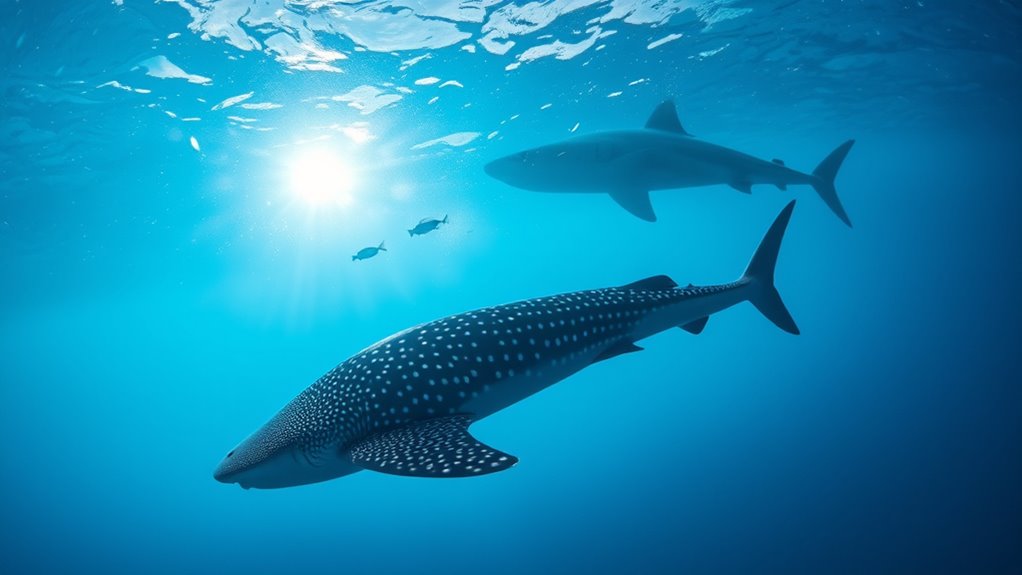
Although adult whale sharks enjoy protection from most predators due to their massive size and thick skin, juvenile and weakened individuals face greater risks.
Adult whale sharks are mostly safe, but juveniles and weakened ones remain vulnerable to predators.
You’ll notice that juvenile whale sharks are especially vulnerable because they’re smaller and less able to defend themselves. Predators like tiger sharks, blue sharks, and killer whales often target these younger sharks, taking advantage of their size and inexperience.
You might even spot distinctive bite marks on juvenile whale sharks, evidence of predator attacks. While adult whale sharks’ thick skin serves as a natural armor, juveniles lack this full protection.
Keep in mind that natural predators aren’t the only threat—human activities such as fishing and boat strikes add to the dangers these young sharks face every day.
Why Juvenile Whale Sharks Are More Vulnerable
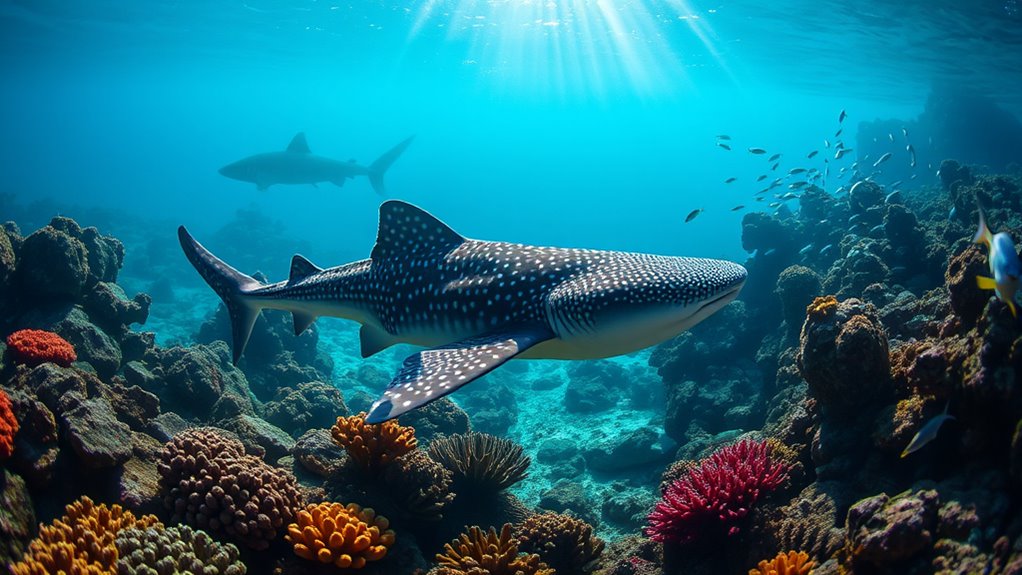
Juvenile whale sharks face greater risks than adults because their smaller size and thinner skin leave them less able to defend against predators. When you’re a juvenile whale shark, predators like great white sharks and killer whales see you as an easier target. You’ll often notice bite marks or scars, clear signs that predators focus on you more than adults.
As you grow, your size and skin toughen, reducing these risks markedly.
| Age Group | Size Range | Predation Risk |
|---|---|---|
| Newborn | <10 feet | Very High |
| Juvenile | 10-20 feet | High |
| Sub-adult | 20-30 feet | Moderate |
| Adult | 30+ feet | Low |
| Mature Adult | 40+ feet | Minimal |
Juvenile whale sharks must stay vigilant as predators target them most.
Common Natural Predators of Whale Sharks
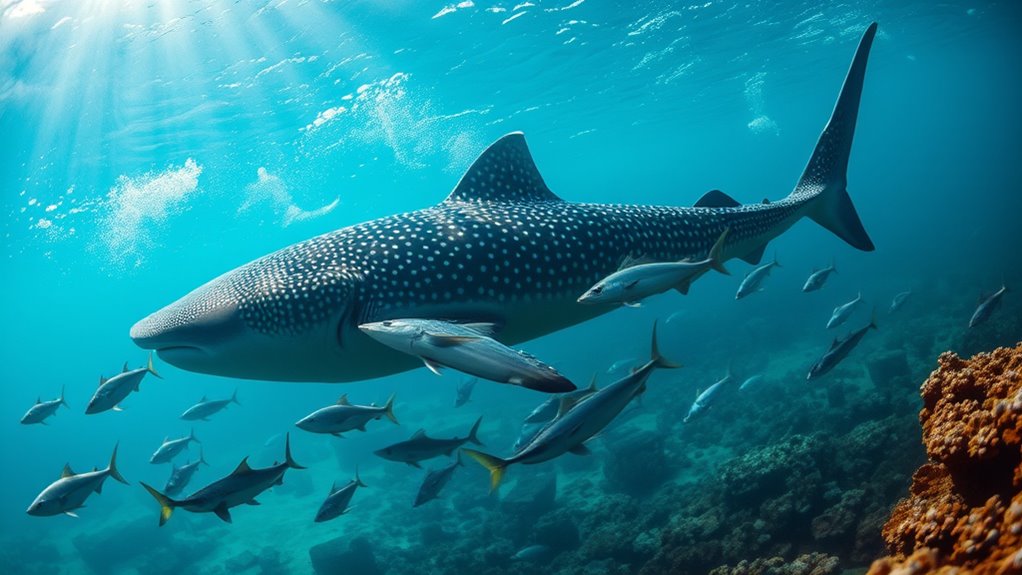
You’ll find that orcas and large sharks like great whites are the main predators targeting whale sharks, especially juveniles or weakened individuals. Each species has unique hunting patterns, with orcas often aiming for the liver.
Understanding how these predators impact whale shark populations helps reveal the challenges these giants face in the wild.
Key Whale Shark Predators
What predators threaten whale sharks in the wild? While adult whale sharks face few threats, juvenile ones aren’t so lucky. Large sharks like great whites, tiger sharks, and black marlins often target young whale sharks.
Killer whales, or orcas, stand out as formidable predators capable of attacking even adult whale sharks by focusing on their livers. Although predation on whale sharks is rare, it tends to happen when they’re young, old, or weakened.
Blue sharks and other large predatory fish may scavenge or opportunistically attack injured or dead whale sharks. Understanding these key whale shark predators helps you grasp the natural challenges these gentle giants face beyond human threats.
Predation Patterns By Species
Although whale sharks face few threats as adults, several species prey on them at different life stages. Killer whales, or orcas, stand out as formidable predators, using strategic hunting techniques and powerful jaws. Great white sharks often target smaller or weakened whale sharks, leaving characteristic bite marks.
Juvenile whale sharks are more vulnerable, attracting tiger sharks and other opportunistic hunters.
Here’s a closer look at predation patterns by species:
- Killer whales use coordinated attacks on whale sharks, especially when isolated or injured.
- Great white sharks focus on smaller or weakened individuals, rarely attacking healthy adults.
- Tiger sharks frequently prey on juvenile whale sharks, exploiting their vulnerability during early growth stages.
Understanding these patterns helps you recognize how whale sharks fit into the ocean food web.
Predator Impact On Sharks
While natural predators rarely threaten healthy whale sharks, they still shape the species’ survival and behavior. You’ll find that killer whales, or orcas, stand out as the most formidable predators, capable of preying on even the largest whale sharks. Predation mainly targets juveniles or weakened individuals, as large sharks like great whites and tiger sharks often leave bite marks on younger whale sharks.
Blue sharks and other predators typically scavenge dead whale sharks rather than hunt healthy ones. Even though predation events are uncommon, they influence whale sharks’ movement and growth patterns. By understanding how killer whales and other predators impact whale sharks, you can appreciate the delicate balance in their ecosystem, where natural threats help maintain population health alongside human challenges.
How Large Sharks Prey on Whale Sharks
You’ll notice that large sharks like great whites and tiger sharks mostly target juvenile whale sharks when they’re vulnerable. These attacks are usually opportunistic rather than planned hunting.
Understanding these patterns helps explain why adult whale sharks rarely face such threats.
Targeting Juvenile Whale Sharks
How do large sharks manage to prey on whale sharks despite their massive size? They focus on juvenile whale sharks, which are smaller and less capable of defending themselves. Predatory sharks like great whites and tiger sharks target these younger individuals because they’re easier prey before whale sharks grow too large to threaten.
You can recognize this predation by:
- Distinctive bite marks on juvenile whale sharks, signaling attack attempts
- Increased vulnerability due to their smaller size and underdeveloped defenses
- A lower risk of predation as whale sharks mature and grow larger
Though attacks on juvenile whale sharks are relatively rare, understanding this dynamic helps you appreciate the challenges these giants face early in life from predatory sharks in the ocean ecosystem.
Opportunistic Attacks By Great Whites
Because great white sharks can grow up to 20 feet long and weigh over 4,000 pounds, they have the power to attack juvenile whale sharks when the opportunity arises. You’ll find that these attacks are usually opportunistic, targeting weakened or smaller individuals rather than healthy adults. When great white sharks prey on juvenile whale sharks, they often leave distinctive bite marks—deep, clean cuts around fins or gills.
Since adult whale sharks are massive and generally resistant to predation, you’ll rarely see great white sharks attempting attacks on them. Instead, juvenile whale sharks remain vulnerable during early life stages, making them more frequent targets. Understanding this helps you recognize how large sharks, especially great white sharks, influence whale shark populations through opportunistic predation.
Tiger Shark Predation Patterns
Although tiger sharks rarely target whale sharks, they do occasionally prey on juveniles or weakened individuals. When you encounter tiger sharks near juvenile whale sharks, you’ll notice they use their powerful jaws and sharp teeth to bite into vulnerable targets. This predation is uncommon and usually affects young or sick whale sharks rather than healthy adults.
You might spot distinctive bite marks on the skin and fins of these juveniles, clear signs of tiger shark attacks. As whale sharks grow larger and stronger, the chance of predation by tiger sharks substantially decreases.
- Tiger sharks measure up to 14 feet, making them formidable predators.
- Juvenile whale sharks are more susceptible due to their smaller size.
- Bite marks on whale sharks signal past tiger shark encounters.
How Orcas Hunt and Attack Whale Sharks
When orcas target whale sharks, they rely on coordinated attacks and powerful bites to overcome their large prey. As apex predators, orcas use their intelligence and teamwork to exploit whale sharks’ behaviors, especially focusing on juveniles or weakened individuals.
You’ll notice that adult whale sharks usually avoid attacks because of their massive size and tough skin. But orcas adapt their hunting strategies, often working in groups to isolate and exhaust younger sharks. Documented cases show orcas successfully preying on whale sharks across various oceans.
If you observe orcas hunting, you’ll see them employing tactical movements and biting to capture their prey efficiently. Understanding this dynamic highlights how orcas maintain their role at the top of the marine food chain while preying on whale sharks.
Fish Predators of Juvenile Whale Sharks
Orcas aren’t the only predators you need to watch out for when it comes to whale sharks. Juvenile whale sharks face threats from several large shark species that see their smaller size as an opportunity. Great white sharks and tiger sharks often target these young sharks, especially if they’re weak or injured.
You’ll notice distinctive bite marks on their skin, clear evidence of shark attacks. Blue sharks, though mainly scavengers, can also pose risks.
Here are key fish predators of juvenile whale sharks:
- Great white sharks: aggressive hunters targeting vulnerable juveniles
- Tiger sharks: opportunistic predators attacking smaller whale sharks
- Blue sharks: scavengers that can turn predatory under certain conditions
Understanding these threats helps you recognize the challenges juvenile whale sharks face.
How to Spot Predator Bite Marks on Whale Sharks
If you want to identify predator bite marks on whale sharks, look for deep, V-shaped or crescent-shaped indentations on their skin, often near the fins or along the body edges. These bite marks mostly appear on juvenile whale sharks, signaling attacks from larger predators.
Multiple clustered marks, torn skin, or missing tissue are clear signs of predation. Here’s a quick guide to spotting these marks:
| Bite Mark Feature | What It Indicates |
|---|---|
| V-shaped indentations | Likely shark or marine mammal bites |
| Crescent-shaped marks | Typical of large predator attacks |
| Location near fins/body | Common attack points |
| Multiple clustered marks | Repeated predation attempts |
Why Adult Whale Sharks Face Fewer Threats
Because adult whale sharks grow up to 40 feet long and weigh around 15 tons, they face far fewer threats than juveniles. Their sheer size deters most natural predators, making attacks on healthy adults extremely rare. You’ll notice that adult whale sharks have a thick skin layer, up to 4 inches deep, which acts as a tough barrier against potential threats.
Adult whale sharks’ immense size and thick skin protect them from most predators, making attacks extremely rare.
Additionally, their ability to perform rapid profound descents helps them escape predators lurking near the surface.
You can picture why adult whale sharks face fewer threats by considering these points:
- Massive size deters most natural predators
- Thick, protective skin acts as armor
- Skilled deep diving aids quick evasion
These factors combine to greatly reduce the risks adult whale sharks encounter.
Whale Shark Defenses Against Predators
While adult whale sharks face fewer threats due to their size, they still rely on several key defenses to stay safe. You’ll notice their enormous size combined with skin up to four inches thick acts as a primary defense against predators. Their distinctive spotted pattern serves as camouflage, blending them into sunlight-filtered waters to help you avoid detection.
When threatened, whale sharks perform rapid submersion dives, allowing you to escape quickly from potential attackers. Their massive mouths and powerful jaws don’t just feed—they can deliver defensive bites to deter smaller predators. Additionally, by swimming alone near surface waters, whale sharks reduce the chance of encounters with threats.
These natural defenses work together to keep whale sharks safer in the wild.
Human Impact: The Greatest Threat to Whale Sharks
Though whale sharks have natural defenses against predators, human activities pose the greatest threat to their survival. You need to understand that human impact, including commercial fishing and bycatch, often leads to their accidental or targeted deaths. Illegal hunting for fins, meat, and oil worsens the problem, especially in markets in China and Taiwan.
Additionally, vessel strikes and habitat destruction from pollution and coastal development shrink their safe environments.
You can visualize these threats through:
- Accidental capture in fishing nets (bycatch)
- Injuries from fast-moving boats near feeding areas
- Loss of breeding grounds due to coastal pollution
Frequently Asked Questions
What Are the Natural Predators of Whale Sharks?
You’ll find orcas, great white sharks, and tiger sharks as natural predators of whale sharks, especially targeting juveniles or weakened ones. Occasionally, aggressive marine mammals like pilot whales pose threats too, despite whale sharks’ impressive defenses.
What Is the #1 Apex Predator in the Ocean?
You’ll find the orca, or killer whale, is the #1 apex predator in the ocean. With its size, intelligence, and teamwork, it dominates marine ecosystems and preys on large animals, including sharks and whales.
What Eats Whale Sharks in the Ocean?
You’ll find that orcas and large sharks, like great whites and tiger sharks, occasionally prey on juvenile or weakened whale sharks.
Adults rarely get targeted due to their size, but humans also pose significant threats.
What Is the Biggest Threat to Whale Sharks?
The biggest threat to whale sharks is human activity. You’ll find illegal fishing, habitat destruction, and pollution all harming them.
Plus, climate change affects their environment, making survival tougher for these gentle giants in the ocean.
Conclusion
You might be surprised to learn that juvenile whale sharks face far greater risks, with predators targeting them more than adults. While adult whale sharks can grow up to 40 feet long, making them tough targets, young ones are vulnerable to large sharks and orcas.
By spotting bite marks and understanding these threats, you can better appreciate their struggle.
Remember, though, humans remain the biggest threat to these gentle giants. Protecting them starts with awareness of whale sharks’ natural predators and the challenges they face in the wild.