Which Months Are in Maui Whale Season?
Maui’s whale season runs from mid-December through April, making these the best months to witness stunning whale activity. Whales begin arriving gradually in early December, marking the start of an exciting time for marine life enthusiasts.
You’ll see the most whale activity from January to March, when thousands of humpbacks fill the waters, putting on spectacular displays. Sightings taper off by late April and May, and during summer months, whales are mostly gone.
If you want the best experience and details on seasonal changes and tips, keep exploring to find out what makes each month unique.
When Does Maui Whale Watching Season Start and End?
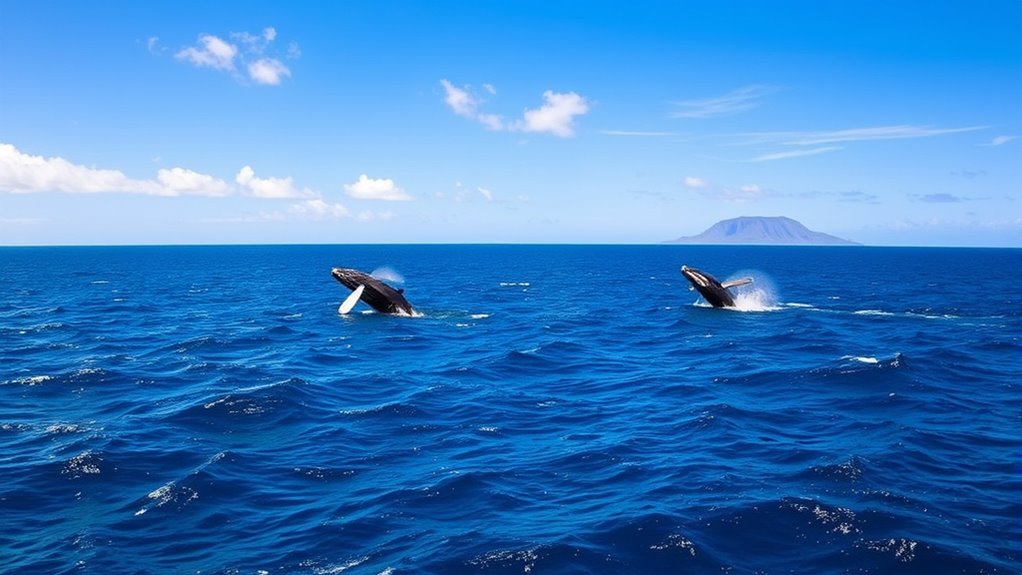
Although whale sightings can begin as early as October, Maui’s whale watching season officially starts around December 15th and runs through April, with some tours extending into May. During these winter months, Maui’s whale season peaks, especially from January to March, when humpback whales gather in large numbers for their migration period.
If you join whale tours during this time, you’ll likely witness the most exciting whale sightings. The peak migration period in February and March offers the highest concentration of these majestic creatures nearshore, making Maui whale watching unforgettable.
While you might spot whales earlier or later, the official whale season from December to April remains the best window to experience the full spectacle of humpback whales in Maui’s waters.
What to Expect During Early December Whale Watching
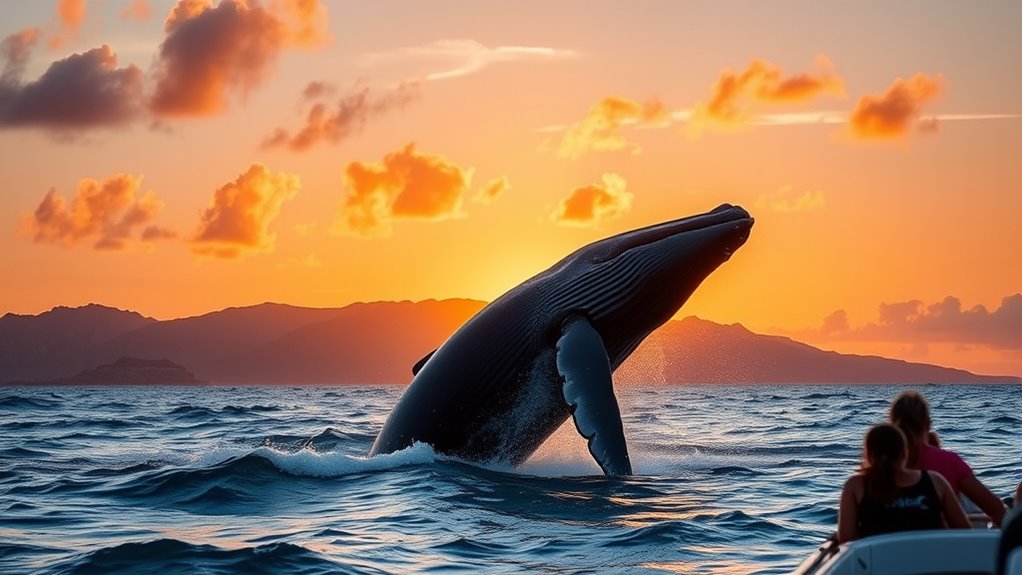
In early December, you’ll start to see whales arriving in Maui, though there are fewer than in peak months. The weather can be cooler and choppier, so dress warmly if you’re heading out on a boat tour, which offers the best chance to spot these early migrants.
Tour operators are ready and enthusiastic to help you catch those first glimpses of whale activity.
Early Season Whale Activity
While the whale watching season officially begins in early December, you’ll notice fewer humpbacks near Maui compared to the peak months. Early December marks the start of whale migration, so spotting whales can be a bit unpredictable. Some whales are early arrivals, while others are still en route, resulting in smaller groups near shore.
Although whale behaviors like breaching and spouting happen less frequently during this time, you can still catch these impressive displays. Early season sightings offer a quieter, more intimate experience than the busy peak season. Whether you’re on a boat tour or watching from land, keep your eyes peeled—Maui’s early December whale watching season gives you a unique chance to observe these majestic creatures as they settle in for their winter stay.
Weather Conditions Impact
You might encounter variable weather when whale watching in early December around Maui, with cooler temperatures and occasional rain shaping your experience. Sea conditions can shift quickly due to winter weather, causing rough waters that may increase the chance of sea sickness. However, calm mornings often provide perfect visibility and smoother seas, making whale spotting easier and more enjoyable.
Early December’s sea activity is lower compared to peak months, so sightings might be less frequent but still rewarding. Understanding the seasonality helps you prepare for these changes in weather and sea conditions. By anticipating variable weather and the possibility of rough waters, you can better plan your whale watching adventure and make the most of this early part of the season.
Tour Availability and Tips
Although early December marks the official start of Maui’s whale watching season, tours just beginning around this time may offer fewer sightings than peak months. Whale watching tours in early December benefit from the seasonality, letting you catch the first migrating whales, including curious juvenile whales and occasional breaching behaviors.
While whale sightings are less frequent than in peak months like January, early December still provides a rewarding experience. Keep in mind that weather conditions can be cooler and windier, so dressing warmly is essential for your comfort on water-based trips.
For the best time to visit, consider your priorities: early December offers quieter tours and unique encounters, while peak months guarantee higher whale activity. Use these trip tips to make your early December whale watching tour memorable.
Why Is January the Best Month for Whale Watching in Maui?
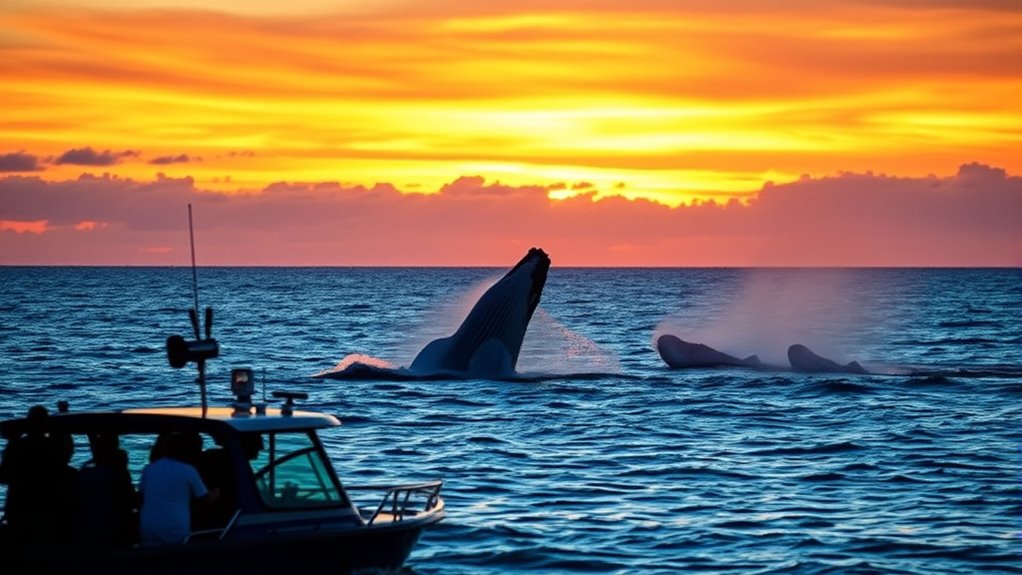
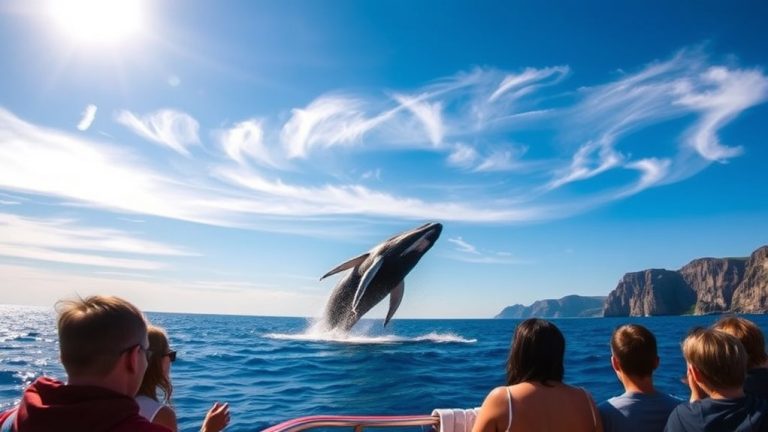
January brings the highest number of humpback whales right to Maui’s shores, giving you the best chance to see them up close. You’ll notice they’re especially active this month, often breaching and slapping their tails in full display.
With so many whales showing off near the coast, your whale watching experience will be unforgettable.
Peak Whale Population
When the humpback whales arrive in Maui’s warm waters, you’ll find around 10,000 of them gathered, making it the best time for whale watching. January marks the peak season of whale migration, with the highest whale population during the entire migration period. These humpback whales travel from Alaska to Maui to breed and give birth, boosting whale sightings considerably.
Because of this dense concentration, you’ll experience more frequent and impressive whale behaviors, which draws numerous whale-watching tours aiming for successful encounters. If you want to catch the essence of Maui’s whale migration, January is your prime month. The combination of the whales’ arrival, active behaviors, and ideal conditions makes January the ultimate time to enjoy whale watching in Maui.
Active Surface Behaviors
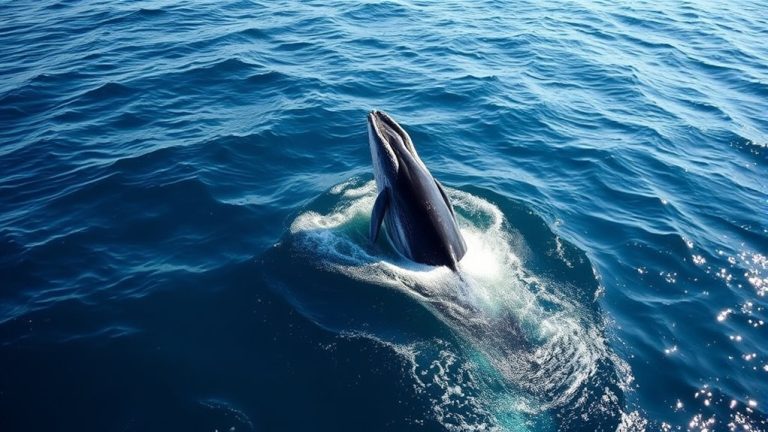
The incredible number of humpbacks gathered around Maui in January doesn’t just increase your chances of sightings—it also means you’ll witness some of their most dynamic surface behaviors. During this peak of Maui whale season, humpback whales engage in spectacular active behaviors like breaching, tail slapping, and spyhopping.
These dramatic displays come as a result of whale migration patterns, bringing many whales to the area for breeding and calving. This social interaction boosts whale activity, making your whale-watching experience unforgettable. When you’re out on the water, you’ll notice how these surface behaviors increase the excitement and frequency of whale sightings.
January truly offers the best opportunity to see humpback whales at their liveliest, making it the prime time for active surface behaviors in Maui.
How Does Whale Activity Change in February and March?
Although whale activity remains high through February and March, you’ll notice subtle shifts in their behavior that make each month unique. In February, humpback whales are especially active and curious, often approaching boats closely during their peak whale migration. You’ll see playful whale behaviors like breaching and tail slapping, with lots of energetic surface displays that make whale sightings spectacular.
Moving into March, whale activity stays strong but shifts toward mating and calf-rearing. The whales continue surface displays such as pectoral slapping and competitive pod interactions, showcasing social dynamics. Both months offer excellent chances to witness these majestic creatures, but February leans toward playful encounters, while March highlights more social and reproductive behaviors among the humpback whales.
What Happens to Whale Sightings in April and May?
As April progresses, you’ll notice whale sightings around Maui drop sharply since most humpbacks start heading back to Alaska by mid-month. This return migration marks the end of the peak season, leading to a significant decline in encounter rates. In April and May, whale behavior shifts mainly to feeding and transit, so surface activity becomes less frequent and harder to spot during whale-watching tours.
Why Whale Watching Is Limited in Maui’s Summer Months (And What to Do Instead)
Whale sightings around Maui drop sharply after mid-April because most humpbacks start migrating back to Alaska. During the summer months, whale activity near Maui slows as whales head to feeding grounds, reducing surface behaviors and close encounters. This makes whale watching less rewarding in the summer season.
Instead, consider these alternative ocean activities:
- Snorkeling vibrant reefs to explore Maui’s underwater life.
- Dolphin watching tours, offering exciting marine encounters.
- Kayaking or paddleboarding for a peaceful ocean experience.
Marine tours shift focus from whale sightings to these engaging options in summer. So, while you won’t see many whales during Maui’s summer months, you can still enjoy the ocean’s beauty and abundant wildlife in other ways.
Frequently Asked Questions
What Is the Best Month to See Whales in Maui?
February’s the best month to see whales in Maui. You’ll catch peak whale activity during their winter migration, making your chances of spotting humpbacks incredibly high compared to other months.
Don’t miss it!
Where Is the Best Place to See Whales in Maui?
Imagine you’re a lighthouse keeper spotting giants at sea. Head to Kaanapali Beach, Kihei Coastline, or McGregor Point Lookout. These shores let you witness whales breaching and spouting, making your whale watch truly unforgettable.
What Is the Best Month to Visit Maui?
You’ll want to visit Maui in February for the best whale watching experience. That’s when whale activity peaks, and your chances of seeing them up close are highest, making your trip truly unforgettable.
Are There Still Whales in Maui in May?
You won’t find many whales in Maui in May, like searching for a floppy disk in a smartphone era. Most have migrated north, but if you’re lucky, a few late stragglers might still hang around early May.
Conclusion
Whale season in Maui runs from December through May, with January being the prime time to catch these majestic creatures up close. Early on, you’ll witness the excitement build, and by spring, sightings start to wane.
If you visit in summer, don’t fret—you’ll find plenty of other fun activities to keep you busy.
So, if you want to see whales, now’s the time to strike while the iron’s hot and make unforgettable memories during the Maui whale season!