Why Is a Humpback Whale Called a Humpback Whale?
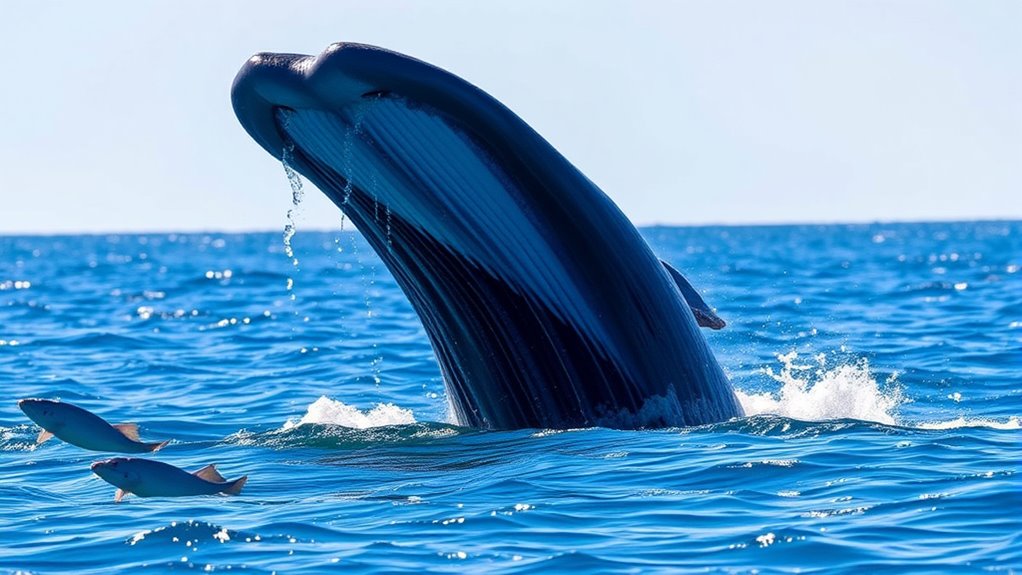
You call it a humpback whale because of the distinctive arching hump it forms on its back right before it dives underwater. This unique feature is what gives the humpback whale its name and makes it easily recognizable among other whale species.
The raised hump, along with its short dorsal fin, sets it apart from other whales.
Scientists also use the shape of its hump, flippers, and unique tail markings to identify individual whales. This visible arch not only helps in recognizing the species but also influences its behavior and conservation efforts.
Keep exploring, and you’ll discover even more fascinating details about these majestic creatures.
Physical Features Behind the Humpback Whale’s Name
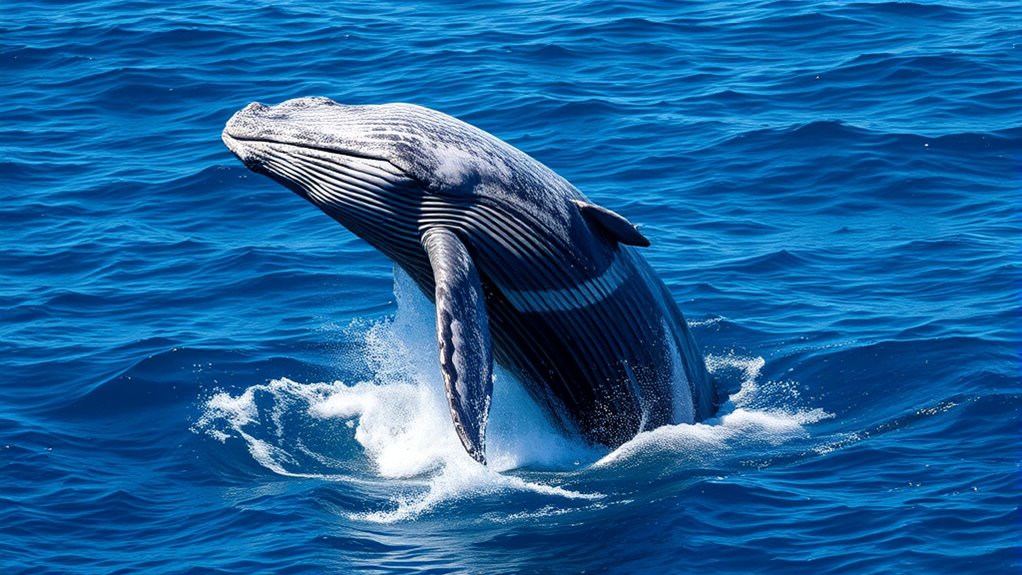
Although you might not immediately notice it, the humpback whale gets its name from the distinctive arch in its back that forms a visible hump before it dives. This arching back creates a unique dorsal profile that sets the humpback apart from other species, like fin whales, whose dorsal fins are more elongated.
The humpback’s dorsal fin is short and stubby, accentuating the prominent hump formed during its diving behavior. These physical features—especially the body shape and whale morphology—make the humpback easily identifiable. When the whale prepares to dive, its arched back and raised hump become unmistakable, highlighting the characteristic dorsal profile.
Understanding these traits helps you appreciate why this whale earned its descriptive name based on its distinct hump and body shape.
How Scientists Identify Humpback Whales by Hump and Flipper Shapes
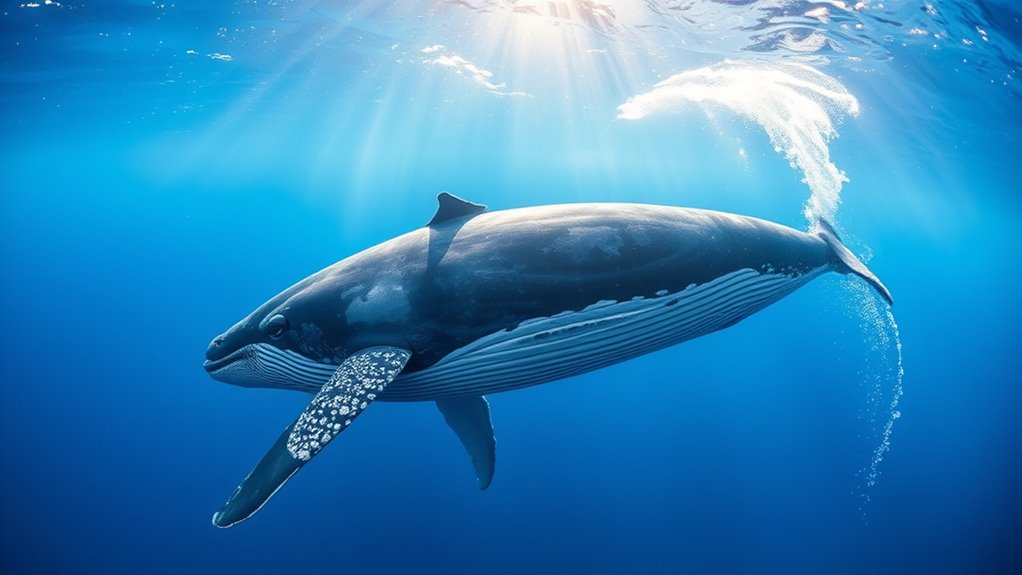
When you spot a humpback whale at the surface, scientists rely on more than just its hump to identify it—they also examine the shape of its long, distinctive pectoral fins and the unique patterns on its tail flukes.
The dorsal hump and dorsal fin profile provide key whale features for quick whale recognition. Researchers carefully study the flipper shape, which varies among individuals, to aid whale identification.
Meanwhile, the tail flukes display unique whale markings that serve as individual identifiers, much like fingerprints. By combining observations of the dorsal hump, flipper shape, and tail flukes, scientists can accurately track and distinguish each humpback whale.
Tail fluke patterns act as unique identifiers, enabling scientists to track and distinguish individual humpback whales.
These detailed whale features make whale recognition more reliable and help deepen our understanding of these majestic creatures.
The Humpback’s Distinctive Arching Dive Before Submerging
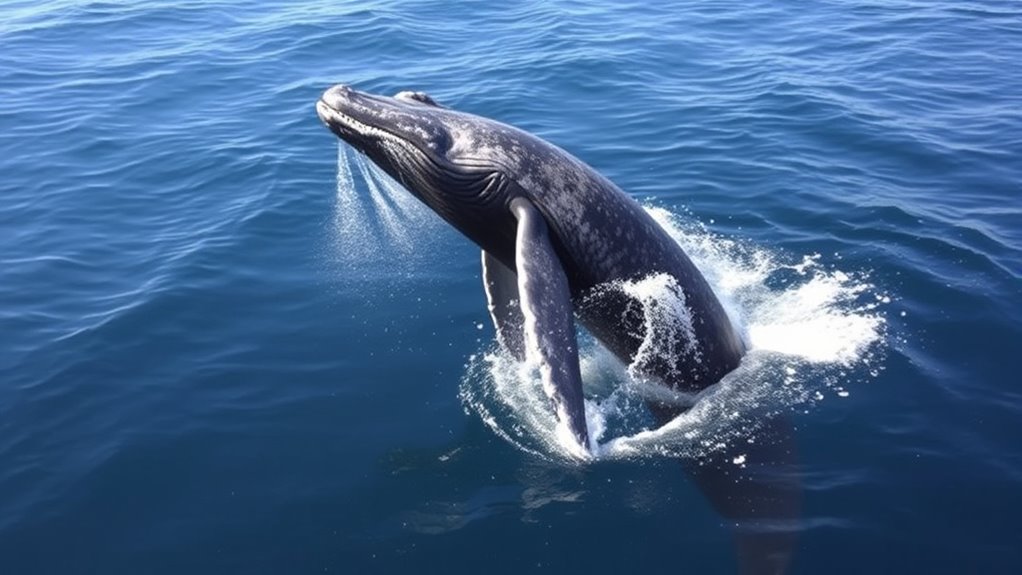
Before a humpback whale dives beneath the surface, you’ll notice it arch its back high above the water, forming a distinctive hump shape. This pre-dive arch signals the whale’s imminent submerge and serves as a clear visual cue for others nearby.
The humpback whale’s back rounds and lifts during this behavior, creating a prominent hump that contrasts with its short, stubby dorsal fin. This diving posture is unique and instantly recognizable.
| Aspect | Description |
|---|---|
| Arch Shape | Rounded, lifted back forming hump |
| Purpose | Visual cue for diving behavior |
| Dorsal Fin | Short and stubby, less visible |
| Behavior Timing | Occurs just before submerging |
You’ll see this arch every time the humpback prepares to dive deeply.
How the Dorsal Hump Influences Humpback Whale Behavior
Because the dorsal hump forms as the whale arches its back just before diving, you can easily spot when a humpback is about to submerge. This arching behavior acts as a clear visual signal during their surface activities, letting you identify their next move. When you see that prominent dorsal hump rise above the surface, it’s a dependable sign the whale will soon dive.
This behavior isn’t just essential for observers—it helps distinguish humpback whales from other marine species. The dorsal hump’s presence influences how these whales behave near the surface, signaling their intention to submerge, which affects how they interact with their environment and other animals.
Why the Humpback Whale’s Name Helps Raise Conservation Awareness
Although many marine animals capture attention, the humpback whale’s name instantly highlights its distinctive arching back and prominent dorsal hump, making it easier for you to recognize and connect with this species. This physical feature serves as a clear visual identifier, sparking public interest and enhancing public awareness.
When you see or hear about the humpback whale in media contexts, the name helps focus attention on their unique behavior and the importance of habitat preservation. By emphasizing this recognizable characteristic, conservation efforts gain traction, encouraging responsible human interaction and support for protecting their environment.
Ultimately, the humpback whale’s name acts as a powerful tool, fostering a deeper connection between you and the species, which is essential for ongoing conservation and habitat preservation initiatives.
Frequently Asked Questions
Why Is an Orca a Dolphin and Not a Whale?
You call an orca a dolphin because it belongs to the dolphin family, Delphinidae. Despite its size, its genetics and behavior match dolphins, not whales, making it the largest dolphin species, not a true whale.
What Are 5 Facts About Humpback Whales?
You might think humpbacks are just big whales, but they’re unique. You’ll love knowing they sing complex songs, migrate thousands of miles, breach spectacularly, have huge pectoral fins, and feed in cold waters annually.
Why Can’t You Swim With Humpback Whales?
You can’t swim with humpback whales because getting too close stresses them, disrupts their feeding and communication, and may cause injury.
Laws protect them, so you must keep a safe distance for their safety and yours.
What Is the Most Violent Whale?
You’d think the ocean’s fiercest monster is the killer whale—because it is! Orcas hunt like ruthless predators, using teamwork and cunning, sometimes even beaching themselves to snatch prey.
You definitely wouldn’t want to mess with one.
Conclusion
You might think the name “humpback whale” is just a simple label, but it actually highlights their unique physical traits and behaviors that make them fascinating to observe. By noticing their distinctive hump and graceful arching dives, you’ll appreciate these gentle giants even more.
Understanding why they’re named this way not only deepens your connection to them but also supports efforts to protect them for future generations to enjoy. Recognizing the humpback whale’s special features helps raise awareness about conservation. This awareness is crucial to ensuring these majestic creatures continue to thrive in our oceans.